WashingtonWeeklyTimes.com
  • Home
  • US News

    Tacoma sailboat found abandoned with 60 cats near Owens Beach, WA

    Marco Rubio jokes about Pop-Tarts while rejecting RFK Jr.’s MAHA diet

    ICE detainer filed for Louisville landlord charged with rape, trafficking

    Tyler Robinson lawyers argue death penalty factor lacks probable cause

    K-9 Ace the German shepherd returns to Polk County Sheriff’s Office

  • Politics

    OOPS! Jen Psaki Makes a Horrible Admission About the Democrat Party’s Nominating Process on the Air (VIDEO) * The Gateway Pundit * by Mike LaChance

    The Rats Flee The Sinking Ship As Karoline Leavitt Bolts From Trump

    Karoline Leavitt Departing Role as White House Press Secretary * The Gateway Pundit * by Cristina Laila

    Bernie Sanders Calls On The Democratic Party To Ban Super PAC Money

  • Business

    Prime Infra CEO: Philippines needs ‘power of all sorts’ following national energy crisis

    Canva was the rare startup that grew fast and made money—then AI cut its growth forecast by a third

    Nearly a dozen firms are paying up to $100,000 per month for early access Truth Social posts

    87.5% of venture dollars went to AI. The rest fought over scraps

  • Science

    Estrogen-only hormone therapy could lower risk of Alzheimer’s

    The Best Photos of the Big August Solar Eclipse

    Darwin spent part of almost every day walking his secluded “Thinking Path” at Down House, turning ideas over in his mind. Nearly two centuries later, neuroscience is beginning to explain why the habit worked: walking boosts divergent thinking, while the brain’s internally focused networks help combine information in new ways — one of the foundations of creative insight.

    New JWST images reveal the Lion Nebula in all its glory

  • Technology

    HostGator Coupon Codes: 76% Off Hosting in August 2026

    Some Claude users are mad that Anthropic’s new watermarks will catch them using it at their jobs, classes

    The Gender War Over ‘Obsession’ Has Come for Theme Parks

    AI code-testing startup Blacksmith’s valuation jumps almost 10x in less than a year

  • Lifestyle

    formatting example | FashionBeans

    Our Readers Have Spoken—These Are Summer’s Most-Wanted Products

    The Top 20+ Best Beaches You Can’t Miss

    The Best Baseball Caps You Can Buy In 2026

  • Music

    Hayley Williams’ Band Power Snatch Drop Second EP of 2026

    The Neighbourhood ‘Sweater Weather’ Hits 1 Billion Views on YouTube

    Eurovision Song Contest changes rules for countries at war

    25 Best Disney Rock + Metal Covers of All Time

  • Television

    5 TV Shows To Watch If You Like Sheriff Country

    9 Years Later, I’m Still Not Over Sheldon’s Horrible Hindi Accent on The Big Bang Theory

    Should Roy and Keeley Revive Their Romance in Season 4?

    What To Watch On TV And Streaming Wednesday, August 12, 2026

  • Film

    Sunny Dancer review – sunk by puerile humour

    End of Oak Street Box Office Opening Targets Spider-Man: Brand New Day

    Alan Ritchson’s Reacher Officially Returns On Prime Video The Same Day Season 4 Ends

    Venus as a Boy: Pink Narcissus at 55

  • Literature

    14 Thoughts I Had Watching the Verity Trailer

    Literary Hub » Lit Hub Daily: August 12, 2026

    Even Good Boys Get a Little Bloody Sometimes

    Book Riot’s Deals of the Day for August 12, 2026

    Literary Hub » A Wealthy Donor to My University Just Silenced One of the World’s Leading Scholars of Genocide

    3 Debut Authors Discuss How to Live in the Hypothetical

    Book Riot’s Deals of the Day for August 11, 2026

    Literary Hub » C.J. Bartunek on the Georgia Review‘s Winter 2001/Spring 2002 Restrospective

    Exclusive Cover Reveal of I CAN FEEL IT ALL OVER by Ebonya Lia

  • Contact
    • About
  • Home
  • US News

    Tacoma sailboat found abandoned with 60 cats near Owens Beach, WA

    Marco Rubio jokes about Pop-Tarts while rejecting RFK Jr.’s MAHA diet

    ICE detainer filed for Louisville landlord charged with rape, trafficking

    Tyler Robinson lawyers argue death penalty factor lacks probable cause

    K-9 Ace the German shepherd returns to Polk County Sheriff’s Office

  • Politics

    OOPS! Jen Psaki Makes a Horrible Admission About the Democrat Party’s Nominating Process on the Air (VIDEO) * The Gateway Pundit * by Mike LaChance

    The Rats Flee The Sinking Ship As Karoline Leavitt Bolts From Trump

    Karoline Leavitt Departing Role as White House Press Secretary * The Gateway Pundit * by Cristina Laila

    Bernie Sanders Calls On The Democratic Party To Ban Super PAC Money

  • Business

    Prime Infra CEO: Philippines needs ‘power of all sorts’ following national energy crisis

    Canva was the rare startup that grew fast and made money—then AI cut its growth forecast by a third

    Nearly a dozen firms are paying up to $100,000 per month for early access Truth Social posts

    87.5% of venture dollars went to AI. The rest fought over scraps

  • Science

    Estrogen-only hormone therapy could lower risk of Alzheimer’s

    The Best Photos of the Big August Solar Eclipse

    Darwin spent part of almost every day walking his secluded “Thinking Path” at Down House, turning ideas over in his mind. Nearly two centuries later, neuroscience is beginning to explain why the habit worked: walking boosts divergent thinking, while the brain’s internally focused networks help combine information in new ways — one of the foundations of creative insight.

    New JWST images reveal the Lion Nebula in all its glory

  • Technology

    HostGator Coupon Codes: 76% Off Hosting in August 2026

    Some Claude users are mad that Anthropic’s new watermarks will catch them using it at their jobs, classes

    The Gender War Over ‘Obsession’ Has Come for Theme Parks

    AI code-testing startup Blacksmith’s valuation jumps almost 10x in less than a year

  • Lifestyle

    formatting example | FashionBeans

    Our Readers Have Spoken—These Are Summer’s Most-Wanted Products

    The Top 20+ Best Beaches You Can’t Miss

    The Best Baseball Caps You Can Buy In 2026

  • Music

    Hayley Williams’ Band Power Snatch Drop Second EP of 2026

    The Neighbourhood ‘Sweater Weather’ Hits 1 Billion Views on YouTube

    Eurovision Song Contest changes rules for countries at war

    25 Best Disney Rock + Metal Covers of All Time

  • Television

    5 TV Shows To Watch If You Like Sheriff Country

    9 Years Later, I’m Still Not Over Sheldon’s Horrible Hindi Accent on The Big Bang Theory

    Should Roy and Keeley Revive Their Romance in Season 4?

    What To Watch On TV And Streaming Wednesday, August 12, 2026

  • Film

    Sunny Dancer review – sunk by puerile humour

    End of Oak Street Box Office Opening Targets Spider-Man: Brand New Day

    Alan Ritchson’s Reacher Officially Returns On Prime Video The Same Day Season 4 Ends

    Venus as a Boy: Pink Narcissus at 55

  • Literature

    14 Thoughts I Had Watching the Verity Trailer

    Literary Hub » Lit Hub Daily: August 12, 2026

    Even Good Boys Get a Little Bloody Sometimes

    Book Riot’s Deals of the Day for August 12, 2026

    Literary Hub » A Wealthy Donor to My University Just Silenced One of the World’s Leading Scholars of Genocide

    3 Debut Authors Discuss How to Live in the Hypothetical

    Book Riot’s Deals of the Day for August 11, 2026

    Literary Hub » C.J. Bartunek on the Georgia Review‘s Winter 2001/Spring 2002 Restrospective

    Exclusive Cover Reveal of I CAN FEEL IT ALL OVER by Ebonya Lia

  • Contact
    • About
No Result
View All Result
WashingtonWeeklyTimes.com
No Result
View All Result
Home Science

What Does It Look Like when an Ecosystem Collapses? Kelp Can Show Us

by Admin
July 21, 2022
in Science
What Does It Look Like when an Ecosystem Collapses? Kelp Can Show Us


This story was co-published with the Monterey Herald and supported by a grant from the Pulitzer Center.

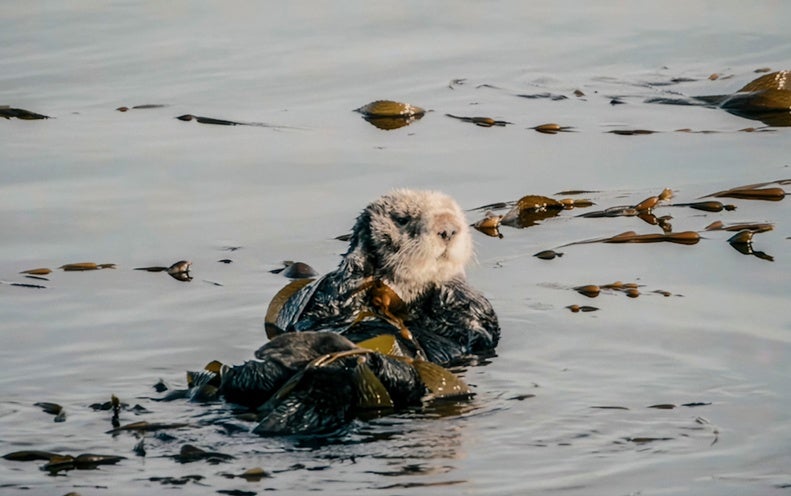
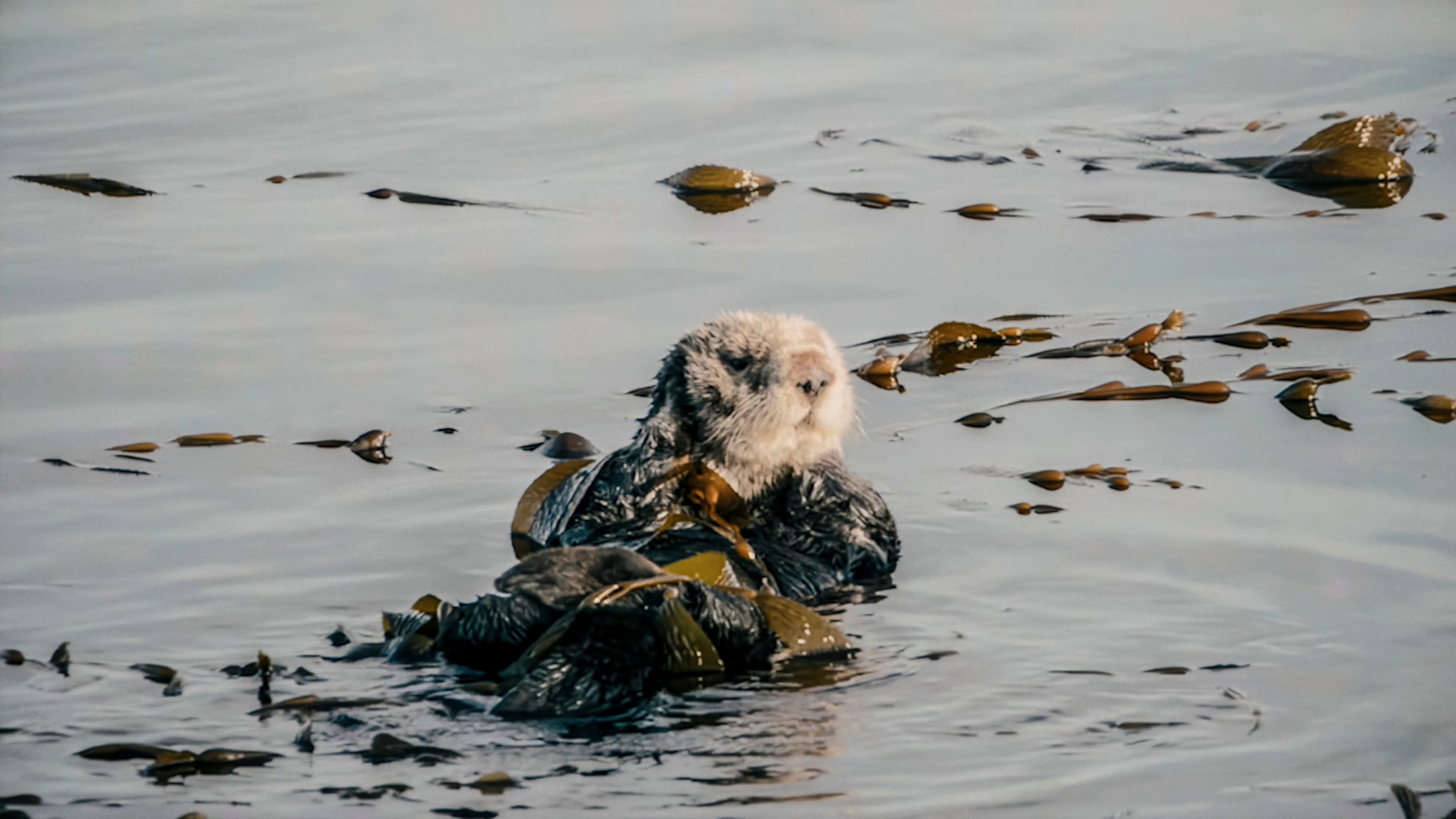
It’s 1988. The Monterey Bay Aquarium is four years old, and so am I. It is my favorite place on earth, and the sea otters are my favorite animal. During a presentation, an aquarium employee tells me that the southern sea otter has more than one million hairs per square inch (about 155,000 per square centimeter) of its body.

“Who counted all that hair?” I wonder.

While the southern sea otter captures the attention of younger visitors, the symbol of the aquarium is another Monterey Bay icon: a whorl of kelp.

Giant kelp is the common name for Macrocystis pyrifera, a species of alga that grows into lush underwater forests along the coast of the northeastern Pacific Ocean, from Baja California north to southeastern Alaska. Reaching from the ocean floor to the surface, the huge, leafy stalks of giant kelp provide food and habitats for thousands of species.

In 1988 a visitor on the aquarium’s observation deck would have seen a lush kelp forest canopy stretching thick from the breakwater to Point Pinos in Pacific Grove, Calif., and beyond.

These days it’s a patchwork at best.

It’s 2022, and I’m surveying the water beyond Monterey, Calif.’s Cannery Row from a small University of California, Santa Cruz, boat named Sebastes.

“Yeah, it’s an awesome boat,” says Joshua Smith affectionately as he dons a crusty old wetsuit with a bright pink patch right on the butt. When I ask him about the patch, he laughs. “This wetsuit got me through my Ph.D., so I couldn’t afford a new one,” Smith says. He goes on to explain that the man who made the custom 10-millimeter-thick wetsuit—vital for cold-water diving—has since retired. Smith is holding out as long as he can before replacing the suit. “It’s an antique!” he says.

Smith has an easy smile and large glasses. He is a postdoctoral researcher at the National Center for Ecological Analysis and Synthesis at the University of California, Santa Barbara, who has been studying kelp forest ecology for more than a decade. “Most of my research has been in Monterey Bay,” he says.

Smith seems optimistic for someone who’s about to tell me kelp populations have been collapsing up and down the coast of California since 2014, some by as much as 90 percent.

But how does one know something like “90 percent of kelp in northern California are gone” with any accuracy? Does a scientist in a rowboat go and count individual stalks of kelp like the hairs on an otter’s head? And how do we know what causes a population to collapse?

The answers to these questions involve scuba excursions (such as the one Smith is about to take), satellites, motivated undergrads, artificial intelligence and people wading in tide pools.

And it all began in 1989, when an oil tanker named the Exxon Valdez struck Bligh Reef off of Prince William Sound, Alaska, and spilled more than 11 million gallons (more than 41 million liters) of crude oil into the North Pacific. The cleanup efforts lasted years. The litigation lasted decades. Environmentalists and lawyers both wanted to know “What was the impact of the spill?” But biologists couldn’t accurately measure pollution impact on the Alaskan coast without knowing what the undersea environment looked like before the spill.

“They asked us to set up a comprehensive monitoring program,” says Peter Raimondi, a professor of ecology and evolutionary biology at U.C. Santa Cruz. “And one of the things that affords is that you have the opportunity to see change over time.”

Researchers such as Raimondi started visiting these subtidal environments and building a record of observations. In 2013, on one such excursion in Monterey Bay, he and his students noticed something surprising.

“One day we were down, and everything was normal, and [then] next we saw starfish starting to disintegrate basically in front of us,” Raimondi says. “There was Pycnopodia decaying, and [it] would just turn into literally the outline of a sea star and bacteria on the bottom.” 

The species was Pycnopodia helianthoides, commonly known as the sunflower sea star, a large predatory starfish found in the northeastern Pacific.

I should say it was formerly found in the northeastern Pacific. Starting in 2013 the sunflower sea star and several other species of starfish died off in mass numbers

“Pycnopodia [was] gone within two weeks, and then some of the other ones took three or four months to go away,” Raimondi says. “In the end, every species that I can think of ended up at least susceptible, and many of them got taken down to incredibly low numbers, compared to what they had been before. And this [was] true for Mexico up to Alaska.”

This phenomenon is called sea star wasting syndrome. Though the exact mechanism that causes the sea stars to dissolve into bacterial piles is still a subject of research, similar events have been observed as early as the 1970s, and they are typically associated with warming waters.

The mass die-off caused immediate concern in the media but also in the public. People were motivated to get involved. Raimondi’s team created a Web site for interested divers and tide-pool combers to contribute photographs and observations of sea stars in the wild.

“Almost all the information that we got, probably 90 percent of the information we got, was from people, citizens,” he says.

So what do these disappearing sea stars have to do with kelp? They help keep an underwater hoard at (the bottom of the) bay.

Back on the Sebastes, Smith and his colleagues are done preparing for their dive. I’m going to be following them with a small remotely operated vehicle, or ROV. Today they are looking for purple sea urchins. They don’t need to look hard.

Raimondi explains, “Normally in a kelp forest, these native sea urchin grazers are living down, tucked away in the cracks and crevices because they don’t want to encounter predators. So they’re hidden down in these crevices, and they’re eating drift kelp.”  

Drift kelp are the fronds that shed from the living underwater forest. If you’ve ever been to a California beach, you’ve seen them in piles or perhaps jumped out of the water when one brushed past your leg.

In 2014 a major marine heat wave bathed the California coast in warm water. Kelp forests require cold, nutrient-rich water to thrive, so this heat wave slowed them down. Normally, they would just bounce back when the water cools off again, but this time an army of purple urchins ascended to feed. “They didn’t have this big sea star predator lurking around. So they came storming out of those crevices, roaming on the reef surface, looking for any live kelp that they could find to chow down on,” Smith says. This change in behavior is why we’re at the reef: Smith and his fellow researcher Tim Tinker of U.C. Santa Cruz, are harvesting urchins to observe them in a lab.

Already depleted by the unprecedented warming event, the sea urchin explosion clear-cut kelp all the way to the reef surface, creating a so-called urchin barren. In many places, all that was left was a carpet of purple.

On our dive, I see the evidence myself: large swaths of purple sea urchins covering rocky outcroppings that used to be kelp forest. What’s especially striking is the absence of any other life in these areas. Without the shelter and food supply of the forest, nothing seems to survive. I’m reminded of tumbleweeds in a California ghost town, haunting spaces once vibrant with life.

When we finally enter one of the remaining patches of kelp, the contrast is incredible: Harbor seals frolic. Fish swim from floor to surface among emerald green fronds. The experience has been compared to a cathedral, and I can see why: light comes through the canopy above like a living stained glass window.

I’m so entranced by the effect that I lose track of my position and get the ROV’s cable tangled in the anchor chain of the Sebastes. As we disentangle the little yellow robot, I’m thinking about how easy it is to miss the kelp forest for the—kelp trees? Certainly things look bad down here. in this little section of Monterey Bay, but clearly some kelp are left. How can researchers know anything about the amount of kelp underwater from Mexico to Alaska? Who counts them?

“In 2015 it was very motivated undergrads” says ​Tom W. Bell, an assistant scientist at Woods Hole Oceanographic Institution.

Bell’s work involves remote sensing—a process that uses reflected and emitted radiation at a distance, such as from satellites or aircraft, to detect and monitor an area’s physical characteristics.

For Bell’s recent research on kelp, that meant oring over photographs of the California coast in a publicly available library of government satellite images. His group analyzed the images’ individual pixels to determine if they might contain the telltale light signature of a kelp canopy visible on the surface of the ocean. In this way, they compared the range and density of kelp every 16 days from the 1980s to a couple of years ago.“When we are looking at change through our own set of eyes, our scale is fairly small,” Bell says. “Remote sensing provides scope.”

That scope comes with a cost in human effort. Bell’s analysis looks at images captured as far back as the mid-1980s. Each pixel in them is 30 meters across (about the size of a baseball infield), and each image covers about 12,190 square miles (31,570 square kilometers), which means more than 35 million pixels per image. I can’t help but think of the millions of hairs on an otter’s head.

These days Bell’s team uses computers to automate the analysis, but a certain amount must still be completed by human eyes. “There’s a new push called Floating Forests on a platform called Zooniverse,” he tells me, where citizen scientists from around the globe can help analyze images.

That brings us to 2021: as a part of his research, Bell co-authored a paper that made some waves in the news. 

The headlines read, “The Death of an Ecosystem,” “The Collapse of Northern California Kelp Forests Will Be Hard to Reverse” and (my favorite in the New York Times) “‘Zombie’ Urchins Are Destroying Kelp Forests. Can’t We Just Eat Them?” 

These articles, and many others like them, drew from the paper, which was published in Communications Biology. The picture it painted was pretty bleak: 90 percent of kelp in northern California were lost starting in 2014. I wanted to know “Did this decline represent a permanent loss of kelp forests? Or could they recover?”   

Bell answers, “We haven’t seen the opportunity for kelp to rebound since 2014–2020 was an unprecedented warm period without much kelp recovery.” adds that there’s cause for concern: if this unprecedented warming keeps happening, decade after decade, we will lose species that depend on the kelp forests for food and shelter.

So why is it important to understand kelp? “Kelp forests can grow and decline very quickly,” Bell says. “We can see these massive cycles. If we [can] understand these patterns, if they transfer to other systems, we can use it as a model for how other ecosystems work.”

After our dive in Monterey Bay, Smith and Tinker published a paper confirming that the urchin barrens are caused by a change in behavior. If and when the urchins leave an area and return to their crevices, the kelp can regrow. The question remains: Will the sea stars ever return to save the kelp forests?

Our world is changing in ways bigger than any single person can observe or understand. It will take a massive diversity of inquiry and effort to understand these dynamic systems and humans’ role in them.

From kelp to sea stars to urchins, what we know about the underwater world is often a tapestry of observations made by scientists, students, citizens and computers. Science is a process; it involves thousands of people working together across time, recording observations.

It’s 2024. The Monterey Bay Aquarium is 40 years old, and so am I. My daughter loves the aquarium. The otters are her favorite. We stand on the observation deck and look out at the bay. What will we see?



Original Source Link

Previous Post

A cavalcade of big names have been tipped for a stuffed Venice Film Festival

Next Post

Facebook’s new ‘Feed’ tab chronologically displays posts from your friends and groups – TechCrunch

Admin

Admin

Next Post
Facebook’s new ‘Feed’ tab chronologically displays posts from your friends and groups – TechCrunch

Facebook’s new ‘Feed’ tab chronologically displays posts from your friends and groups – TechCrunch

Ep. 499 — David Chalian – The Axe Files with David Axelrod

Ep. 499 — David Chalian - The Axe Files with David Axelrod

1/6 Committee to Show Outtakes of Trump’s January 7th Speech Meant to Ensure Orderly Transition

1/6 Committee to Show Outtakes of Trump's January 7th Speech Meant to Ensure Orderly Transition

PopularPosts

Kenan Thompson, Kel Mitchell Reunite in Film – The Hollywood Reporter

Kenan Thompson, Kel Mitchell Reunite in Film – The Hollywood Reporter

August 22, 2023
‘Maybe We Should Do It Again’

‘Maybe We Should Do It Again’

July 9, 2023
NFL news: Bills seriously considering Philip Rivers for head coach position, insider says

NFL news: Bills seriously considering Philip Rivers for head coach position, insider says

January 25, 2026
40 Rock Radio Hits That Defined 2005

40 Rock Radio Hits That Defined 2005

June 17, 2025
Queer social app Lex acquired by the former Musical.ly CEO’s conglomerate

Queer social app Lex acquired by the former Musical.ly CEO’s conglomerate

September 30, 2024

Orange Crush: TAG Heuer Drops a Bright Revamp of the Original Metal F1 Watch

August 10, 2026

Categories

  • Business (7,745)
  • Events (12)
  • Film (7,675)
  • Lifestyle (5,427)
  • Literature (5,791)
  • Music (7,729)
  • Politics (7,445)
  • Science (7,117)
  • Technology (7,670)
  • Television (7,738)
  • Uncategorized (6)
  • US News (7,778)

RecentPosts

14 Thoughts I Had Watching the Verity Trailer

by
August 13, 2026

The trailer for the adaptation of the mega-bestselling 2018 psychological...

Hayley Williams’ Band Power Snatch Drop Second EP of 2026

by
August 13, 2026

© 2026 Condé Nast. All rights reserved. Pitchfork may earn...

Prime Infra CEO: Philippines needs ‘power of all sorts’ following national energy crisis

by
August 13, 2026

To engineer-turned-corporate executive Guillaume Lucci, there’s a straightforward solution to...

OOPS! Jen Psaki Makes a Horrible Admission About the Democrat Party’s Nominating Process on the Air (VIDEO) * The Gateway Pundit * by Mike LaChance

by
August 13, 2026

Screencap of YouTube video. Jen Psaki admitted something horrible about...

Tacoma sailboat found abandoned with 60 cats near Owens Beach, WA

by
August 13, 2026

NEWYou can now listen to Fox News articles! An abandoned...

HostGator Coupon Codes: 76% Off Hosting in August 2026

by
August 13, 2026

Whether you’re starting a small business or just want a...

Archives

Editor's Picks

Trump Falls Asleep In Front Of Reporters, But Wakes Up Long Enough To Endanger Kids

August 11, 2026
Planned Amazon data center could become the biggest climate polluter in the U.S.

Planned Amazon data center could become the biggest climate polluter in the U.S.

August 9, 2026

New JWST images reveal the Lion Nebula in all its glory

August 12, 2026

Browse By Category

  • Business (7,745)
  • Events (12)
  • Film (7,675)
  • Lifestyle (5,427)
  • Literature (5,791)
  • Music (7,729)
  • Politics (7,445)
  • Science (7,117)
  • Technology (7,670)
  • Television (7,738)
  • Uncategorized (6)
  • US News (7,778)

Useful Links

  • Anti-Spam Policy
  • Copyright Notice
  • DMCA Compliance
  • Earnings Disclaimer
  • Fair Use Disclaimer
  • FTC Compliance
  • Medical Disclaimer
  • Privacy Policy
  • Social Media Disclaimer
  • Terms and Conditions

Copyright © 2022 by Washington Weekly Times. All rights reserved. All articles, images, product names, logos, and brands are property of their respective owners. All company, product and service names used in this website are for identification purposes only. Use of these names, logos, and brands does not imply endorsement unless specified. By using this site, you agree to the Terms of Use and Privacy Policy.

No Result
View All Result
  • Home
  • US News
  • Politics
  • Business
  • Science
  • Technology
  • Lifestyle
  • Music
  • Television
  • Film
  • Literature
  • Contact
    • About

Copyright © 2022 by Washington Weekly Times. All rights reserved. All articles, images, product names, logos, and brands are property of their respective owners. All company, product and service names used in this website are for identification purposes only. Use of these names, logos, and brands does not imply endorsement unless specified. By using this site, you agree to the Terms of Use and Privacy Policy.

We use cookies on our website to give you the most relevant experience by remembering your preferences and repeat visits. By clicking “Accept All”, you consent to the use of ALL the cookies. However, you may visit "Cookie Settings" to provide a controlled consent.
Cookie SettingsAccept All
Manage consent

Privacy Overview

This website uses cookies to improve your experience while you navigate through the website. Out of these, the cookies that are categorized as necessary are stored on your browser as they are essential for the working of basic functionalities of the website. We also use third-party cookies that help us analyze and understand how you use this website. These cookies will be stored in your browser only with your consent. You also have the option to opt-out of these cookies. But opting out of some of these cookies may affect your browsing experience.
Necessary
Always Enabled
Necessary cookies are absolutely essential for the website to function properly. These cookies ensure basic functionalities and security features of the website, anonymously.
CookieDurationDescription
cookielawinfo-checkbox-analytics11 monthsThis cookie is set by GDPR Cookie Consent plugin. The cookie is used to store the user consent for the cookies in the category "Analytics".
cookielawinfo-checkbox-functional11 monthsThe cookie is set by GDPR cookie consent to record the user consent for the cookies in the category "Functional".
cookielawinfo-checkbox-necessary11 monthsThis cookie is set by GDPR Cookie Consent plugin. The cookies is used to store the user consent for the cookies in the category "Necessary".
cookielawinfo-checkbox-others11 monthsThis cookie is set by GDPR Cookie Consent plugin. The cookie is used to store the user consent for the cookies in the category "Other.
cookielawinfo-checkbox-performance11 monthsThis cookie is set by GDPR Cookie Consent plugin. The cookie is used to store the user consent for the cookies in the category "Performance".
viewed_cookie_policy11 monthsThe cookie is set by the GDPR Cookie Consent plugin and is used to store whether or not user has consented to the use of cookies. It does not store any personal data.
Functional
Functional cookies help to perform certain functionalities like sharing the content of the website on social media platforms, collect feedbacks, and other third-party features.
Performance
Performance cookies are used to understand and analyze the key performance indexes of the website which helps in delivering a better user experience for the visitors.
Analytics
Analytical cookies are used to understand how visitors interact with the website. These cookies help provide information on metrics the number of visitors, bounce rate, traffic source, etc.
Advertisement
Advertisement cookies are used to provide visitors with relevant ads and marketing campaigns. These cookies track visitors across websites and collect information to provide customized ads.
Others
Other uncategorized cookies are those that are being analyzed and have not been classified into a category as yet.
SAVE & ACCEPT