














.png "I Made Terrible Games With Google’s AI Playground")


















A Luxury Apartment in Manhattan Is No Safer Than a Kitchen in East Oakland
“Kitchen Barbarians” by Jason Kwon
The Lehman desk had been dead for six years, but still haunted the 47th floor of One Bryant Park. Jack Kwon could feel it some nights: the residual hum of 10,000 trades that had pulsed through this building, before the world ate itself in 2008. A new firm had leased the space, gutted it, and rebuilt it in glass and that shade of corporate gray that whispered we are serious people who do serious things, but the building’s bones remembered.
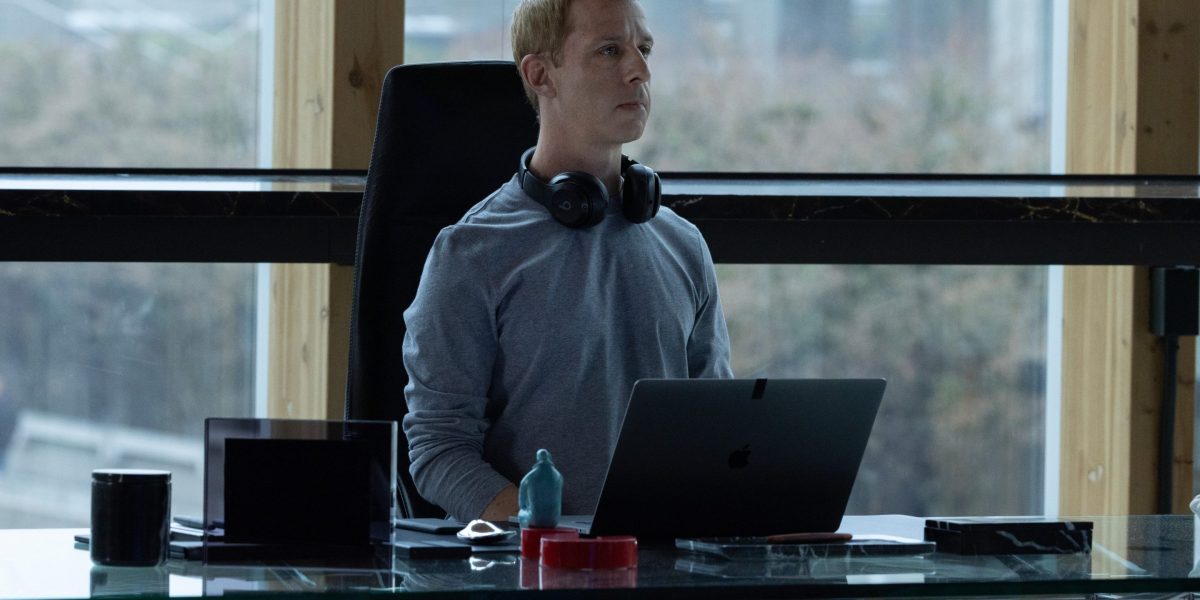
Jack stood at the head of the conference table, Calacatta marble, 40 feet, custom-built for the room. Twelve men in bespoke suits pretended they weren’t nervous. They were nervous. He could smell it under the cologne and the leather and the recycled air, the sharp, animal scent of people who had staked reputations and capital on a deal that was still unsigned.
The Meridian-Lux real estate acquisition. $740 million. Fourteen months of due diligence, back-channel negotiations, regulatory gymnastics, and the kind of financial engineering that made God-fearing people lose their religion. Jack had quarterbacked the whole thing from the buy side. Built the models, created the business plan, stress tested the assumptions until they either held or cracked, and the ones that cracked he rebuilt stronger. He was 30 years old and this was the biggest deal his firm had ever closed. In 17 minutes, the partners from both sides would sign documents that would rearrange a small corner of the American industrial landscape, and it was Jack’s architecture. Every number. Every projection. Every carefully-constructed argument for why Meridian’s office platform was worth 3.2 times revenue and not a penny less.
He adjusted his watch. A white-gold Patek Philippe, its cobalt dial luminous beneath the sapphire crystal. A gift to himself after his first seven-figure bonus. His father would have called it wasteful. Jack bought it for the opposite reason. He knew what a 60-grand quiet-flex watch communicated in a room full of men who measured each other by such things.
Charles Weston, senior partner, stood next to his young protégé. Silver-haired, 62, three market crashes and two divorces behind him, and he considered all acceptable costs of doing business. Eight years earlier, Weston had met Jack on the other side of a deal. While everyone else had seen a young associate, Weston had seen something rarer: patience, precision, and the instinct to kill when the moment came. The deal closed, and a month later, Weston poached him from the competing firm. He had recognized in Jack the same thing he looked for in undervalued investments, something the market had failed to price correctly.
“We ready?” Weston whispered to Jack, ignoring the other suits in the room.
“We’re ready,” Jack replied softly.
“Lux’s counsel is asking about the earn-out provision again. Section 4.7.”
“They can ask. The language is airtight. I wrote it.”
“They want flexibility on the 18-month trigger.”
“They can want. The trigger stays. Eighteen months, performance benchmarks met, or the earn-out doesn’t vest. That’s not a negotiating position. Trust me, they’ll fold.”
Weston studied him. The older partner had a way of looking at people that reminded Jack of a jeweler examining a stone: tilting it, testing it, deciding what it was worth.
“You’re sure?”
“I’m sure.”
“Seven hundred and forty million dollars sure?”
Jack met his eyes. “Feed me to the wolves if I’m wrong.”
The conference room was silent except for the whisper of climate control and the muted pulse of Manhattan 47 stories below: taxis, sirens, the grinding machinery of a city that never stopped.
The signing proceeded.
Jack tracked the signatures, which belonged to the principals, the men whose names would appear on the documents and whose photographs would appear in The Wall Street Journal. Jack’s name would not appear anywhere, by design. Private equity deal guys were architects, not buildings. You constructed the thing and someone else’s name went on the door.
Twelve signatures to execute the final agreement. The scratch of Mont Blanc pens on paper that smelled of fresh ink and old power. When the last signature was applied, the room exhaled around Jeff Rothschild, senior partner at Lux Capital, who rose first and buttoned his blazer. The rest of his team stood with him.
Handshakes, the firm grip of men sealing something irrevocable. Smiles rooted in real pleasure, relief, the primal satisfaction of people who had just made each other rich.
Weston caught Jack’s eye across the room and gave him the nod. You did this. We don’t need to say it out loud.
Jack nodded back, then turned to his laptop and closed the deal model. Twenty-seven tabs of Excel, every assumption and projection he’d lived inside over the past four months. Beneath them was another browser tab he’d opened at 3:00 AM, before the final morning of negotiations, when the conference room was empty and the cleaning crew was running vacuums in the hall.
A recipe. Canard à la Rouennaise, Rouen-style pressed duck, one of the most technically demanding dishes in classical French cuisine. The preparation required bleeding the duck by strangulation, rather than slitting its throat, to keep the blood in the meat, then roasting it rare, carving tableside, and pressing the carcass in a silver duck press to extract a sauce of blood and bone marrow and Cognac. In the opinion of every chef who had ever attempted it, this was either the pinnacle of culinary art or an act of beautiful insanity.
Jack had been studying the recipe for weeks. Not casually, with YouTube videos and weekend attempts, but the way he studied deal structures. Obsessively. Completely. He’d found a 1927 Larousse Gastronomique entry that described the pressing technique in details that bordered on pornographic. He’d cross-referenced three different preparations—Escoffier’s, Ducasse’s modern interpretation, and a handwritten recipe from a retired chef at Tour d’Argent that he’d found in an obscure culinary archive online—and synthesized them into his own version: one investment thesis built from competing sources. He’d adjusted ratios mentally a dozen times before touching an ingredient, tasting each step in his imagination, feeling the sauce come together: the iron minerality of the blood, the warmth of the Cognac, the silk of the butter. He’d sourced a duck press from an antiques dealer in Connecticut: silver-plated, French, circa 1890, $800, the most irrational purchase he’d made since the Hermès tie, and the only one that made him feel anything.
He closed the browser tab before anyone could see it. The recipe vanished, replaced by the Bloomberg screensaver, the scrolling green-and-white data of a financial world that never slept.
They went to Per Se, Thomas Keller’s three-Michelin-star restaurant, the dinner theater of New York’s finest. Chef Keller was one of the most iconic chefs in American history.
The group was 12 deep: deal team, partners, two Sullivan & Cromwell lawyers who charged $1,900 an hour to drink Barolo at someone else’s expense.
“To Kwon,” Weston said, raising his glass. “The racehorse that doesn’t stop.”
The table raised glasses, crystal catching candlelight. Jack raised his. Smiled. Drank.
The bourbon was Pappy Van Winkle, 23-year. Three hundred and fifty dollars a pour. It tasted like oak and vanilla and caramel and the accumulated patience of nearly a quarter century in a barrel, and it was, objectively, one of the finest things a human being could put in their mouth. Jack experienced almost none of its joy. He registered the gentle tickle and the warmth and the familiar loosening behind his sternum, but the flavor, the thing that made a $350 pour worth $350, passed through him.
He’d been losing taste for months. Not literally. His palate was sharper than it had ever been. But there was a difference between the tongue’s care and the soul’s hunger.
For six years, he’d been teaching himself to cook, visiting every Michelin-starred restaurant he could reach, reconstructing dishes alone in his kitchen late at night. The thing that would have sounded insane if he’d tried to explain it was that he could taste things before he cooked them. He composed flavors the way a conductor composed a symphony, hearing the finished work before the notes were played. As he half-listened to a story Weston was telling about a hostile takeover that had ended in a fistfight, the back room of his brain was building the duck. Layering the pressed sauce: Cognac first, then the marrow butter, the Madeira reducing, the blood darkening the whole thing from amber to mahogany. He could feel the balance shift when he mentally added a quarter ounce more butter, sense the exact second the sauce would go from rich to cloying if he let the reduction go too long. It was the same faculty that made him lethal with deal structures—the ability to hold a hundred variables simultaneously and see how they connected—except, instead of cash flows, the variables were salt and acid and heat and time.
He composed flavors the way a conductor composed a symphony, hearing the finished work before the notes were played.
But his taste for this life, for old-world wines and Mont Blanc pens and gilded ceilings, had been dying for over a year. The dopamine hit of building something complex and watching it hold used to be his drug, but even drugs stop working if you take them for too long.
His phone buzzed in his jacket pocket.
He ignored it. Poured another drink. Listened to various partners tell vapid stories.
The phone buzzed again.
Jack pulled it out under the table. Two texts from an unfamiliar number with a 510 area code. East Bay. Oakland.
The first text: mom is dead.
The second followed minutes later: BTW, this is your father.
The letters were sharp and white against the dark background, each word a small detonation. His thumb hovered over the keyboard and his face held steady, as something tidal dragged him under, suffocating him. He had learned this at eight years old, standing in a kitchen in Oakland, listening to the front door open and laughter die. You learned to keep your face empty when the world could most hurt you. It was the first lesson Min Kwon taught his son, though he never meant to.
Jack put the phone back in his pocket.
“Another round?” Weston asked.
“Another round,” Jack said.
Jack’s condo was on the 52nd floor of a glass tower on West 57th Street. Floor-to-ceiling windows turned Manhattan into a painting. Central Park, midtown stretching south, the whole impossible sprawl of a city built on ambition, dynamite, and landfill.
Jack was New York rich—asset-rich but cash-poor. In Manhattan, money had a way of disappearing faster than it could be made, no matter how many zeroes were on your paycheck. Everything he owned was worth a fortune and he could access none of that until he sold it. The furniture was impersonal, a trendy decorator’s vision of a successful young man’s apartment. White linen sectional with throw pillows standing at perfect attention. Abstract art that cost more than his first car and communicated nothing except the owner’s ability to spend money on objects that communicated nothing.
He stood at the windows at 1:47 AM and looked down at the city. Jack was never a sleeper, even as a child.
The phone was on the kitchen counter behind him. He hadn’t glanced at it since the restaurant. Hadn’t responded. The words were burned into his retinas like afterimages from staring at the sun—mom is dead.
His father. He hadn’t spoken to his father in 12 years. Hadn’t spoken to his mother either. Had, in fact, constructed this entire life on the principle that his father did not exist, that the house in East Oakland did not exist, that the boy who’d walked home bloody from school and who’d placed himself between his father’s fists and his mother’s body were characters in someone else’s story.
More than a decade of silence. It had started as pain and calcified into something harder. It held its shape because the forces on either side were pressing equally hard.
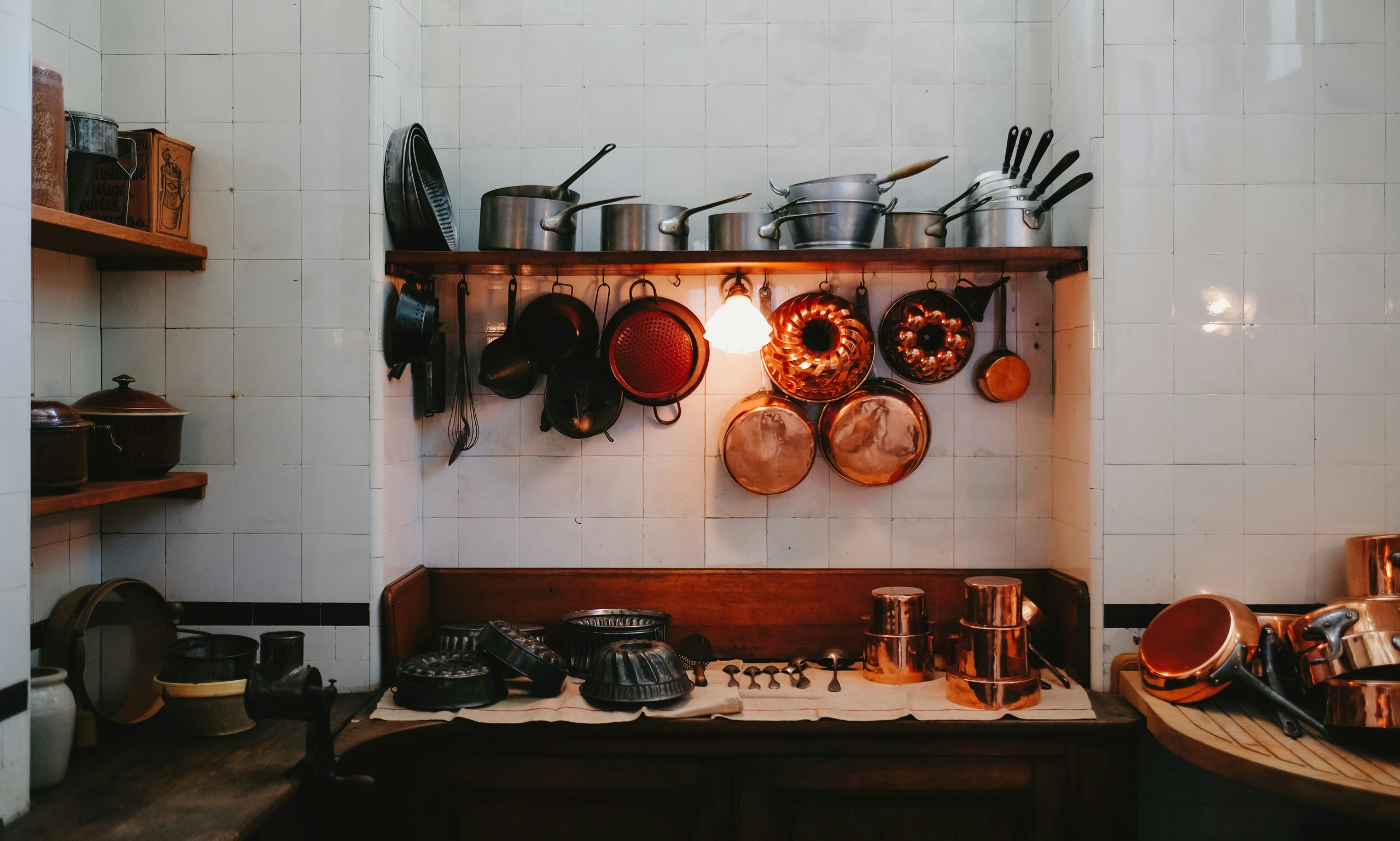
He went to the kitchen, the one room that was authentically his. The decorator had proposed a minimalist aesthetic, the kind of kitchen that belonged in a magazine to show the owner had sophisticated taste and no intention of cooking. Jack had fired the decorator. Hired a kitchen designer from a restaurant supply company in the Bronx. Installed a six-burner Viking range, a convection oven, a French-top that could hold a steady 275º for braising. He’d hung copper pots from a ceiling rack, not for aesthetics—though they were beautiful, the copper darkened with use, patinated from years of actual heat. He’d built a knife drawer with magnetic strips, each slot holding a blade he’d selected personally: a Masamoto gyuto, a Misono carbon steel petty, a Nenox yanagiba for fish, each one sharpened to a standard that would make a sushi chef weep.
The duck press sat on the counter. Silver-plated, French, 1890. A screw mechanism mounted on an ornate base, the pressing plate fitted inside a cylindrical body. Jack had cleaned it when it arrived, polishing the silver until it caught the under-cabinet lights like a small, dangerous moon.
He opened the refrigerator. The duck was there. A whole Moulard, sourced from a farm in the Hudson Valley, delivered yesterday. He’d been planning to cook it this weekend.
He took the duck out. Set it on the cutting board. Ran his fingers along the breast, feeling the fat beneath the skin, the cool density of the meat.
Mom is dead. He wondered why he couldn’t feel anything.
He had spent over a decade training himself to be numb, to forget his past. Like Jay Gatsby, Jack wanted to be a mystery man without a history.
He picked up his knife. The Masamoto. Two hundred and forty millimeters of Shirogami white steel, ground so thin it barely displaced air. The handle was magnolia wood, octagonal, fitted to his grip by use and repetition and the deep, specific chemistry between a man’s hand and his tools.
He began.
The alternative was lying in a bed that cost $10,000 and staring at a ceiling and thinking about a lady who had died without his permission, presence, phone call, or anything from him at all.
He broke down the duck with surgical care. Separated the legs at the joint, finding the socket by feel, the knife following the natural seam of cartilage and sinew the way his pen followed the logic of a term sheet. He removed the breasts, leaving the skin intact. He’d broken down 40 ducks alone in this kitchen, while the rest of Manhattan was sleeping. Setting the carcass aside for the press, his hands moved with the fluidity of muscle memory. The knife found the joints without searching. The blade followed the bone like it had been there before. Every technique was borrowed from the masters whose books lined his kitchen shelves, every motion refined until it belonged to him. Not Escoffier’s hands, not Keller’s hands, but Jack Kwon’s hands, doing the work that the cookbooks had taught and his own palate had perfected.
He seared the breasts skin-side down in a cast-iron skillet. The immediate, violent hiss of cold protein hitting hot fat filled the kitchen, and when he leaned over the stove and listened to the skin crisp and smelled the rendering fat, sweet and rich and ancient, he was not on West 57th Street anymore.
Cooking transported him back to a small kitchen in Oakland. Cluttered, the linoleum peeling at the edges, the overhead light a buzzing fluorescent tube that had been replaced in 1987 and never again. His mother was beside him. She was young, or she was the age she’d always been to him, which was young, because mothers are always young in the memories that matter.
He blinked. His Manhattan flat reassembled around him. The cast iron. The Viking range. The copper pots. The city through the windows, indifferent, infinite.
He roasted the breasts to medium-rare. One hundred and thirty-one degrees, checked with a Thermapen, because Jack Kwon did not guess temperatures any more than he guessed interest rates. He let them rest on a wire rack while he loaded the carcass into the duck press.
The press was a ceremony. You placed the carcass in the cylinder. You turned the screw. The mechanism compressed the bones and cartilage and connective tissue, and from the spout at the base came a liquid that was part juice, part marrow, part the essence of the bird itself—a concentrated extraction of everything the duck had been. Jack added Cognac and a splash of Madeira to the liquid, heated it gently, whisked in butter, and the sauce came together: dark, glossy, trembling with richness, a sauce that tasted like the earth and the animal and the fire and the centuries of French cooks who had bent over this same preparation and known they were doing something that mattered.
He sliced the breasts. Fanned them on a plate. Simple white porcelain, because the food didn’t need decoration. He spooned the pressed sauce around the meat. A scatter of fleur de sel. A single frond of chervil, because even in grief, even at 4:00 AM in a condo that felt like a mausoleum, he couldn’t bring himself to compose an ugly plate. It was the only honest thing about him.
He sat at the counter, the preparation in front of him, and carefully sliced a piece of the breast.
The meat was perfect: rose-pink at the center, the skin shatteringly crisp, the fat rendered into a translucent whisper between skin and flesh. He put it in his mouth.
The duck was extraordinary. He knew it the way he knew the Lux deal was sound. The pressed sauce, dark and vital, tasted of Cognac and marrow and the quiet pride of a man who had mastered something most chefs never attempt. The canard à la Rouennaise was the best thing he had ever made.
He took another bite. Chewed slowly. Set his fork down.
The plate went unfinished, pushed away, and he sat in the blue light of the under-cabinet LEDs.
Mom is dead.
He picked up his phone. A third text from an hour ago, from the 510 number: Are you coming to the funeral?
Jack looked at the screen. The duck press gleamed beside him. The canard à la Rouennaise cooled, the sauce thickening as the butter solidified, the meat going from medium-rare to room temperature to the beginning of waste.
He set the phone down. Picked up the fork. Took another bite.
The duck was still extraordinary. It would hold even cold. That was its nature: it survived the inevitable entropy of a thing moving from perfection toward decay.
The childhood memory came without warning. Not summoned. Just there, unbidden, inevitable.
He was eight. The kitchen in East Oakland. The ghetto. No Viking range or copper pots. The real kitchen.
The counters were Formica, cream-colored, chipped at the edges. The stove was a Kenmore from the 70s, two of the four burners unreliable, the oven door held shut with a dishtowel knotted through the handle because the latch had broken three years ago and Min Kwon did not fix things. Min Kwon endured broken things, because his father had taught him endurance, as his father’s father had taught him, a lineage of endurance that masqueraded as strength but was the inability to imagine anything different.
The kitchen was warm. Jack remembered the stove’s heat. The pot that was always simmering. His mother moving through that small space with a grace that the rest of the house did not permit her. In the kitchen, she was someone else. The tightness left her shoulders and the wariness left her eyes and she hummed. Korean songs, folk songs, songs her grandmother had taught her in a village outside Daegu, about rivers and mountains and longing, always longing, because Korean songs were built on longing.
“Jack-ah,” she said. His name with a thick Korean accent. The way only she said it. “Come. Watch.”
She was making kimchi jjigae. The stew of stews. The dish that every Korean mother makes differently and every Korean child believes it’s the only correct version. Her version started with aged kimchi. Three months, minimum, the cabbage fermented past crunch into something softer, funkier, the lactic acid having done its slow, invisible work. She sliced it with a knife that was too big for her hands, the blade moving through the fermented cabbage with the sound of a whisper.
“You see?” She held up a piece. Translucent, rust-red, the color of something that had been alive and had become more interesting than alive. “When it looks like this, it’s ready. Not before. You can’t rush kimchi. Kimchi teaches patience.”
“Can I help?”
The jjigae needs attention. Like a person. If you ignore it, it burns.
She smiled. Her smile was the antidote to everything—to the peeling linoleum and the broken oven latch and the sound of the TV in the next room, which Min was watching, the blue flicker casting glows that Jack had learned to read the way sailors read clouds. If the shadows were steady, it meant Min was calm. If they moved, if the channel changed rapidly, it meant Min was restless, and restless was one stop before angry, and angry was one stop before the sound that Jack would spend a lifetime trying to un-hear. It was the sound of his mother’s body against the kitchen wall, the singular percussion of a small meerkat being attacked by a Bengal tiger in a small house where there was nowhere to hide.
But now the shadows were still. His mother was smiling.
“You stir,” she said. She handed him a wooden spoon, worn smooth, the handle darkened with years of grip and oil. “Slowly. In circles. Never stop. The jjigae needs attention. Like a person. If you ignore it, it burns.”
Jack stirred. The stew was beginning to bubble, the aged kimchi softening into the pork broth, the tofu trembling at the edges, the gochugaru releasing its heat in slow waves. The smell rose from the pot. Fermented cabbage and chili and garlic and pork and a layer underneath all of it that didn’t have a name, the smell of his mother’s kitchen, of her hands, of the only place in the world where he was not a target or a problem or a mouth to feed, but simply a boy stirring a pot.
“Good,” his mother said. She leaned over the pot. Tasted from the spoon. Not his spoon, her spoon, the mother’s spoon, because in Korean kitchens there was a hierarchy of spoons as rigid as any corporate structure. “More doenjang. A little. You taste.”
She offered the spoon. Jack tasted. The stew was good but not finished. The structure was there. The heat was there. Missing: depth, the bass note, the richness that made kimchi stew more than just fermented cabbage in hot water. The doenjang—fermented soybean paste, the dark, pungent, deeply savory heart of Korean cooking—would give it that depth.
“How much?” he asked.
“Until it tastes like home,” she said, then laughed. Her laugh was quiet, rare, the best sound in the world. For Jack, home had never been a place. It had always been his mother.
He added the doenjang. A spoonful. Stirred. Tasted. Too mild. Another half spoonful. Stirred. Tasted. There. The stew shifted, deepened.
“There,” his mother said, watching his face. She didn’t need to taste it. She could tell from his expression. “You feel it? When it’s right, you feel it. Not here.” She touched her tongue. “Here.” She touched her chest.
Jack’s smile bloomed slowly, his eyes widening as if he had discovered something miraculous. “Umma, this is the best thing you’ve made!” Jack exclaimed. “If you ever opened a restaurant, I would be your first customer.”
One of Jack’s favorite memories transformed almost as quickly as it had appeared. In its place came something else entirely. Dread engulfed him as a child. He had felt it for the first time, at eight years old, balanced on a step stool in the kitchen in East Oakland, a father in the next room who might at any moment become a different person. He felt it. The thing that would ruin his life and save it was already moving in him then. It had no name and didn’t need one.
Just like that, his mother’s face changed. It was instantaneous, a transformation so practiced, so reflexive, that it barely registered as movement. Her smile didn’t fall; it was simply replaced—gone—and the other thing was in its place. Her shoulders drew up. Her hands went still. The humming stopped.
He knew that look. It moved through his body. The fear in her eyes pierced his small frame. His eight-year-old brain flooded with the familiar shock, the helpless concern rising again.
Min Kwon filled the doorway.
He was not a large person. People didn’t grasp that about Min Kwon, how the damage he did didn’t match his size. He was 5’9, thin and wiry, not an ounce of excess on his frame. His face was angular, hard-planed, carved rather than raised by the Korean countryside. His eyes were the eyes Jack would one day see in the mirror. Dark, intelligent, capable of a warmth that almost never surfaced, like a fish in deep water.
He filled the doorway and he smelled like the dry cleaner, the chemical sweetness of perchloroethylene, the solvent that was slowly poisoning him and every other dry cleaner in America, the invisible tax of the immigrant entrepreneur. And beneath the chemical smell: soju. The sweet, sharp ghost of Korea’s national drink, a smell that had become, in Jack’s eight-year-old mind, the smell of danger.
“Dinner,” his mother said. A statement and a question and a prayer.
With glassy eyes, Min stared at his son, balanced on a step stool, holding a wooden spoon.
He ignored the question and walked to the next room. The TV channel changed.
The laughter was dead. The humming was gone. The kitchen, which had been warm with the steam of the stew and the sound of his mother’s voice and the simple miracle of a child learning to cook, was now a room with a broken oven and a woman navigating a minefield she’d memorized.
Jack kept stirring. He stirred the way his mother had told him to—slowly, in circles—and the stew bubbled and the steam rose and his mother’s hands shook as she set out the bowls, and somewhere in the next room the TV flickered, and Jack Kwon absorbed a truth he would carry for the rest of his life. The kitchen was the only safe place. And even the kitchen wasn’t safe.
He came back from the memory slowly, in stages, like a diver surfacing—the pressure changing, the light returning. The New York condo reassembled around him. The duck had gone colder. The sauce had congealed. The city outside the windows was still glittering and indifferent, the same city it had been when he sat down. Above the streetlights and lit storefronts, the dark sky had begun to lighten.
His phone was on the counter. The texts were on the screen, which had dimmed but not darkened, the letters still visible in the blue light:
mom is dead
By the way, this is your father.
Are you coming to the funeral?
Let me think about it.
He’d written a text that he never sent. Let me think about it. Five words that were either the cruelest or the most honest thing he’d ever typed. Because he was thinking about it. In the only way Jack Kwon knew how to think about anything. Silently. Privately. In a kitchen, at 4:00 AM, with a cold plate.
He picked up the plate and held it over the trash bin.
The duck, the perfectly executed, classically prepared canard à la Rouennaise that had taken two hours and required a silver duck press from 1890 and a whole Moulard from the Hudson Valley and a level of technique that 99% of professional chefs would never achieve, hung over the garbage.
He didn’t throw it away. He covered it with plastic wrap and put it in the refrigerator.
He wasn’t sure why. Maybe because waste offended him. Maybe because his mother had taught him that food was not disposable, that every grain of rice had been grown by someone and every animal had died for someone’s dinner and the least you could do was eat it. Or maybe because keeping the duck was easier than admitting what throwing it away would mean—that nothing he cooked would ever matter as much as the kimchi stew in that kitchen in Oakland, and nothing he experienced would ever be as real as a boy on a step stool stirring a pot while his mother hummed.
He washed the dishes by hand. Every piece. Cast iron, duck press, saucepan, cutting board, Masamoto. He washed them with care, performing a ritual, which is what it was—the final act in the process of cooking, the restoration of order. A workspace made clean.
Then he turned off the lights. Went to the bedroom. Lay on the cool, crisp mattress and stared at the ceiling. He lit a joint to calm his nerves from the 20-hour day. It was already Saturday.
He did not call his father.
He did not cry.
He listened to Manhattan breathe and felt the hollow place inside him, the place that had been empty since he was 18 years old and had packed a bag and walked out of the house in East Oakland. The place that was shaped like a kitchen and smelled like kimchi stew.
He closed his eyes.
Outside, the city continued. The taxis ran their routes. The delivery trucks made their rounds. The buildings had begun to gather the first gray light from the eastern sky.