Just over a year ago, Adrian Matejka became the editor of Poetry Magazine. It’s a daunting job for anyone to helm such a storied American literary institutions, and Matejka, the first person of color to head the magazine, took the job understanding what it has been and what it might be.
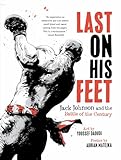
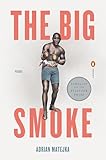 This year, in addition to celebrating his first anniversary at Poetry, Matejka released a graphic novel, Last On His Feet: Jack Johnson and the Battle of the Century, a collaboration with the artist Youssef Daoudi. Matejka has been researching and writing about Jack Johnson since 2005, first for his acclaimed poetry collection The Big Smoke and now for Last on His Feet,which is the result of a deep collaborative process between writer and artist
Matejka, the author of five books of poems, has by his own admission been de-centering the writing of poetry. I spoke with him about what that meant and how his work has changed, his deep love for comics, and the recent changes at the magazine.
Alex Dueben: We were talking earlier about how often in art and institutions, it’s hard to build something lasting. Last year you took over an institution—one of the American literary and cultural institutions.
Adrian Matejka: It’s wild. 110 years. The oldest monthly poetry magazine in the world. There’s so much wonderful history here. And also a very complicated legacy in terms of gatekeeping and the tradition of king- and queen-making. I want to untangle that. I want to de-center our editorial team and make Poetry a space that is more inclusive than it was in the past. And to really center poets and their work. That’s what the magazine is about. The recent editors and guest editors have been good about trying to open up the pages, so what I’m working toward is not some brand new thing.
One of the ways we’ve been celebrating and interrogating what 110 years looks like is through archival folios. We’ve been dedicating pages to people who should have been in the magazine before but weren’t given the space. The 110th anniversary issue had one dedicated to Carolyn Marie Rogers, a Chicago poet and co-founder of Third World Press. She had been a finalist for the National Book Award, but she was never in the magazine. February’s issue featured William J. Harris, who was part of the Black Arts Movement. He’s a beautiful poet, has been publishing for 40 years, and had never been in Poetry. The responses to these folios has been gratifying. So I’ve been trying to as best as I can grapple with the magazine’s history—to honor it, but also hold it accountable. And hold us as editors accountable to make some lasting change to the editorial philosophy.
AD: The folios have been a great addition. The William J. Harris one, especially, was amazing. I think most people reading know about the Black Arts Movement, but you never read everyone and it’s always a joy to discover someone hiding in plain sight and read their work.
AM: William is unbelievably generous on and off the page. He was so happy to be in the magazine and we were so happy to be able to highlight his capacious body of work. And his poems are just fun. That’s been something that I’ve tried to keep in the forefront. As a fellow writer you know writing is not always fun. [laughs] It’s hard work. When I sit down to write I’m not sitting down because it’s going to be a party, I’m sitting down because I have to get after it. Which doesn’t mean that the end result can’t be fun. William’s work was a reminder that this doesn’t all have to be bleak. Poetry can be kind to the reader even as it’s informing and delighting.
AD: I’m curious about your relationship to the magazine before you took over. As you came up in MFA culture, in Cave Canem, how did you think about and see Poetry Magazine?
AM: I’ll give you a great example of this as a way into the conversation. Poetry Magazine had a holiday party in November. At this holiday party, every table had center pieces made out of old issues of the magazine. The table I was sitting at had issues from 1998, 2000, and 2004. I love books and poetry so of course I picked them up and started flipping through. There was not a single writer of color in any of those issues. Not a single one. It was all the same white male writers. And I know that because some of the poets in the pages were my teachers. I wasn’t just guessing. I’ve studied their work. There was not a Black person to be found in those three issues. Not a Latinx person. Maybe there was some diversity of sexuality that I was not aware of, but it was almost exclusively cisgender white men of a particular age. That’s what I thought Poetry was coming up. A place where there was no room for me. A magazine that wasn’t interested in my stories because the editors showed by their curatorial choices there was no room for my stories. Every once in a while Rita Dove would be in it. Later, Yusef Komunyakaa and Kevin Young.
That’s one of the things that’s changed while I’ve been part of the poetry hustle. When I started writing poems, Rita, Yusef and Gwendolyn Brooks were the only Black poets who had won a Pulitzer Prize. But you look at the last 10 years, things have changed! Tracy K. Smith and Tyehimba Jess and Greg Pardlo and Natasha Trethewey and Jericho Brown. I love the fact that in a decade more Black poets won than had previously in 100 years. Things have changed radically and in the best way. The institutions have been opened up by Cave Canem and Lambda and other groups. Now there are people I came up with who are in leadership positions and they’re able to curate from different perspectives. Which is not something I ever imagined would happen. I see it now, the real, tangible changes in access and equity. I’ve seen it over the past 10 years. But before that, I never would have imagined. I certainly never would have imagined that I would be here at Poetry Magazine.
AD: So what changed that? What made you want this job and just see it as a possibility?
AM: When they approached me about this job, I said no. I’m from Indiana and I lived down the street from my mom and family in Indianapolis. But my wife said, How are you going to say no? You say you want more challenges in your life. Can you imagine a bigger challenge than this? Nothing like being called out to make me rethink things. But I originally said no because wasn’t sure that I was the right person for the editorship. I wasn’t sure that going back to editing full time would be good for my writing. Then I met the other editors and Michelle T. Boone, the Poetry Foundation president, who’s visionary. I could see her vision and what we might be able to do for the readers and writers of poetry. That’s when I started to think seriously about how I could change the aesthetics of the magazine. The thing is, the magazine was already changing when I showed up. It’s important for me to acknowledge the work that the editors were already doing when I walked in the door. They’re all writers too, and we’ve been able to build an editorial ethos as both readers and practitioners. I’m not writing a lot of poetry right now. But part of that is because I was finishing up Last On His Feet and that took up a lot of energy. The graphic novel is why I haven’t been writing a lot of poetry. I was working on the page proofs most of last year. It was a lot.
AD: It’s a lot. And you’ve had a busy few years doing a lot of different things.
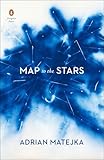
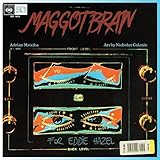 AM: I guess it was 2017 when Map to the Stars came out. When I finished that book, I remember feeling like I needed to do something else. I felt as if I’d done everything poetically that I knew how to do at that point. The book allowed me to I embrace the fact that I am from Indiana and have to deal with that complicated racial legacy whether I want to or not. Once I worked through that, I felt finished with poetry. Not in the sense of “I’m leaving poetry,” but I just got to a place where I didn’t know how to do anything more than I’d already done on the page. I started writing song lyrics with the musician and artist Nicholas Galanin. I ended up collaborating with him and another visual artist Kevin Neireiter on Standing on the Verge & Maggot Brain, a mixed media text about Funkadelic. I worked on a sculpture with Dario Robleto, a fantastic artist in Houston. Around that same time, Youssef and I started working in earnest on the graphic novel. Basically, I started doing things that weren’t poem, that I knew I was going to fail at so I could try to learn something. [laughs]
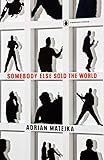 I de-centered poetry in a way in hopes of coming back to it with a new perspective. Then Covid happened and I didn’t have anything else to do but write. [laughs] So between March and October 2020 I wrote almost all the poems in Somebody Else Sold the World and all the poems in the Funkadelic book. I wrote almost every day. I wasn’t teaching. I was on research leave. Just like everyone else I was stuck at home with no place to go. That’s when I realized that there were things that I still needed to explore in poems. I also wanted to try to figure out how to synthesize what was happening around us at that time. COVID was—and is—exhausting. It is terrifying. Do you remember those early days when there were no planes and no one was driving? It was so quiet. We would just sit on our front porch and it felt like being in a movie about an apocalypse. The only way I could survive that was jumping into poems. I couldn’t find the same catharsis in essays or the graphic novel. Poems were the only salvation.
AD: Maybe that’s a good segue into Last On His Feet. In 2013 you published The Big Smoke, which is an incredible book of poetry. I don’t know how many years you spent writing and researching it.
AM: Eight years. I started in 2005. I spent two years researching Jack Johnson before I wrote any poems. It was a really long project. This is going to sound like a flex but I came up with the idea for Last On His Feet at the National Book Awards. [laughs]
AD: You just happened to be at the National Book Awards because you happened to be nominated that year.
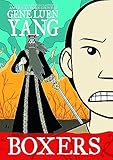 AM: It sounds like I’m bragging, but it’s not. I’d already not won when I had the idea! [laughs] Because I’d lost and I didn’t have to give a speech, I was having a martini with my editor Paul Slovak. The Big Smoke looked so different because of all of the conversations I had with him. I showed him a draft of the book in 2011 and he said, we’ll take it as it is, but I have some suggestions for you. He gave me fantastic suggestions and encouraged me to build out the book in a different, more narrative way. Anyway, at the awards they have all of the finalists’ faces and book covers rotating on video screens. While I was sitting with Paul, Gene Yang’s Boxers and Saints came up and I said, The next book needs to be a graphic novel. I wanted it to be a different book in every way from The Big Smoke. I didn’t want to write another book of poems. I’d already answered the poetry questions I had and didn’t want to do that again. But a graphic novel? I read them all the time. I’ve collected comic books since I was a kid. How hard could it be? [laughs] And here we are almost 10 years later and the book is finally in the world. I spent 18 years total working on these two books about Jack Johnson.
AD: Reading Last On His Feet, I know what you mean about not wanting to write him in monologue, but Jack Johnson’s voice defines and shapes the book. Was his voice easy to find and to let these projects be shaped by his voice? Or was it a struggle to get right?
AM: Youssef and I worked on this narrative together, and he believes that making art is just a different kind of storytelling. So we kept going back and forth trying to encapsulate the story in a way that wouldn’t be repeating what I’d done in The Big Smoke. How could we create something that would add to the myth of this guy and the people around him? It was tough to find the equilibrium, but it wasn’t hard to slip back into Jack Johnson’s voice. The hard part was trying to figure out what to do with it, if that makes sense.
AD: It does. Reading this book, you can tell that you didn’t write a script and email it to him, this was the result of a very close collaborative process.
AM: It was an absolute collaboration. To the point where we were working on it all the way to the last pass. The editorial team knew what we were doing, but I imagine it was a little frustrating for them. The book was supposed to come out fall 2022, but we just wanted to get it right—especially the artwork—which is why it got pushed to the spring.
AD: You guys were fiddling with the pages to the very very end?
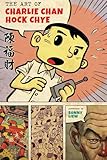 AM: The very end. If I can say this about something I was involved in creating: I’ve never read a book like this. Sonny Liew’s The Art of Charlie Chan Hock Chye was an inspiration for both of us. It shows the different ways media can be used and how varying styles within a book can create texture. It’s not the same thing. Liew has an imagination full of shifting perspectives and visual intentionality. Youssef used archival media to create the texture of our book. He was always thinking about the different kinds of artifacts we might be able to include. We had hundreds of documents and photographs and videos we were going through to create the world of the book.
AD: There’s a lot of elements to the book and you can see Youssef playing with media and texture and form in different ways and how that informs the voice and storytelling.
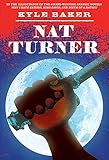 AM: Sonny’s book was a big influence. Also Kyle Baker’s book Nat Turner. I love that graphic novel. There’s like 40 pages of art before we get any text. I kept telling Youssef, We need to do this. And he said, Nope! [laughs] Jack Johnson’s voice needs to be the driver. We can’t go that long without hearing him because he’s the center of this story. But both of those books were really vital. Especially because I’d never written a graphic novel before.
AD: Now that you’ve said it, I can see the Nat Turner influence. Last On His Feet opens with all these other characters and voices defining the world and building this space for Jack Johnson to inhabit before he shows up and the match starts.
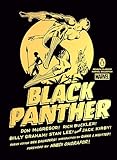
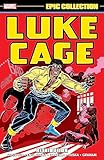 AM: As a writer as an editor I’m a big fan of people wearing that influences proudly. I love it when I can tells someone is a fan of Yusef Komunyakaa or Gwendolyn Brooks in their poems. I try to do that same thing. I namedrop Emily Dickinson all of the time to let people know what a fan of hers I am. [Laughs] As for the graphic novel, I hope people can tell that I have the entire original run of Black Panther comics. I have the entire original run of Luke Cage Hero for Hire. They were the only black heroes around with their own comics when I was a kid. So when I wrote the script, there were a lot of exclamation points in the dialogue and all this performative stuff because I was thinking about dialogue the way I discovered it in those comics. When I showed Youssef the original script, he said, “I can’t draw this. This is what I need you to do.” And what he needed me to do was write an actual movie script. So I read the script for Barry Jenkins’s Moonlight, which reads like an elegant novel, and I used that as my model. I spent almost a year rewriting it before Youssef began making the art.
AD: I wanted to just circle back to the magazine because one of the things you’ve been committed to—and as we were saying before, there’s a difference between Poetry in recent years versus 30 years ago—is publishing new poets.
AM: I want poets to feel like they’re welcome in the magazine. Sometimes that requires saying things like “Everyone is welcome here,” in the tradition of Poetry founder Harriet Monroe. But it also requires a more determined approach and willful way of space-making. As an example, we’ve set it up so that we’re only publishing poets once a year. We’re committed to not seeing the same names in our pages, which frees up space for new voices. I love Terrence Hayes. I would love it if we had Terrence in every issue. But that takes space from poets who may not have had that same opportunity or that same visibility as Terrance has. Our goal is to have 50% of every issue be new poets. Over my first six issues, the percentage has been more than that—around 65%. So the first step was limiting the number of times people can be in the magazine. The next part was being mindful about trying to find poets who haven’t had the opportunity. To meet poets where they live and work rather than waiting for them to find us. It’s not hard. It just takes being deliberate. Because there are so many poets. And so many good poets! We get 12,000 poems submitted to us a month. It’s an astonishing number and speaks to the breadth of the poetry community in 2023.
AD: Poetry Magazine is a big deal, and you pay, so why not submit!
AM: It’s free to submit and we pay a lot! For the world of poetry anyway. That’s something we’re committed to maintaining or trying to increase. I don’t like the term editor-in-chief because it feels uncomfortable, but that’s what I am. I manage the print and digital content too. One of the first things we did when we merged the digital editorial team with the print editorial team was make sure that everybody gets paid the same, so whether you appear online or in the pages of the magazine, the checks are the same. We’re interested in putting money in the pockets of writers, both as an editorial team and as a foundation. We recently started a grants program for organizations who support poetry. We’re give out $9 million in grants over the next three years. As we all know, there’s not a lot of financial support for poets. Nobody’s getting rich off of poetry unless they win the MacArthur. [laughs]
AD: I know a couple people who have been published for the first time since you took over, but I will say that the magazine feels a little different. The standards have not changed and maybe as a non-poet I’m not the one to assert this, but it feels more representative of the conversations within poetry than the magazine used to.
AM: Thank you for saying that. I hope so. We‘ve tried to. My editorial philosophy is that we want to be rigorous, but also available and inviting. That’s my charge to all of the editors, whether the digital editorial team, the archives editor, everyone. We need to be more available and accessible. Some of that has manifested in direct ways like publishing people who haven’t been published in the magazine before. But it also manifests in the kinds of work that we publish now. It’s a little less didactic I think.
I want to be respectful and not compare the aesthetics of the magazine now versus before I got here, but I value legibility and readability. I don’t want it to be niche. We’ve gotten essays or pitches from people that were too insular. I couldn’t imagine anyone being excited about the pieces because they weren’t available unless you have a PhD. In the first issue I curated, we had an essay by Ross Gay called “On Time” from his new book. It’s beautifully written and rigorous, but it’s also available for people. Ross wants the reader to stay with him sentence to sentence. Editorially, we’ve tried to approach both poems and prose as invitations. We don’t want it to be exclusionary or showcasing poems you have to spend your whole life studying to understand. There is a place for that work and there is room in the magazine for it, but it’s not where we start.
The March issue just came out and it is already sold out. It is front-to-back a statement on how we’ve evolved as an editorial team. It’s a gorgeous issue. I feel comfortable saying that because none of my work is in the pages. [laughs] We curate everything as a team. I’ve de-centered myself and the lead editor position. I’ve never said at a meeting, “We’re going to take this poem.” Every poem we’ve had in the magazine has been a group decision by all the editors. That’s how I want to do the work, as a community, not as a monolith. That’s how I was taught to edit by my mentors Jon Tribble and Allison Joseph. That everything is done better together. We are a group of writers trying to support other writers.