WashingtonWeeklyTimes.com
  • Home
  • US News

    Texas Longhorns seek revenge against top-ranked Ohio State after last season’s seven-point loss

    Underdog Promo Code FOXNEWS: Deposit match up to $1,000

    Are We Going Chicken Mad? By Howard Bloom

    Are We Going Chicken Mad? By Howard Bloom

    Former Mets pitcher Al Leiter tells his harrowing 9/11 story of a quiet trip turned tragedy

    Family of critically missing DC mom reveals troubling discoveries

  • Politics

    Biden Judge Halts Planned ICE Holding Facility in California Garlic Country Over Absurd “Septic Tank” Concerns

    Democrats Expect Trump To Cheat In The Midterm

    No Kings Returns to Colorado With Voter Turnout Push

    Oprah Audience ERUPTS in Applause as Doctor Demands “Pink Shirts and Energy” for Black Mothers Who Kill Their Children — “I Want Us to Have the Same Passion”

  • Business

    Neuroscientist Jared Horvath: Silicon Valley pushed computers in classrooms, plummeting test scores

    Binge shop while you binge watch with Prime Video’s feature for browsing content-inspired products

    A four-time Fortune 500 CFO makes a huge career bet—joining Polymarket

    $9.999 and maxed out: California diesel prices overwhelm pump displays as supply crunch worsens

  • Science

    A farmer lost a hammer in his field and went looking for it with a metal detector — instead he found nearly 15,000 Roman coins, gold jewelry and silver tableware buried beneath the soil, one of the richest Roman treasure hoards ever discovered in Britain

    AI researcher Jacob Coxon quit, fearing extinction. Security experts see a familiar fight

    August 2026 Was the Hottest Month Ever Recorded: Copernicus Data

    For more than a century, visitors to Stonehenge rented hammers from the blacksmith in the next village and knocked off pieces of the stones as souvenirs — the chipping got so bad that in 1900 the owner fenced the site, and since 1978 no ordinary tourist has wandered freely among the stones

  • Technology

    Mecka AI nears $500M valuation in Sequoia-led deal amid rush for robot training data

    The 9 Best TV Shows to Stream This Month (September 2026)

    Scammers target hundreds of thousands of crypto owners after Trezor confirms data breach of email provider

    OpenAI Wants to Know if an AI Industry Slowdown Would Even Be Legal

  • Lifestyle

    EVERYDAY CARRY: Domestic | FashionBeans

    What Is Measured After a Building Has Been Dried Out

    Perimenopause Sleep Problems: Causes and What Helps

    13 Best Square Watches for Men 2026

  • Music

    The Roots Talk Hip-Hop Hall of Fame, ‘Endgame’ & Roots Picnic

    The Proclaimers say trans lobby are “truth-phobic” and defend Graham Linehan

    Revisiting Limp Bizkit’s Strange Connection to 9/11

    JAY-Z Joined by Justin Timberlake at Paris 30th Anniversary Show

  • Television

    Anna Pigeon Season 1 Episode 6 Delivers Bombshell Revelations, Family Secrets & Twists!

    ‘The Cheetah Girls: Next Gen’ Wraps Filming

    Before Lanterns, Kelly Macdonald Starred In An Acclaimed Steve Buscemi HBO Series

    Stuart Fails to Save the Universe Season 1 Episode 8 Expertly Doubles Back

  • Film

    Toronto Purgatory Director Navigates Parents Dark Divorce Comedy

    8 Darkest Justice League Moments in DC History

    Girlhood in Post-9/11 Cinema: Margaret at 15

    Jodie Comer and Harry Melling in Body Horror Musical

  • Literature

    September 7 – 11, 2026

    In These Novels by African Women, Coming of Age Is Collective

    Book Riot’s Deals of the Day for September 11, 2026

    Literary Hub » 121 years ago, Russian printers went on strike over commas.

    My Father Called Me His Problem Child

    Book Riot’s Deals of the Day for September 9, 2026

    Literary Hub » Lit Hub Daily: September 9, 2026

    A Debut Novel About Knowing Everything and Nothing

    Book Riot’s Deals of the Day for September 8, 2026

  • Contact
    • About
  • Home
  • US News

    Texas Longhorns seek revenge against top-ranked Ohio State after last season’s seven-point loss

    Underdog Promo Code FOXNEWS: Deposit match up to $1,000

    Are We Going Chicken Mad? By Howard Bloom

    Are We Going Chicken Mad? By Howard Bloom

    Former Mets pitcher Al Leiter tells his harrowing 9/11 story of a quiet trip turned tragedy

    Family of critically missing DC mom reveals troubling discoveries

  • Politics

    Biden Judge Halts Planned ICE Holding Facility in California Garlic Country Over Absurd “Septic Tank” Concerns

    Democrats Expect Trump To Cheat In The Midterm

    No Kings Returns to Colorado With Voter Turnout Push

    Oprah Audience ERUPTS in Applause as Doctor Demands “Pink Shirts and Energy” for Black Mothers Who Kill Their Children — “I Want Us to Have the Same Passion”

  • Business

    Neuroscientist Jared Horvath: Silicon Valley pushed computers in classrooms, plummeting test scores

    Binge shop while you binge watch with Prime Video’s feature for browsing content-inspired products

    A four-time Fortune 500 CFO makes a huge career bet—joining Polymarket

    $9.999 and maxed out: California diesel prices overwhelm pump displays as supply crunch worsens

  • Science

    A farmer lost a hammer in his field and went looking for it with a metal detector — instead he found nearly 15,000 Roman coins, gold jewelry and silver tableware buried beneath the soil, one of the richest Roman treasure hoards ever discovered in Britain

    AI researcher Jacob Coxon quit, fearing extinction. Security experts see a familiar fight

    August 2026 Was the Hottest Month Ever Recorded: Copernicus Data

    For more than a century, visitors to Stonehenge rented hammers from the blacksmith in the next village and knocked off pieces of the stones as souvenirs — the chipping got so bad that in 1900 the owner fenced the site, and since 1978 no ordinary tourist has wandered freely among the stones

  • Technology

    Mecka AI nears $500M valuation in Sequoia-led deal amid rush for robot training data

    The 9 Best TV Shows to Stream This Month (September 2026)

    Scammers target hundreds of thousands of crypto owners after Trezor confirms data breach of email provider

    OpenAI Wants to Know if an AI Industry Slowdown Would Even Be Legal

  • Lifestyle

    EVERYDAY CARRY: Domestic | FashionBeans

    What Is Measured After a Building Has Been Dried Out

    Perimenopause Sleep Problems: Causes and What Helps

    13 Best Square Watches for Men 2026

  • Music

    The Roots Talk Hip-Hop Hall of Fame, ‘Endgame’ & Roots Picnic

    The Proclaimers say trans lobby are “truth-phobic” and defend Graham Linehan

    Revisiting Limp Bizkit’s Strange Connection to 9/11

    JAY-Z Joined by Justin Timberlake at Paris 30th Anniversary Show

  • Television

    Anna Pigeon Season 1 Episode 6 Delivers Bombshell Revelations, Family Secrets & Twists!

    ‘The Cheetah Girls: Next Gen’ Wraps Filming

    Before Lanterns, Kelly Macdonald Starred In An Acclaimed Steve Buscemi HBO Series

    Stuart Fails to Save the Universe Season 1 Episode 8 Expertly Doubles Back

  • Film

    Toronto Purgatory Director Navigates Parents Dark Divorce Comedy

    8 Darkest Justice League Moments in DC History

    Girlhood in Post-9/11 Cinema: Margaret at 15

    Jodie Comer and Harry Melling in Body Horror Musical

  • Literature

    September 7 – 11, 2026

    In These Novels by African Women, Coming of Age Is Collective

    Book Riot’s Deals of the Day for September 11, 2026

    Literary Hub » 121 years ago, Russian printers went on strike over commas.

    My Father Called Me His Problem Child

    Book Riot’s Deals of the Day for September 9, 2026

    Literary Hub » Lit Hub Daily: September 9, 2026

    A Debut Novel About Knowing Everything and Nothing

    Book Riot’s Deals of the Day for September 8, 2026

  • Contact
    • About
No Result
View All Result
WashingtonWeeklyTimes.com
No Result
View All Result
Home Literature

Esmeralda Santiago Felt Invisible in Mainland United States, So She Wrote Herself Into Existence

by
September 2, 2024
in Literature
Esmeralda Santiago Felt Invisible in Mainland United States, So She Wrote Herself Into Existence


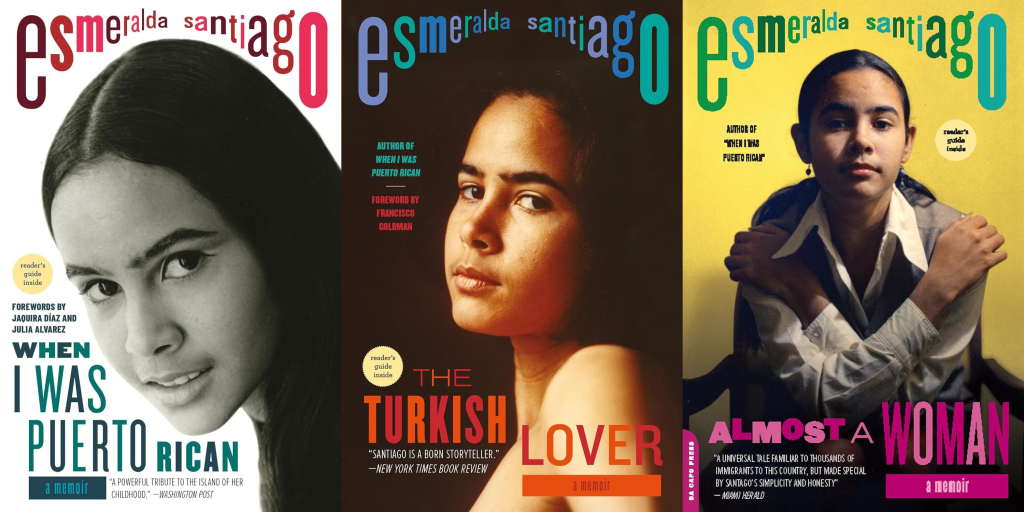
Esmeralda Santiago’s book When I Was Puerto Rican debuted 30 years ago. This memoir introduced us to Negi (Santiago), a pre-teen with a captivating voice who chronicles her life in rural Puerto Rico in the 1950s. In Santiago’s own words, the memoir captures a world that no longer exists in Puerto Rico.
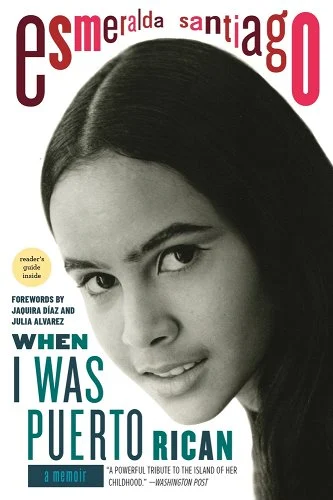
We watch Negi grow from four years old to becoming a teenager, from living in rural Puerto Rico to living in Brooklyn, and from helping rear her younger siblings to having to take on the responsibility of learning English. We watch the dissolution of her parents’ relationship, constant dislocation, and how the United States transgresses into their lives by innocuous means like a nutrition guide and by a nasty concoction of powder milk and peanut butter. But we also see Negi’s curiosity, her incessant questions to her poet father, her defiance, her love of storytelling, and how Negi and her family survive. They keep going, and this memoir ends with a fairy tale ending, which is what any reader would want for Negi after reading this endearing and enduring memoir.  

I interviewed Santiago via Zoom. Our conversation took frequent diversions which gave us insight into the world of working-class people in New York in the ‘60s; her ordinary, but extraordinary, mother; and how as we grow, we learn to forgive our parents and all the uprootings we may have suffered. 


Ivelisse Rodriguez: All three of your memoirs, When I Was Puerto Rican, Almost a Woman, and The Turkish Lover, are being reissued, along with audio versions in English and Spanish narrated by you. What does it mean to you as a writer to have written books that have had such longevity to the extent that 30th anniversary editions are being published? 

Esmeralda Santiago: I was thrilled to hear that the book has been in print for 30 years and being taught in schools across the United States and in some foreign countries. We often think our lives are so singular. But in many ways, there are so many points of connection between us and other people who are completely unlike us. This is what I love about memoir—you can write about your experience in rural Puerto Rico in the 1950s, and somebody in Moscow can get something out of it. It’s fantastic.

IR: What was the impetus to write your memoirs? 

ES: I started writing from a place where I felt invisible in the United States. I had a child, and I was worried that my child would not know anything about his mother. We lived in suburban Massachusetts, and I was pretty sure I was the only Puerto Rican in this town. So I began to write because I didn’t want to forget the experience of how I grew up, and I wanted to pass it on to my children, so that they knew about it, even though they were going to have a very, very different life from the one that I had. 

I started writing from a place where I felt invisible in the United States.

Also, when I was in Brooklyn, I found myself learning about the United States by reading the literature that I came across. But then at a certain point, I realized, wait a second, I’m not in this culture. None of the books are about me. And that’s when my need to write about people awakened, so that I would not be the only one going through this experience. 

And when I was about 16 or 17 years old, the famous, wonderful poet, writer, essayist Langston Hughes came to my high school. He came to do a presentation about his book and to talk about being a writer. And I just remember he was just so very handsome, he was dressed beautifully, and he was this Black man with such dignity, and a beautiful voice, and he talked about his writing and about how he hadn’t seen himself in literature either. 

IR: Oh my God, that’s amazing that you got to meet Langston Hughes! 

ES: It was just sheer luck that on that day, I didn’t have to take my mother to welfare, or I wasn’t sick, or something. I happened to be there when this man was there with an important message for all of us. This message of writing yourself into the literature really, really stuck with me to the point where when I met people who were at his presentation, they don’t remember that event until I remind them. It was like he came from this place in Harlem to talk to me, who could barely understand English. But I literally went from school to the library and took a stack of all his books that I could find and read them all. He showed me the way to write about myself in literature, and I am forever grateful to him and to that event and to whoever organized it. 

IR: Though there were hardships in your childhood, one of the things that always stood out to me about your book is how endearing it is, and how lovingly you recreate your childhood in Puerto Rico. How do you, as a writer, hold the hardships of the past alongside the love for the past? 

ES: I decided to not write it from the perspective of an adult because an adult makes all kinds of assumptions about the past; we visit the past in a way that’s more comfortable for us. So, I decided I was just going to try and inhabit the child at that stage and detail what that child would have experienced and would have noticed at that age. And so, by doing that, it made it possible for me to really tell a story rather than trying to make sense of the past or turn the writing into therapy. By limiting the point of view to the child, I thought the reader would have a much more immediate connection to the experience.

IR: I was wondering about the courage to represent your mother as you saw her when you were young. She was doling out cocotazos and frequently fighting with your father. At first, she seems angry, but as we keep reading, we see what she was going through. 

ES: In When I Was Puerto Rican, I just didn’t want to add the knowledge that I now have as an adult to this child’s head. As a child, all you know is what you’re seeing. For example, as a child, I didn’t have any idea about infidelity. My mother just said your dad is with other women. As a child, you can’t even envision what that means, but obviously it’s a bad thing. If you read my other memoirs, the character of Esmeralda continues to mature intellectually, so she’s better able to make those kinds of connections later on. It requires experience in life for you to understand those kinds of things.

Plus, I didn’t want to subject my parents to psychologizing. It was a literary decision that made it possible for me to avoid playing Dr. Freud. 

IR: How did your mother react to the book? 

ES: At some of my events, my mother would answer that question by saying, “You know, everybody talks about this book as if this is about Esmeralda, but this book is about me.” So, she understood that she was the hero in this book. Even though I’m the main protagonist, she really is the person who makes things happen for the character. And then my dad said he loved being the villain in this book. 

This story was about people like us: jíbaros.

The rest of my family has been like her. They’ve been very, very supportive, encouraging and generous about not challenging any of the things that I’ve said because they all understand this is the way I saw things, even though they might have had a different experience. I’m the eldest of 11, so we all say that we each had a different mother. The more experience she had as a mother, the more she learned and became a different person. 

My mother also thought it was great that this story was about people like us: jíbaros. I think my parents really understood that I picked up on something that had not been done in literature. There really wasn’t a lot of writing about the jíbaros from the perspective of the jíbaros. The books that existed about that community were written by people from places like Barcelona. They did not live that life, but I lived it. So, I wrote When I Was Puerto Rican from the perspective of a jíbara. And my mother really appreciated that. She said my book really sounds like the way it was. My parents were both smart people, and they liked reading, and they liked seeing themselves in literature. 

IR: That’s an excellent point about the jíbaro experience and who was writing about it. I am glad you pointed out that this was a gap you were filling in literature by Puerto Ricans. Also, it is interesting to see how you come to understand yourself as a jíbara. Early in the text, when you’re living in Macún, you wonder what a jíbaro is, and you are told these people who live in the countryside with all there mores are nothing to aspire to. But when you moved to Santurce, you were called a jíbara, so you had to see yourself in a new way. 

This is the beginning of a series of rejections and becomings that you had to endure for the rest of your life. How did this help you transition to living in Brooklyn? 

ES: Well, I think when you live in chaos, you get used to living in chaos. You find ways to deal with the chaos around, for example, the chaos of being in one-room apartments with eight, nine, ten, 12, 15 people. I can’t control that. That was all we could afford. I really understood that. I was very empathetic to my mother’s struggles. In fact, at a very early age, even though I was angry at her for bringing me to New York, and not going back to Puerto Rico immediately when Raymond was fine about a year later, I really understood that a lot of what was happening around us was outside of our control, my mother’s too. I remember she would work in a sweatshop for a week, and on Friday when she got to work, it would be closed because they didn’t want to pay the workers. This happened to her all the time, to the point that she then only worked in the sweatshops where they would pay at the end of the day. She learned how to fight for herself. She had to make these transitions as well. 

We were all going through these transitions: learning language, getting used to the climate, and more. All those kinds of challenges were happening to all of us at the same time. But of course, my mother had the biggest responsibility because she had all these children. 

IR: One of those challenges was learning English, and this led to a fight with your mother when you came home late from the library. She accused you of thinking you could do whatever you wanted because you spoke English. In what ways did learning how to speak English give you freedom to develop a self? 

ES: My mother really just drilled it into me that I had to learn English when we came to the United States because, first of all, she needed a translator. I was the eldest, and I was the most willing because I was always reading. I had to learn it fast because she couldn’t do it. And no one in our immediate family was remotely bilingual. So, I knew that this was my task. I had to learn it quickly, and I had to learn it well enough to be able to help my mom because that was the only way that I could as a little kid. I didn’t resent it. In fact, I thought it was great. I love learning. I came to the United States in 8th grade. By the time I graduated, I entered grade nine, and I was reading at a 10th grade level in English. But I couldn’t pronounce things. I couldn’t speak it. I mean, I could have, but I would have mispronounced everything. So I was very silent and quiet the first two or three years that I was in school, but I aced all my exams. I realized then that that gave me power. When translating for my mom, for example, I realized I couldn’t mess up the translation of application forms or mess up translating for a kid who’s convulsing. 

The culture was harder for me. I was a teenager who wanted to be like every other girl. And, according to my mother, I was not like any other teenager because I was Puerto Rican. 

IR: In Nicholsa Mohr’s Nilda, another classic book written by a Puerto Rican woman about girlhood, Nilda’s mother is giving Nilda consejos on her death bed. Among the advice the mom gives is that she warns Nilda that men will leave her with a bunch of children, and then she will have to go on welfare. This is, at times, what happens to your mother. Nilda’s mom continues with her advice and tells Nilda to always keep something for herself that is all hers and that if she cannot see beyond being a mother, then life was not worth it. What do you think are the things that your mother kept for herself that brought her joy? 

ES: First, I think my mother really kept a lot of stuff from us. A lot. And I don’t know just how much. Maybe I know 4.5% of what she went through from the interviews that I did with her. And even that information was absolutely horrific to me. I know that I will never know what all her sacrifices were. 

16 Puerto Rican Women and Non-Binary Writers Telling New Stories


Dr. Ivelisse Rodriguez, author of Love War Stories, on the writers who are changing the topography of Puerto Rican literature

Aug 15 – Ivelisse Rodriguez

Reading Lists


But in terms of what brought her joy, she was a child of the depression, so she just loved feeding the people she loved and making sure that they were nourished. She loved dancing. She loved music. She wasn’t a swimmer, but she liked going to the beach just to feel the salt air. She loved dressing nicely. When you’re raised very poor, you have longings for certain things. When my siblings and I all had jobs and could make money, we gave her gifts that would bring her joy. 

She was somebody who was full of joy in many ways in the midst of chaos, tragedy, hard work, and humiliations. She always found a way to smile and to find joy in something. And I think she passed that on to all of her children. 

IR: That’s really heartwarming—that you were able to participate in giving her that joy.

In When I was Puerto Rican, before you get to Brooklyn, you write that you did not forgive the uprooting. At this stage in your life, have you forgiven the uprooting of coming to the continental U.S.? 

ES: Yeah, I guess I have. I’m not a person for regrets. As a child, I was very angry for years because I didn’t understand what had happened. Nobody explains it to you when parents break up. And then many, many years later, as I matured, as I learned, and as I knew my parents better, I understood that they really did the best that they could with what they had. Once I understood that adults do things for reasons that children cannot understand until they’re adults, then it was really easy for me to forgive. 

In Puerto Rico, the doctors were ready to amputate my brother Raymond’s foot. My grandmother and all of my mother’s aunts and uncles were in New York, so they encouraged her to get a second opinion in the United States. And, the doctors in the U.S. said they could save his foot. She came back to Puerto Rico, and she asked my dad if he would go with us. My father and his family were very independence-minded, anti-imperialism, and anti-colonialism. So he refused. My mother was forced to make a choice between her children or her man. Even though they were always fighting, they really did love each other. She had to make that decision, and she chose her children. She knew that she would have to move to New York, at least for a year or two, in order to make sure that Raymond was completely well. I think once she was here, she realized, it’s equally hard here, but I have more help here. Seven years later, she did go back to Puerto Rico with all the kids that were left. And it was just me and Elsa who were in the United States. We were both studying, so we didn’t want to go back at the time. 

Both my parents have passed, and I think they should be and must be very proud of the children that they had because we are two or three steps economically from where they were at their best. That was something that they wanted for us. They wanted us not to struggle quite so much. We still struggle, but the struggles are different. We live in nicer neighborhoods than we did when we were growing up. So, all their sacrifices, dreams, and aspirations did come about. I’m very proud of the work that my parents did with us.


Take a break from the news

We publish your favorite authors—even the ones you haven’t read yet. Get new fiction, essays, and poetry delivered to your inbox.

YOUR INBOX IS LIT

Enjoy strange, diverting work from The Commuter on Mondays, absorbing fiction from Recommended Reading on Wednesdays, and a roundup of our best work of the week on Fridays. Personalize your subscription preferences here.


Original Source Link

Previous Post

Lzzy Hale covers ‘Crawling’ amid Linkin Park rumours

Next Post

How A Man Should Dress In His 30s: Fashion and Styles 2024

Next Post
How A Man Should Dress In His 30s: Fashion and Styles 2024

How A Man Should Dress In His 30s: Fashion and Styles 2024

Industry Season 3 Episode 4 Review: White Mischief

Industry Season 3 Episode 4 Review: White Mischief

Brady Corbet’s Epic ‘The Brutalist’ Debuts at Venice Film Festival

Brady Corbet's Epic 'The Brutalist' Debuts at Venice Film Festival

PopularPosts

How To Wear Brown: Men’s Style And Outfits Guide 2025

How To Wear Brown: Men’s Style And Outfits Guide 2025

February 16, 2025
The Cordillera Of Dreams review — Affecting lithograph of Chile

The Cordillera Of Dreams review — Affecting lithograph of Chile

October 5, 2022
Briana Adams Eliminated in Episode 5 and Channing Wilson Wins the Night

Briana Adams Eliminated in Episode 5 and Channing Wilson Wins the Night

November 17, 2025
Cause of Covid’s mysterious bloody symptom found

Cause of Covid’s mysterious bloody symptom found

May 21, 2022
6 Best Color Combos To Look Elegant This Spring – Ferbena.com

6 Best Color Combos To Look Elegant This Spring – Ferbena.com

April 14, 2023
15,000-Strong Immigrant Caravan Makes Its Way North As Biden Prepares For Summit Of The Americas

15,000-Strong Immigrant Caravan Makes Its Way North As Biden Prepares For Summit Of The Americas

June 9, 2022

Categories

  • Business (7,829)
  • Events (14)
  • Film (7,757)
  • Lifestyle (5,493)
  • Literature (5,875)
  • Music (7,812)
  • Politics (7,530)
  • Science (7,200)
  • Technology (7,755)
  • Television (7,823)
  • Uncategorized (6)
  • US News (7,865)

RecentPosts

Mecka AI nears $500M valuation in Sequoia-led deal amid rush for robot training data

by Admin
September 12, 2026

Mecka AI, a startup that collects and analyzes human motion...

A farmer lost a hammer in his field and went looking for it with a metal detector — instead he found nearly 15,000 Roman coins, gold jewelry and silver tableware buried beneath the soil, one of the richest Roman treasure hoards ever discovered in Britain

by Admin
September 12, 2026

Peter Whatling lost a hammer in a Suffolk field in...

Toronto Purgatory Director Navigates Parents Dark Divorce Comedy

by Admin
September 12, 2026

What’s a girl to do when your parents split up...

Anna Pigeon Season 1 Episode 6 Delivers Bombshell Revelations, Family Secrets & Twists!

by Admin
September 12, 2026

Anna Pigeon just kicked things into gear with that revelation!...

EVERYDAY CARRY: Domestic | FashionBeans

by Admin
September 12, 2026

FashionBeans Editors Meet the collaborative force behind this article. Jamie...

September 7 – 11, 2026

by Admin
September 12, 2026

THE BEST OF THE LITERARY INTERNET TODAY: In 1846, Elizabeth...

Archives

Editor's Picks

A Debut Novel About Knowing Everything and Nothing

September 9, 2026

Rome declares Colosseum ‘red zone’ to address crime and public safety

September 7, 2026

The Proclaimers say trans lobby are “truth-phobic” and defend Graham Linehan

September 12, 2026

Browse By Category

  • Business (7,829)
  • Events (14)
  • Film (7,757)
  • Lifestyle (5,493)
  • Literature (5,875)
  • Music (7,812)
  • Politics (7,530)
  • Science (7,200)
  • Technology (7,755)
  • Television (7,823)
  • Uncategorized (6)
  • US News (7,865)

Useful Links

  • Anti-Spam Policy
  • Copyright Notice
  • DMCA Compliance
  • Earnings Disclaimer
  • Fair Use Disclaimer
  • FTC Compliance
  • Medical Disclaimer
  • Privacy Policy
  • Social Media Disclaimer
  • Terms and Conditions

Copyright © 2022 by Washington Weekly Times. All rights reserved. All articles, images, product names, logos, and brands are property of their respective owners. All company, product and service names used in this website are for identification purposes only. Use of these names, logos, and brands does not imply endorsement unless specified. By using this site, you agree to the Terms of Use and Privacy Policy.

No Result
View All Result
  • Home
  • US News
  • Politics
  • Business
  • Science
  • Technology
  • Lifestyle
  • Music
  • Television
  • Film
  • Literature
  • Contact
    • About

Copyright © 2022 by Washington Weekly Times. All rights reserved. All articles, images, product names, logos, and brands are property of their respective owners. All company, product and service names used in this website are for identification purposes only. Use of these names, logos, and brands does not imply endorsement unless specified. By using this site, you agree to the Terms of Use and Privacy Policy.

We use cookies on our website to give you the most relevant experience by remembering your preferences and repeat visits. By clicking “Accept All”, you consent to the use of ALL the cookies. However, you may visit "Cookie Settings" to provide a controlled consent.
Cookie SettingsAccept All
Manage consent

Privacy Overview

This website uses cookies to improve your experience while you navigate through the website. Out of these, the cookies that are categorized as necessary are stored on your browser as they are essential for the working of basic functionalities of the website. We also use third-party cookies that help us analyze and understand how you use this website. These cookies will be stored in your browser only with your consent. You also have the option to opt-out of these cookies. But opting out of some of these cookies may affect your browsing experience.
Necessary
Always Enabled
Necessary cookies are absolutely essential for the website to function properly. These cookies ensure basic functionalities and security features of the website, anonymously.
CookieDurationDescription
cookielawinfo-checkbox-analytics11 monthsThis cookie is set by GDPR Cookie Consent plugin. The cookie is used to store the user consent for the cookies in the category "Analytics".
cookielawinfo-checkbox-functional11 monthsThe cookie is set by GDPR cookie consent to record the user consent for the cookies in the category "Functional".
cookielawinfo-checkbox-necessary11 monthsThis cookie is set by GDPR Cookie Consent plugin. The cookies is used to store the user consent for the cookies in the category "Necessary".
cookielawinfo-checkbox-others11 monthsThis cookie is set by GDPR Cookie Consent plugin. The cookie is used to store the user consent for the cookies in the category "Other.
cookielawinfo-checkbox-performance11 monthsThis cookie is set by GDPR Cookie Consent plugin. The cookie is used to store the user consent for the cookies in the category "Performance".
viewed_cookie_policy11 monthsThe cookie is set by the GDPR Cookie Consent plugin and is used to store whether or not user has consented to the use of cookies. It does not store any personal data.
Functional
Functional cookies help to perform certain functionalities like sharing the content of the website on social media platforms, collect feedbacks, and other third-party features.
Performance
Performance cookies are used to understand and analyze the key performance indexes of the website which helps in delivering a better user experience for the visitors.
Analytics
Analytical cookies are used to understand how visitors interact with the website. These cookies help provide information on metrics the number of visitors, bounce rate, traffic source, etc.
Advertisement
Advertisement cookies are used to provide visitors with relevant ads and marketing campaigns. These cookies track visitors across websites and collect information to provide customized ads.
Others
Other uncategorized cookies are those that are being analyzed and have not been classified into a category as yet.
SAVE & ACCEPT