




















Denée Benton‘s Peggy Scott has grown from supporting character to leading lady inThe Gilded Age, and Season 4 Episode 3 delivered a beautiful series high for the character through her wedding to Dr. William Kirkland (Jordan Donica). Benton tells TV Insider that there was a time during the creation of The Gilded Age Season 4 when the team questioned if they would show Peggy’s wedding at all. Warning:The Gilded Agespoilers ahead.
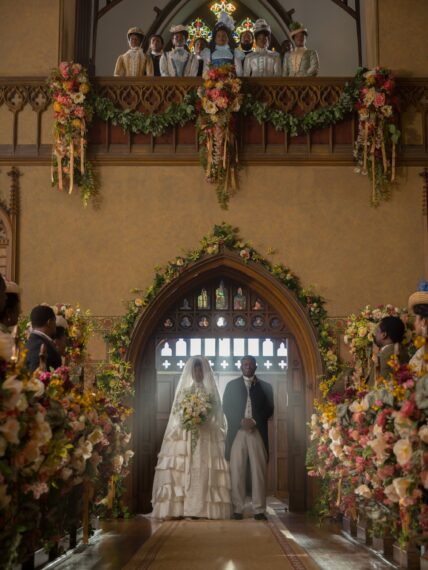
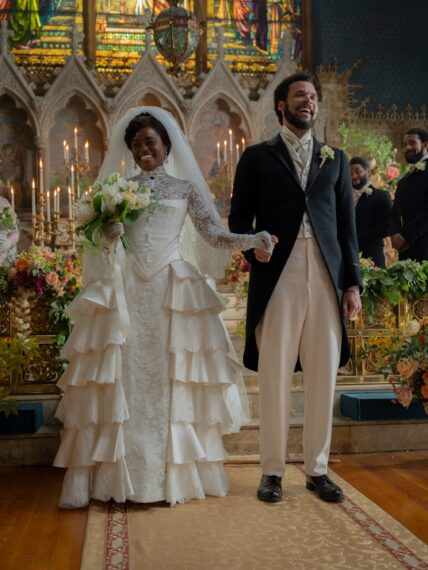
Benton says she fought for Peggy’s wedding to be shown this season as opposed to the story jumping ahead to after they were wed. Given that, she really wanted the wedding “to have time to linger” so viewers could see the happy day radiate. The day before the wedding, plus the wedding itself, were shown in splendid fashion. The set design was like a bright, lush painting. Audra McDonald and Cynthia Nixon share what they love about the wedding in ourGilded Age Aftershow video above, revealing that they were filming the wedding when the New York Knicks won the NBA finals this summer.
Benton explains why the celebratory day almost didn’t happen and why she fought for it.
“There’s so much to get through in our show and there’s so many storylines that I think originally they were going back and forth about whether or not they were going to show the wedding or if Peggy and William were just going to be married,” Benton reveals. “Me and a couple other people were like, ‘You have to have a wedding.’”
Karolina Wojtasik/HBO
Peggy has been married once before, but she eloped and the marriage was annulled. That relationship resulted in a child. Peggy was led to believe that the baby boy was stillborn, but the baby was alive. Peggy’s father, Arthur (John Douglas Thompson), arranged for him to be adopted, but he died of scarlet fever a few years later along with his adoptive mother. Benton wanted Peggy to be able to have a moment of pure joy with her wedding after such difficult hardships in the past.
“Peggy has been such a rooted-for underdog, crowd favorite that I feel like the audience has been really waiting for her to get her real center-stage moment,” Benton says. “And so I think that it’s a really special pay off that we get to see a full [wedding] sequence.”
The wedding also gives a satisfying conclusion to the fractured family bonds between Peggy and her parents after the ordeal with her first marriage and her late son.
Karolina Wojtasik/HBO
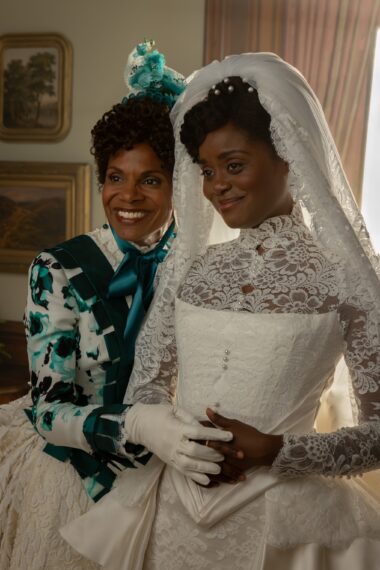
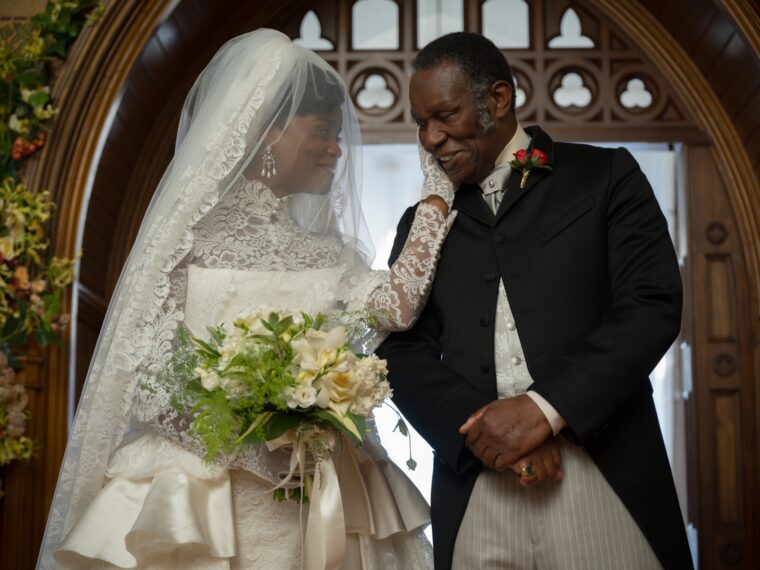
Dorothy (McDonald) and Arthur got to finally see their daughter get married, and Peggy got to have moments of healing with her mom and dad as her mom helped her get ready for the ceremony and her dad expressed his love and gratitude before walking her down the aisle. With this closure, the Scott family can move forward even stronger in this next stage of their lives.
Peggy forged a closer bond with her mother-in-law, Elizabeth Kirkland (Phylicia Rashad), the day before the wedding.
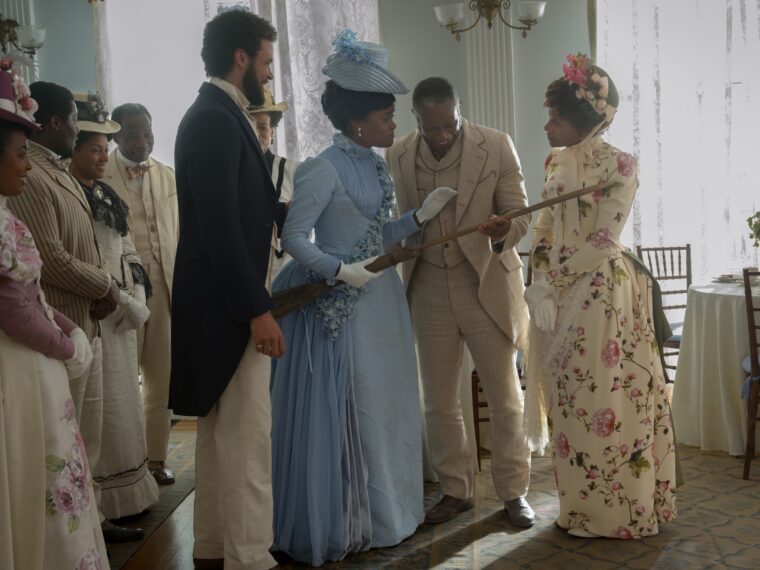
Elizabeth was outraged that Peggy and William wanted to jump over a broom in their wedding ceremony. Before slavery ended in America, enslaved people were not legally allowed to get married. The tradition of jumping over a broom to signify a marital union developed as a result. That’s how Arthur, who was born into slavery, and Dorothy tied the knot before they had an official ceremony after the Civil War ended, as Arthur explained in this episode.
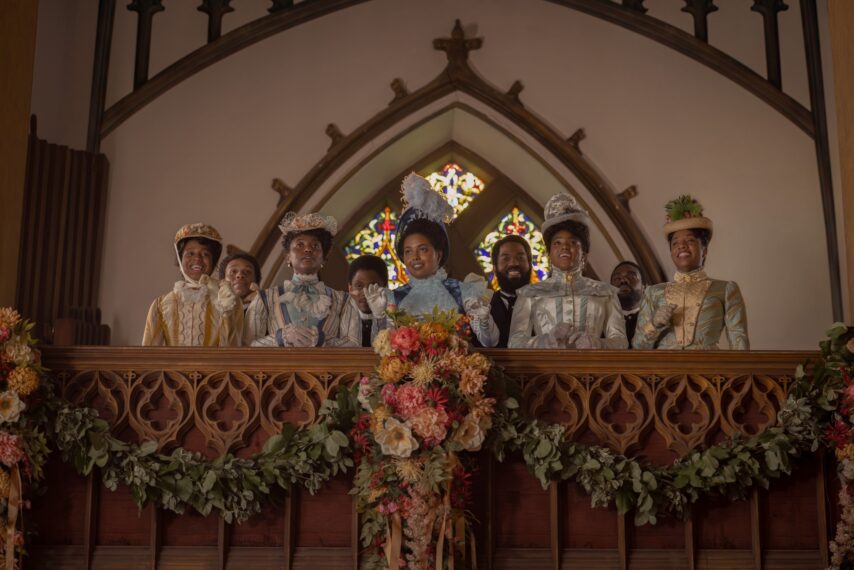
Arthur and Dorothy gave their wedding broom to Peggy and William, which they accepted happily. Peggy’s cousin, Ava (Adrienne Warren), also brought Nashville’s Fisk Jubilee Singers (a real choir plucked from history) to sing during the wedding ceremony.
Karolina Wojtasik/HBO
The Kirklands pride themselves on not having familial connections to slavery, and Elizabeth was horrified at the idea of these customs being incorporated into her son’s wedding.
The Scott and Kirkland disagreements devolved to the point where William told his mother not to come to the wedding if she couldn’t accept and love Peggy and her family. Peggy took matters into her own hands in a private conversation with Elizabeth. She told her that William was raised well by his parents and because of that, he would side with his wife in family conflicts. Elizabeth could be in her son’s life or not, but the choice was entirely hers.
Benton explains what made Peggy so confident in this moment and how her relationship with William informed that.
“Peggy has gone through so much sacrifice at this point in her story over the last four seasons, and she really has found an equal who wants the same things as her and who values the parts of her that are considered taboo in society as an ambitious woman,” Benton says.
Karolina Wojtasik/HBO
“She plays nice for as long as she can, and then she gets to meet Mrs. Kirkland with some of her own alpha medicine and is like, ‘I’m going to be the head of my own household, and you can be a part of it or not, but I’m not messing up my soft-life moment for you. We tried,’” she continues.
“I also think that Peggy has a hard line when it comes to the respect she has for her culture and her family, which has been a through-line of what her values are,” Benton adds, “and she’s really willing to speak truth to power when she has to.”
Peggy’s family traditions are “really sacred stuff,” Benton notes, and aren’t something she’s willing to sacrifice for anyone. This speaks to Peggy’s belief that her past is not a problem, a concept that other characters in The Gilded Age have to fight against as well “at a time where you have so many characters that are lying about who they were in order to move up in their station,” Benton explains.
Karolina Wojtasik/HBO
“You have Enid Winterton; you have Jack trying to hide where he came from; you have Bertha Russell. In Season 1, they say she was a potato digger’s daughter,” she says. “The American way at that time was really to absorb any of your ethnic or indigenous cultural heritage that wasn’t this very strict, high society version of American whiteness.
“To have Peggy be a character who’s like, ‘No, I want you to know where my family came from and how hard they fought to get here,’ she’s like a new version in that era where it could have hindered her rising,” the actress continues, “but instead, she chooses to show us a version of what it means to carry your history with you.”
More Broadway history was on set in this episode with the addition of Warren, the latest of many Tony winners in The Gilded Age cast. Warren’s Ava is a member of the Fisk Jubilee Singers. They sang the Gospel songs “My Lord, What a Morning” and “Ain’t That Good News” during the ceremony in Reverend Frederick Kirkland’s (Brian Stokes Mitchell) church.
Karolina Wojtasik/HBO
“It was really cool getting to be on set with all of my Broadway comrades,” Benton, an alum ofNatasha, Pierre and the Great Comet of 1812, says. “Adrienne Warren is a legend of this industry and the American stage, and so her playing my cousin and getting to sing in that moment was really special.”
“Being in that church, surrounded by all of that original Tiffany glass, hearing songs written by people from that time, it really felt transporting” Benton shares, “and was just like a moment of celebration and arrival for this world in our show that wasn’t necessarily intended to take up as much space as it has. The audience responding so beautifully to it has given us space to keep expanding this world of the Gilded-verse. I’m thankful to get to be the face of it.”
We’re breaking down each episode of Season 4 in video interviews with the cast in ourGilded AgeAftershow, the third episode of which you can watch in the video above or on TV Insider’s YouTube channel. New interviews come out each Sunday this season after the episodes air on HBO.
The Gilded Age, Sundays, 9/8c, HBO