


























I read Sarah Wang’s debut novel New Skin while still contemplating my own escape from postpartum depression. I call it escape because the mental gymnastics I had to perform to endure the asylum that was my mind—which involved blocking my own mother’s capricious “care”—in order to survive my ordeal was nothing short of miraculous. Like Linli’s mother, Fanny, my mother is obsessed with and conscious of beauty and society’s standards and aesthetics, though unlike Fanny, she is not obsessed with plastic surgery. Needless to say, I found in this novel a reflection of an often invisible view of a dysfunctional mother-daughter relationship, built on Fanny’s concept of motherhood. As she says, “mothers must always be a slave to their children.” She even adds, “There is no way out. You think I don’t wish for a way out everyday?”
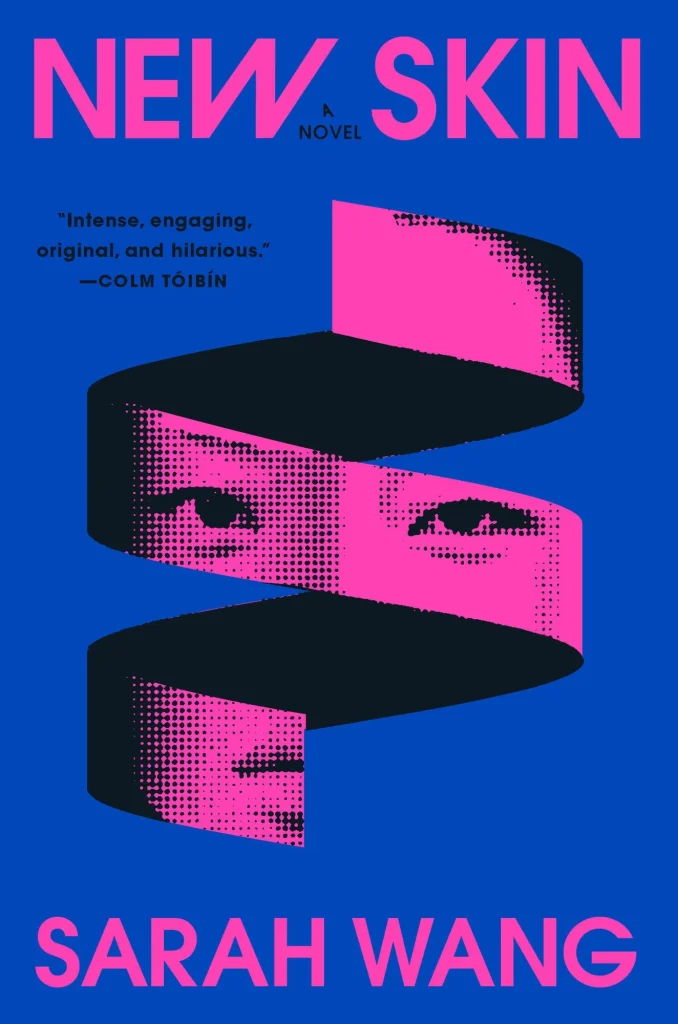
New Skin is a satirical exploration of the obsession with the beauty industry, particularly with cosmetic surgery. At its core, however, the novel is about the fraught mother-daughter relationship of Fanny and Linli. Fanny tells yarns believing that she is making things better by transforming her face and that this is the course of evolution. She believes this course of evolution applies to her body as well—that the original should be augmented. But beneath this facade is also the performance of appearing to be loving and caring, especially during the America’s Beauty Extreme reality show segments where Fanny, in her desire to win, performs the most human and truthful versions of herself. Fanny’s obsession with plastic surgery began long before her daughter became conscious of it, when she was trying to fit in to survive. This is a different kind of immigrant and assimilation novel where evolution from immigrant to citizen is an involution of maternal debris, returning to the site of motherhood: the body.
I met Sarah in 2021 while we were both attending Tin House Workshop (now The McCormack Center) online. In this interview, Sarah and I talked over Zoom and e-mail about the mother-daughter relationship, therapy, colonialism, and hauntings.
Cherry Lou Sy: New Skin is such a different immigration/assimilation novel. Forgive me if I’m being too forward in classifying the novel that way. Even though a lot of the marketing is about the satirical and absurdist nature of the beauty industry through the lens of this mother-daughter relationship, eventually Fanny’s immigration story as well as her assimilation story are revealed. Was this intentional? How did this book start? Were you trying to do an assimilation story, or was it always a mother-daughter story?
Sarah Wang: The mother-daughter story is the heart of the novel. I think of the plastic surgery and reality TV subplots as Trojan horses for delving into the issues that are most important to me: immigration and the lives of those who are undocumented, debt, class, and women’s labor. The book is told from Linli’s perspective, a second-generation immigrant who, like many in their mid-twenties, is trying to figure out how to go out into the world to be her own person. Part of that is understanding where she came from, which is in some ways mysterious to her. Many of my friends who are second-gen have similar experiences. Our parents don’t really talk about the past and what their lives were like when they immigrated. Maybe it’s cultural or maybe it’s because they don’t want to revisit traumatic histories. But this unknowing leaves a gap in our understanding of our own identities. And beyond that, what Linli also longs for is to know how the person closest to her, her mother Fanny, came to be the way she is—a disfigured plastic surgery addict who will do anything she can to get what she wants. So you’re right in reading the novel foremost as an immigration story. Linli and Fanny’s story is one defined by their experiences as second- and first-generation Chinese immigrants. The novel is definitely informed by my own desires and questions about my family history.
CLS: I am interested in this idea of truth being presentational in this story. How does truth and fiction exist in the novel for you?
I think of the plastic surgery and reality TV subplots as Trojan horses for delving into the issues that are most important to me.
SW: The axis of truth and fiction is one of the novel’s main concerns. Linli doesn’t know who her father is or much about her mother’s life, except for these fragments of horrible stories that Fanny tells her. Despite these glimpses, Linli isn’t in possession of a cohesive narrative. On the reality TV show she sneakily auditions for, Fanny reveals some shocking stories, but it’s impossible to know if they’re true or if she’s just trying to win the competitive therapy sessions—which is the premise of the show, America’s Beauty Extreme. Fanny and her cohort are all botched plastic surgery victims competing in weekly group therapy challenges in a kind of death match to see who can make the most progress in the journey of healing. The contestants have to divulge traumatic stories in order to avoid elimination and out-therapy each other to win. Linli watches her mother on TV disclosing abortion attempts, criminal arrest, and living in the shadows as an undocumented immigrant. Linli doesn’t know whether this is true or not and neither do we. But she finds documents stashed deep inside her mother’s drawers that disclose a horrific part of Fanny’s past as an undocumented immigrant and her extraordinary path to citizenship. Readers, along with Linli, have to decide how to contend with not knowing if Fanny’s presentation—as you say—on reality TV is to be believed or not. Real life is similar in that we also have to figure out how to accommodate contradictions. If you ask different people in your family about what happened in the past, they’ll often have different accounts, or even discount that something ever happened. Who do you believe? Sometimes we have to hold space for multiple truths and possibilities, the absence of certainty, and lack all at the same time.
CLS: That’s so interesting because the stereotype in Asian culture is that we always think the elders know best, that we have to follow everything they say 100 percent etc. But in the book, the elder, Fanny, is an unreliable narrator of her history, at least in the story she tells her daughter, and this search for truth is what’s driving Linli. Do you think trauma makes unreliable narrators of people, and how is that reflected in this story?
SW: Fanny is an extreme person who does outrageous things to get what she wants. She manipulates people and tricks them—these are the skills that both ruin her daughter’s life and allow Fanny to be a tremendous competitor on America’s Beauty Extreme. But as wild as Fanny is, I’m not sure we can say she’s unreliable. She could be telling the truth. The way that traumatic memories are stored in the mind [differs from] other memories. They are extremely vivid and bodily. What if trauma made people reliable narrators?
CLS: How do immigrant women who are at the edges of society participate in or even want these black-market cosmetic procedures? They’re not safe, but they still participate in them. Why do you think there’s this obsession with that?
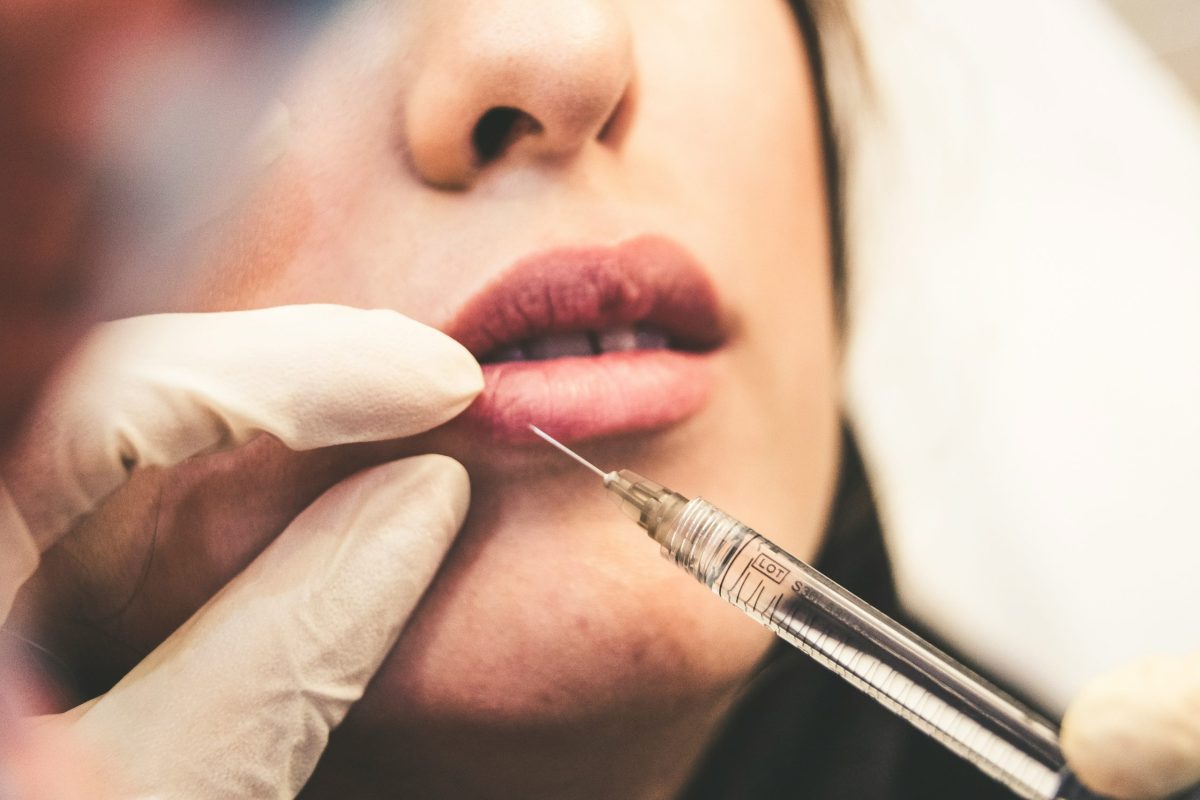
SW: People have the desire to keep up with whatever the latest trend is. Especially with globalization, the democratization of the internet, and virality of social media, the speed at which we want is accelerated, and therefore there’s also higher turnover. We want faster and we want more. Whether we’re wealthy or poor, there are things we all want and that are advertised to us in the same way. Beauty and youth are a mainstay; then it’s glass skin one season and turmeric pills the next. Cottage industries develop to make trends accessible. Just because you’re poor doesn’t mean you aren’t susceptible to wanting a Balenciaga bag. Just because you are undocumented and working in informal labor markets doesn’t mean you won’t want a facelift. The issue is that with fewer options and resorting to the black market to afford what many may want but few can buy, there are risks. That’s what poverty is often about, taking risks. Jumping the turnstile, not paying utility bills hoping that your lights will turn on when you get home, taking out loans and running up credit cards, getting Botox in a basement from someone who is not trained and with chemicals that are unsanctioned. These informal markets are fueled by the same desiring machines that capitalist systems demand, and subject to this speed, we’re just running on treadmills at inclines trying to keep up. We all want to have what everyone has and what we see around us and on our screens.But not everyone has the luxury of safety and support that comes with wealth.
Fanny’s mantra is: Look better, feel better, be better. Linli doesn’t care at all what she looks like. What she really cares about is having meaning and purpose in this world. That’s the privilege that Linli is afforded because she didn’t have to deal with the same kind of displacement as a second-generation immigrant. It’s not a condemnation of Fanny, though. It’s a condemnation of society and the ways in which society pressures people and women and immigrants.
CLS: In Asian culture, therapy isn’t traditionally considered a necessary treatment. It’s seen as very Western, invasive, and even self-indulgent. But it’s so important in the novel that you even use a psychologist’s words in your epigraph. I actually had to look up the psychologist that you quoted. Can you talk about this idea of mental health and therapy in your book?
We all want to have what everyone has and what we see around us and on our screens.
SW: I have been in psychoanalysis for 16 years, which at this point has just become a way of life for me. The role of psychoanalysis in my life is mostly a practice of noticing what I say and how I’m saying it, as well as understanding what I’m communicating to myself. This language isn’t just relegated to speech; it’s also written in mistakes, repetitions, interpersonal dynamics. People get into the same relationships over and over again. Why? What are you reenacting? All this is to say that I think my book is really an exploration from beginning to end of all of these different things. What do Fanny and Linli want? What do they want from each other and what do they want for themselves but can’t seem to achieve? Desire is confusing because on the surface, Fanny seems like she just wants to be beautiful but she ends up being the exact opposite. Like the Winnicott quote, “It is a joy to be hidden and a disaster not to be found,” Fanny is endlessly thrilled to be getting plastic surgery and hiding inside of her face, but she’s also in pain and needs help. She has had a lot to be very upset about, and the territory of her face is somewhere for her to express herself. The text is written on her body. Linli says she wants to get away from her mom and have her own life, yet she can’t seem to leave. Through her job working at a community clinic, which is called Another Horizon, she finds a foothold.
Another Horizon is based on the Crime Victims Treatment Center in Manhattan. People can get individual and group therapy there; legal services related to asylum, immigration, and orders of protection for survivors of domestic violence; art therapy, acupuncture, and narrative therapy. They offer a way forward—to heal. Healing can happen in a community with support, by learning, and through the imagination. When Linli is able to imagine different possibilities about what her mother’s life was like as an undocumented immigrant experiencing hardship and possible violence, she is confronting the unexplainable and unknowable. Among other things, therapy in New Skin is about how we might imagine through storytelling, poetry, psychedelic hallucinations, and dreams.
CLS: There’s a lot of haunting that happens in the book. There’s the haunting of history and there’s the haunting of Fanny’s face, especially because Linli remembers the image of her original face. Can you talk about that?
SW: I love that you classified Fanny’s old face as a haunting because it is true that it haunts Linli. There is this kind of haunting, then the haunting of histories of war and displacement, and also haunting as an act of subterfuge in the novel too—what Fanny does to her competitors on the reality show.
The people that we love the most in this world and that we’re closest to can be our hardest relationships.
Maybe it’s a good time for me to talk about this actually, especially with you as another Asian, how I wanted to use the reality show as a direct kind of transcription of my experience and the experiences of other Asian people around the world being scapegoated during Covid. There really was nothing we could do to resist or counter being blamed for a global pandemic. We could post, we could do mutual aid, but the world still needed to locate a villain for their suffering. We had to take it. If somebody yelled at us in the street, we just had to go home. What else could we do except that and hide? But for Fanny, because she’s a fictional character, I wanted her to do something about being blamed for someone else dying on reality TV. She thinks: If you ascribe to me this power, then I’m going to harness it and use it against you to defeat my competitors who are also bullying me. She takes that power and subliminally infects these men, the two people who are left standing with her at the end, to her advantage. Haunting is also culturally significant. Chinese people, and also other cultures, use the supernatural to understand our lives and our history. Fanny, endlessly and enviably cunning as she is, uses her culture as a weapon to vanquish racists.
CLS: You were able to metabolize that really horrific time into something useful for the novel. What would you want readers to take from the book?
SW: Fanny and Linli both learn and grow from being with each other and with the communities they start to become part of. The character DB says, “showing up is enough, sometimes.” He’s right, because showing up can lead to more. Other things happen when you show up. Fanny and Linli show up for each other in imperfect ways and they participate in their respective communities, the reality show and the community center. They start to learn and construe meaning, develop friendships, and understand the context in which they belong.
I hope that the accumulation of experience for them both can result in launching them into the next chapter of their lives, whatever that is. I hope the same thing for the reader as well. Real life is obviously much harder. The people that we love the most in this world and that we’re closest to can be our hardest relationships. I think, in a lot of cases, sticking with them and working through issues can be extremely productive and valuable. Not always, of course, but sometimes.
CLS: I know for myself as an Asian woman who has issues with my mom, this book really spoke to me.
SW: Thank you so much. It really is so meaningful to have another Asian woman read the book and to relate in this important way through shared dialogue.