1.
I had been living in Japan for 20 years when I moved back home to the United States in 2011. Upon my return, I decided that I would finally focus my energies on creative writing. But where to begin? The more I consulted friends and colleagues, the more I heard the same thing, over and over
“Whatever you do, don’t get an MFA.”
I received this advice from published authors and, even more frequently, from MFA-holders themselves. My understanding of MFA programs was limited—I’d heard of the prestigious “Iowa Workshop” but was otherwise completely unaware that MFA programs in the U.S. had exploded in popularity over the past two decades.
In Japan, there is no such thing as an MFA. People who want to be writers study things like literature and journalism. My own undergraduate background was in philosophy from Berkeley, and I later got an MA in Japanese literature and linguistics from the University of Wisconsin at Madison. In grad school, we read voluminously, wrote translations, and did literary analysis. After graduating, I worked as a translator in the fields of business, government, and academia. It was around this time that I had what was probably the best creative-writing “craft” experience of my life: I was hired to translate a novel from Japanese to English.
More than once I’ve been told by successful writers that if I wanted to become a writer, I should copy out by hand my favorite novel. “You have to write out the entire thing,” one of them told me. “You can’t imagine how illuminating it can be.” I’ve never done this exercise myself, but I believe that I’ve experienced its intended effect doing literary translations. Translating a novel was a formative experience for me as a writer because I learned that writing is like any other art: while talent can’t be taught, technique can be learned. So, how exactly does one learn technique? I decided to take creative writing classes, earning my Certificate in Creative Writing from UCLA Extension and attending classes through Stanford Continuing Education’s program, as well as a handful of other writing centers. It was then that I experienced the creative writing workshop for myself.
So, what is a workshop?
It is, first and foremost, an American invention. The basic idea is that a group of writers, sometimes called a cohort, submits a set number of pages to the group—usually students submit in small groups or singly. The cohort then provides structured feedback concerning strong and weak points in the writing with suggestions for development and revision. During this time the authors are under “a cone of silence,” a kind of gag order. Authors are not allowed to speak during their own workshops until the end, at which point they can thank their cohort and perhaps provide clarification or ask a question or two.
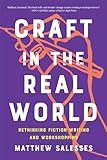
In his 2021 book Craft in the Real World: Rethinking Fiction Writing and Workshopping, Matthew Salesses argues that, at base, workshops should enable writers to articulate their artistic visions. I remember when I started working on my certificate at UCLA Extension, a friend in one of my first classes told me that the best outcome I could hope for was that “the classes will help you understand what you like.” I was skeptical. Is that all? But as I continued to study, I came to agree with my friend. It is valuable to be able hammer out one’s own artistic vision through conversation with other people. For this reason, giving feedback is usually more valuable than receiving it, which is also something most writing teachers will tell you.
But Craft in the Real World also vigorously critiques the American MFA program and the workshop model in general. (Salesses was just appointed assistant professor of writing at Columbia University’s MFA program.) Salesses wonders: if only one type of writing is held up as “good” and the programs remain highly insular, how can an artist articulate a unique vision? He writes:
If you have been taught to write fiction in America, it is a good bet that you have been taught a style popularized by Ernest Hemingway and later by Raymond Carver, sometimes described as ‘invisible,’ that is committed to limiting the use of modifiers and metaphors, to the concrete over the abstract, to individual agency and action, and to avoiding overt politics (other than the politics of white masculinity). Instead of a political argument, a character might angrily eat a potato.
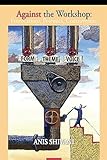
 Ironically, the workshop’s roots are overtly political. It was by reading two books—Anis Shivani’s Against the Workshop: Provocations, Polemics, Controversies and Eric Bennett’s Workshops of Empire: Stegner, Engle, and American Creative Writing during the Cold War—that I learned about how the U.S. government, via the CIA, interfered in the creation of the Iowa Workshop, and how this interference continues to inform the multitude of writing programs we have today. From 1941 to 1964, Iowa Writers’ Workshop director Paul Engle fundraised for the program by using explicitly anticommunist rhetoric, promising to promote American values through the teaching of creative writing. Among the program’s donors were the Rockefeller Foundation, State Department, the Fairfield Foundation, and the Asia Foundation, the latter two of which were CIA front groups.
And so the Iowa Workshop became a form of soft power to push back against Soviet collectivist ideas. As a result, writes Bennett, the Workshop was mandated to promote stories centered around the private life of the individual. Literature was to highlight “sensations, not doctrines; experiences, not dogmas; memories, not philosophies. Anything to ensure collectivist movements would not form.”
Elif Batuman, in a 2010 essay in the London Review of Books called “Get a Real Degree,” argues that these rules have become so embedded in creative writing shops that today they are not questioned. Sometimes called psychological realism, the basic canon encourages a kind of writing style that is based on strong individualism, an encapsulated self out in the world. And in fiction, as well as a lot of nonfiction, the name of the game is something we call “conflict.”
You will often hear in workshops that conflict is the fuel that drives all story. We are taught to begin in-scene—and then, teachers tell you, “stay in scene”—and to begin as close to the central point of conflict as possible. From here the story moves toward its resolution. Along the way, there must be plenty of “character development.” One of my fiction teachers told me that this focus on character arcs is almost an obsession in American literary fiction.
Americans read far fewer books in translation than readers in places like Japan, Poland, France, or Spain, and the workshop is even more insular than the general reading population. My biggest complaint about my workshops, shared by many of my cohorts, is that we read the same books and stories over and over again. There is a case to be made that this insularity and practice of narrow reading has helped create a canon of bland and cookie-cutter books.
2.
Throughout Craft in the Real World, Salesses questions the extreme whiteness of creative writing programs. (Tongue and cheek, Batuman, in her London Review of Books essay, places “writing classes” at #14 on a list of “stuff white people like.”) Speaking anecdotally, my writing classes and workshops have overwhelmingly been taught by white female instructors. Taught by faculty that is so homogenous—racially, linguistically (teachers have been primarily monoglots with no experience reading globally in other languages), and in gender—the classes present a narrow and skewed system of aesthetic values.
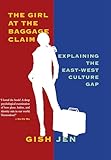 In her 2017 book The Girl at the Baggage Claim: Explaining the East-West Culture Gap, Gish Jen unpacks the way differing underlying concepts of self inform the various storytelling traditions around the world. Throughout her career as a writer, Jen has made a case for fiction that combines both Eastern and Western craft. In the West, she says, this concept is something she calls the “big pit self,”
a self unlike any other in the world, assertive and full of self-esteem, and yet anxiously protective of its self-image and obsessed with self-definition. Why is it, exactly, that Americans must have fifty flavors of ice cream when other cultures are happy with ten? Why do we talk about ourselves so much? Why are we consumed with the memoir? Why is personal growth so important? Does self-esteem come at a price? And why do we see work the way we do, and how did we get this way?
In contrast to the “pit self,” Jen explores a notion of self that is far more prevalent outside the Western world, the interdependent “flexi-self” associated with collectivistic societies. In this case, the boundary between self and world is “nowhere near so absolute. It is, rather, porous and fluid—a dotted line.” It would only be natural that this latter sense of self would inform the writing traditions of those countries. And so, the American workshop can be encouraging or stifling depending on one’s background. Because, as Salesses argues, the workshop is all about societal expectation. Being so firmly founded in cultural norms and ideology, it will not promote artistic rule-breakers or genre-defilers.
3.
After 20 years in Japan, where for the last decade I thought, dreamt, and read mainly in Japanese, my thinking and writing now reflects Japanese storytelling styles. I prefer more meditative writing with constant pivots and turns. I love surprises, and prefer the lyric over the concrete, the “nobility of failure” over the hero’s journey. And more than anything, I love books that refer to other books.
Salesses, who was born in Korea, reminds us that not all traditions favor conflict, or character-driven models, like the hero’s journey. He cites Chinese, Korean, and Japanese stories, which “developed from a four-act, rather than a three- or five-act structure: in Japanese it is called kishōtenketsu (ki: introduction; sho: development; ten: twist; ketsu: reconciliation).” The kishōtenketsu structure informs fiction, nonfiction, theater, and even the movements of the tea ceremony. It is a profoundly different aesthetic system from the Western model, with its primary focus on conflict. Perhaps the most common critique I hear from Western readers about Japanese fiction is that nothing ever seems to happen.
 Last year, I reviewed Multispecies Cities: Solarpunk Urban Futures for the Asian Review of Books. Multispecies Cities is a collection of climate fiction set primarily in the Asia-Pacific, that seeks to imagine what cities might look like in a future of multi-species co-existence and green justice. The stories are filled with a polyphony of voices—some non-human and a few non-alive—working together to bring about solutions that address global warming, the extinction of animal species and the coming climate disaster. The stories in Multispecies Cities call on us to change not just what we write about, but how we write. The stories themselves question progress-based narratives and stories of the individual, or the lone hero. At first, Western readers might even feel disoriented by these stories of cooperation and immersion in the environment, where rivers speak and stars can be heard. You might need to re-read some of them to assess what is going on when no-one wins or loses, overcomes or fails—because at first glance nothing seems to change.
Salesses laments that we have come to teach plot as a string of causation in which the protagonist’s desires move the action forward. He says:
Western fiction can often be boiled down to A wants B and C gets in the way of it. This kind of story shape is inherently conflict-based, perhaps also inherently male (as author Jane Alison puts it: “Something that swells and tautens until climax, then collapses? Bit masculo-sexual, no?”). In East Asian fiction, the twist (ten) is not confrontation but surprise, something that reconfigures what its audience thinks the story is ‘about.’
In workshop, “Nothing happens” is always meant as a criticism, an inherently bad thing. This can be stifling for a writer who doesn’t read for urgency or conflict in everything.
5.
I have spent roughly half my life in Japan and half in America. For so long, I had two languages switching back and forth in my mind, one for America, one for Japan. There were different clothes, ways of speaking, foods to eat, body languages, and styles of friendships. It has been an enormous adjustment to permanently return to America in mid-life. I have had to relearn and get reacclimated to a lot. But I never would have expected that reading and writing would be the most challenging adjustments so far. I had not realized how insular American publishing is, how few books that might broaden Western tastes are actually translated for the American market, and how translations are almost completely ignored in creative writing classes. And how students are made to read and re-read the same books over and over again.
And so, I find myself in a quandary. It is not that I think we should scrap existing syllabi, but rather that we must make room for other storytelling traditions in these programs. And this must start with reading. As Matthew Salesses repeats again and again in his book: what is being taught as universal rules of good writing in these programs is nothing more than a highly narrow understanding of literary taste.
I wonder how we can ever change the world if we don’t first change our dominant mode of storytelling, with its intense and politically-motivated focus on individual experience and conflict? The future of creative writing programs should be radically inclusive, allowing not just for a multiplicity of voices but of a wide variety of traditions. There is room on the syllabus for wider reading that pushes back against the established rules of the workshop—literature in translation, for instance—that would infuse new ways of thinking, fresh forms, and more creativity into a cookie-cutter literary landscape.
As I look toward my own studies, I feel ambivalent. As someone who, as a reader, tends toward more international styles of storytelling, I have never been a huge fan of writing that is scene-driven, nor have I ever been all that interested in the hero’s journey—much preferring Borges and Calvino to Carver or Hemingway. Before I do anything else, I think I need to make my own rules. There is value in the workshop. My writing courses have challenged me to think about how and why people read, to engage with the purpose of the art. I am convinced that people read not just to be entertained, but to be enchanted. There are many roads to that place of enchantment, some less traveled. But in the end, that is a road that I will have to discover for myself.
The post Culture Shock: Reassessing the Workshop appeared first on The Millions.


![Emmys 2022: What Should Win for Outstanding Drama Series? [POLL]](https://tvline.com/wp-content/uploads/2022/08/emmys-2022-drama-series.jpg?w=620 "Emmys 2022: What Should Win for Outstanding Drama Series? [POLL]")