







































A simple device that costs almost nothing to install could prevent thousands of traffic accidents each year, according to new research from Austria.
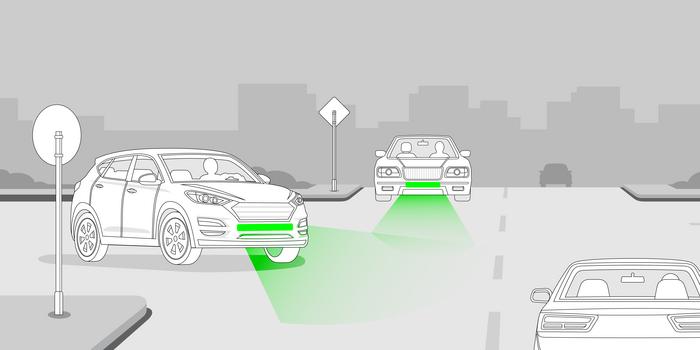
Scientists analyzing 200 real-world crashes found that front-mounted brake lights—glowing green instead of traditional red—would have prevented up to 17% of intersection collisions. The technology works by giving drivers crucial advance warning when vehicles ahead are slowing down or preparing to move from a stop. Unlike expensive autonomous safety systems that take years to reach all vehicles, these retrofit brake lights could be installed on existing cars immediately, potentially saving lives while the automotive industry catches up with modern safety technology.
The Forgotten Direction of Safety
For decades, automotive safety has focused obsessively on protecting vehicles from behind. Every car displays bright red brake lights to warn following drivers, yet nothing signals braking intentions to vehicles approaching from ahead or the side. This oversight becomes deadly at intersections, where cars approaching from different directions must make split-second decisions about each other’s movements.
Ernst Tomasch from TU Graz’s Institute of Vehicle Safety discovered this safety blind spot while studying intersection crashes in Austria. His team analyzed accident data spanning over a decade, focusing on the three most common collision types that account for more than 80% of serious intersection injuries and fatalities.
The concept isn’t entirely new—researchers first proposed front brake lights in the 1970s, and limited studies showed promise in laboratory conditions. But no manufacturer has implemented the technology, leaving a crucial safety gap that kills thousands of people annually at intersections worldwide.
The Simulation Breakthrough
Since no production vehicles carry front brake lights, Tomasch’s team couldn’t study real-world crash data. Instead, they pioneered a sophisticated “what-if” analysis using Austria’s Central Database for In-Depth Accident Study. This database contains painstakingly detailed reconstructions of real crashes, including vehicle speeds, braking patterns, and exact collision timing.
The researchers first recreated each accident precisely as it occurred, then reran the simulation assuming one vehicle carried a front brake light. By comparing baseline crashes with hypothetical front-light scenarios, they calculated exactly how many accidents could be prevented or made less severe.
This counterfactual simulation method has proven reliable for evaluating automotive safety systems before they reach market. The same approach helped validate collision-warning systems and autonomous emergency braking before manufacturers invested billions in the technology.
Why Intersections Kill
Intersection crashes represent a uniquely challenging safety problem because they involve vehicles approaching from multiple directions with different priorities and intentions. Unlike highway accidents where vehicles generally move in the same direction, intersection collisions require drivers to predict and react to complex movements from unfamiliar vehicles.
The study focused on three deadly scenarios that dominate intersection fatalities. Left-turn collisions occur when drivers turn across oncoming traffic, often misjudging approaching vehicle speeds. Straight-crossing crashes happen when drivers run stop signs or fail to yield, typically because they can’t see approaching traffic until it’s too late. Each scenario involves critical moments where earlier warning could prevent disaster.
Current vehicle lighting provides no help in these situations. Brake lights only warn vehicles behind, while turn signals indicate intended direction but not current braking status. Drivers approaching intersections must guess whether other vehicles are slowing down, speeding up, or maintaining constant speed—guesses that prove fatally wrong thousands of times each year.
The Critical Seconds
The research revealed how tiny timing differences determine life and death at intersections. Drivers typically need 0.5 to 1.5 seconds to recognize a threat, decide on a response, and begin braking. During those crucial moments, vehicles traveling 50 kilometers per hour cover 14 to 42 meters—often the difference between avoiding a crash and devastating impact.
Front brake lights compress this deadly timeline by providing instant visual cues about vehicle intentions. When a front light activates, approaching drivers immediately know the vehicle is slowing down. When it deactivates, they know a stopped vehicle is about to move. These simple signals eliminate guesswork that currently kills drivers every day.
The timing advantage proves especially crucial for older drivers, whose reaction times naturally slow with age. By providing earlier warning, front brake lights could help elderly drivers maintain safe driving longer while reducing their crash risk.
The Visibility Problem
However, the research revealed a significant limitation that could undermine the technology’s effectiveness. Front brake lights only work when other drivers can actually see them—a condition that failed in roughly one-third of analyzed crashes due to unfavorable vehicle angles.
The visibility problem varies dramatically by crash type. In head-on scenarios where vehicles approach from opposite directions, front lights remain visible throughout the critical decision period. But in side-impact crashes where vehicles approach at right angles, front lights become invisible just when drivers most need the warning.
Straight-crossing crashes proved particularly challenging, with 75% showing poor front light visibility. These accidents typically involve vehicles approaching perpendicularly, meaning front-mounted lights point away from approaching drivers who need the warning most.
The researchers found that light visibility depends on the relative angle between vehicles. When cars approach at angles between 100 and 260 degrees, only portions of a front light remain visible—sometimes as little as 8.7 centimeters of a 50-centimeter light strip.
The Side-Light Solution
To address visibility limitations, Tomasch’s team recommends mounting brake lights on vehicle sides in addition to front positions. This modification could dramatically improve warning effectiveness in side-impact scenarios that currently show poor front light visibility.
Side-mounted lights would also help in complex urban intersections where multiple vehicles approach from various angles simultaneously. Rather than relying on single front lights that may not be visible to all approaching traffic, comprehensive lighting systems could provide 360-degree warning capability.
The added cost would remain minimal since the technology requires only simple LED strips connected to existing brake light circuits. Unlike advanced driver assistance systems that cost thousands of dollars, comprehensive brake lighting could be retrofitted to existing vehicles for under $100.
Reaction Time Reality
The study’s most striking finding involved how driver reaction times determine safety benefits. With fast 0.5-second reactions, front brake lights could prevent 17% of intersection crashes. But with slower 1.5-second reactions, prevention rates dropped to just 7.5%—highlighting how individual driver capabilities dramatically affect safety technology effectiveness.
This reaction time sensitivity reflects the harsh reality of human factors in automotive safety. Young, alert drivers with quick reflexes benefit enormously from early warning systems. Older, tired, or distracted drivers see much smaller benefits because they can’t capitalize on the additional warning time.
The research revealed that collision speed reduction follows similar patterns. Front brake lights helped fast-reacting drivers reduce impact speeds from an average of 45 km/h to 29 km/h. Slower-reacting drivers achieved much smaller speed reductions, limiting injury-prevention benefits.
These findings suggest that front brake lights work best as part of comprehensive safety strategies rather than standalone solutions. Combined with other warning systems and enhanced driver training, the technology could achieve maximum life-saving potential.
The Gender Factor
Buried in the technical data lies an intriguing pattern that wasn’t highlighted in the main findings: female drivers showed notably different crash patterns that could affect front brake light effectiveness. Women were more likely to come to complete stops before entering intersections, creating more opportunities for brake light activation.
This behavioral difference stems from documented gender variations in driving style and risk tolerance. Women typically drive more cautiously at intersections, making fuller stops and taking extra time to assess traffic conditions. These behaviors naturally create more situations where front brake lights would be active and visible to approaching drivers.
The research data showed that 32% of analyzed vehicles had come to complete stops before entering intersections, with higher rates in certain crash types. This stopping behavior directly correlates with front brake light activation, suggesting that gender-based driving differences could influence the technology’s real-world effectiveness.
Beyond Austrian Roads
While the study focused on Austrian crash data, the findings carry global implications for intersection safety. The researchers estimate that front brake lights could prevent up to 220 fatal car-to-car crashes annually across Europe, while reducing injury severity in 650 additional accidents.
These numbers represent conservative estimates based only on analyzed crash types involving two passenger cars. The actual safety benefit could be much larger when considering accidents involving trucks, motorcycles, and pedestrians—scenarios where front brake lights might provide even greater warning value.
The technology’s retrofit potential offers particular promise for developing countries where new vehicle sales lag behind safety needs. Rather than waiting decades for advanced safety systems to penetrate entire vehicle fleets, countries could mandate front brake lights immediately and achieve significant safety improvements at minimal cost.
International safety regulators are already taking notice. The European Commission’s focus on intersection safety as part of its Vision Zero initiative creates regulatory momentum for simple, effective solutions like front brake lights.
The Road Surface Reality
One crucial factor that emerged from the detailed analysis involves how road conditions affect braking performance and safety outcomes. The study found that front brake lights showed much higher effectiveness on dry roads compared to wet or snowy conditions—a finding with significant implications for year-round safety benefits.
On dry pavement, front brake lights could prevent 12.8% to 27.7% of crashes depending on driver reaction times. But in adverse conditions, prevention rates dropped to just 5.8% to 10.2%. This dramatic difference reflects the physics of vehicle stopping distances, which increase substantially on slippery surfaces regardless of how early drivers receive warnings.
The road condition effect suggests that front brake lights provide maximum benefit in fair weather conditions when vehicles can stop quickly. During rain, snow, or ice conditions, the extra warning time may not translate into sufficient stopping distance reduction to prevent crashes.
Implementation Challenges
Despite promising safety benefits, several obstacles could slow front brake light adoption. Regulatory approval processes typically take years as safety agencies evaluate new lighting configurations and ensure they don’t create driver confusion or distraction.
Color standardization presents another challenge. The research used green lights to distinguish front brake signals from traditional red rear lights, but international regulations must establish consistent color codes to prevent driver confusion across different vehicle markets.
Manufacturing integration also requires coordination between automakers and lighting suppliers. While retrofit installations remain simple, factory-integrated systems require design modifications and supply chain adjustments that could delay implementation.
Perhaps most significantly, the technology’s effectiveness depends on widespread adoption. Front brake lights provide little benefit if only a few vehicles carry them—their safety value emerges only when most drivers recognize and understand the signals.
The Cost-Benefit Reality
From an economic perspective, front brake lights represent extraordinarily cost-effective safety technology. The researchers estimate implementation costs of under $100 per vehicle for retrofit systems, while preventing crashes that impose enormous social and economic costs.
Each prevented fatality saves society an estimated $4-6 million in lost productivity, medical costs, and quality-of-life impacts. Even preventing a single serious injury justifies hundreds of front brake light installations from a pure cost-benefit analysis.
This economic argument becomes particularly compelling when compared to advanced driver assistance systems that cost thousands of dollars per vehicle. While autonomous emergency braking and collision warnings offer superior performance, their high cost limits deployment to newer, expensive vehicles that represent a small fraction of the total fleet.
The Safety Timeline
The research comes at a critical moment in automotive safety evolution. While manufacturers invest heavily in autonomous driving and advanced warning systems, these technologies will take decades to reach all vehicles on the road. Meanwhile, intersection crashes continue killing thousands of people annually in preventable accidents.
Front brake lights offer a bridge solution that could save lives immediately while advanced systems slowly penetrate vehicle fleets. The technology’s simplicity means it could be mandated for all new vehicles within years rather than decades, providing immediate safety benefits rather than eventual promises.
The study’s timing also aligns with growing interest in retrofit safety systems as regulators recognize that waiting for fleet turnover condemns another generation to preventable traffic deaths. Simple, effective technologies like front brake lights could accelerate safety improvements by decades.
Key Research Findings
The comprehensive analysis revealed several crucial safety insights:
- Front brake lights could prevent 7.5% to 17% of intersection crashes depending on driver reaction times
- An additional 9% to 25.5% of crashes could achieve reduced collision speeds and injury severity
- Visibility limitations affect roughly one-third of crash scenarios due to unfavorable vehicle angles
- Road surface conditions dramatically influence effectiveness, with dry roads showing much better results
- Retrofit costs remain under $100 per vehicle, making the technology extremely cost-effective
- Female driving patterns create more opportunities for brake light activation at intersections
- Side-mounted lights could address visibility limitations in perpendicular crash scenarios
The Innovation Paradox
Perhaps the most frustrating aspect of this research involves the innovation paradox it reveals. While automotive companies spend billions developing complex autonomous systems, simple solutions with proven safety benefits remain uninvestigated and unimplemented.
Front brake lights represent exactly the kind of straightforward engineering that once drove automotive safety progress. Like seat belts, airbags, and antilock brakes before them, they address obvious safety gaps with elegantly simple solutions.
The technology’s retrofit potential offers particular promise for immediate impact. Unlike advanced systems that require complete vehicle redesign, front brake lights could be added to existing vehicles through simple aftermarket modifications, potentially saving lives within months rather than decades.
As governments worldwide struggle with intersection safety and traffic fatalities, front brake lights offer a rare opportunity for immediate action. The research provides compelling evidence that simple, affordable technology could prevent thousands of crashes while the automotive industry develops more sophisticated solutions.
For families who lose loved ones in preventable intersection crashes, the distinction between simple and sophisticated technology matters little. What matters is whether society chooses to implement proven safety solutions or wait for perfect ones that may never come.
If our reporting has informed or inspired you, please consider making a donation. Every contribution, no matter the size, empowers us to continue delivering accurate, engaging, and trustworthy science and medical news. Independent journalism requires time, effort, and resources—your support ensures we can keep uncovering the stories that matter most to you.
Join us in making knowledge accessible and impactful. Thank you for standing with us!