






































Plenty of promising drugs for neurological conditions have sailed through testing in mice only to crash and burn in human trials. The problem, really, is one of translation: how do you know the drug is doing the same thing in a person’s brain as it did in the mouse? For fragile X syndrome, the most common inherited form of autism, that question has been especially painful. Candidate after candidate has failed to meet clinical endpoints, despite looking brilliant in the lab.
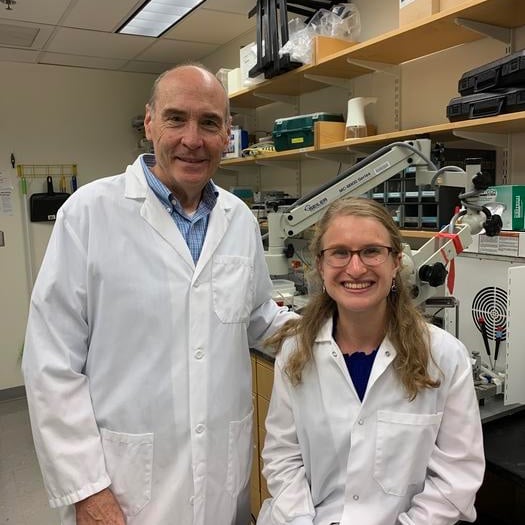
Now a team at MIT thinks they have found something that could help close the gap. Sara Kornfeld-Sylla, a postdoctoral researcher in the lab of Mark Bear at the Picower Institute for Learning and Memory, has identified a pattern in low-frequency brainwaves that is disrupted in fragile X patients and, crucially, disrupted in the same way in mice carrying the equivalent genetic mutation. The work, published in Nature Communications, offers what amounts to a shared language between species, a biomarker that could let researchers track whether a drug is actually engaging its target in both mouse and human brains.
Fragile X syndrome arises from the silencing of a single gene, FMR1, and the loss of the protein it encodes. Because the genetics are straightforward, engineered mouse models have been available for years, and they have taught us a great deal about what goes wrong in the brain. But the molecules put forward as treatments have consistently disappointed in clinical trials. We have been, in a sense, groping around without a reliable compass to guide the jump from mouse to human.
The new biomarker sits in the alpha band of brainwave activity, the dominant rhythm you would pick up on an EEG recording of someone sitting quietly with their eyes closed. In adults with fragile X, these alpha waves are slowed compared with neurotypical adults. Kornfeld-Sylla’s approach was to strip away the background electrical noise and isolate only the oscillatory, or periodic, component of the brainwave signal. She also did something a bit unconventional: rather than forcing comparisons between traditionally defined frequency bands (the Greek-letter categories like delta, theta, alpha, and gamma that neuroscientists have used for decades), she simply lined up the periodic power spectra from humans and mice side by side.
That turned out to be the key insight. The relevant brainwave disruption in mice actually falls in the theta range, not the alpha range. Had Kornfeld-Sylla tried to match alpha to alpha across species, she would have missed it entirely. “The cross-species connection and the collaboration really makes this paper exciting,” she said.
In adult men with fragile X, a peak in the power of these low-frequency waves shifts to a significantly slower frequency compared with neurotypical men. In adult mice carrying the Fmr1 mutation, the same thing happens. Younger subjects tell a slightly different story: in boys with fragile X and in juvenile mice, the peak is somewhat shifted but the more striking change is a drop in power. These age-related differences, too, are mirrored across species.
Digging deeper using electrodes implanted inside the mouse visual cortex, the researchers discovered that the brainwave peak in question is actually composed of two distinct subpeaks. Only the lower-frequency subpeak varies specifically with fragile X. And when they selectively shut down different types of inhibitory neurons in the mouse brain, they found that somatostatin-expressing interneurons, cells that exert their effects through the neurotransmitter GABA, were the ones shaping that particular subpeak. This matters because GABA signalling is thought to be impaired in fragile X.
Which brings us to arbaclofen, a drug that boosts GABA activity and has been a leading therapeutic candidate for the syndrome. Bear helped pioneer this approach. In the new study, even a low single dose of arbaclofen shifted the biomarker in normal mice, consistent with those animals having healthy GABA responsiveness. Fragile X mice needed a higher dose, but once they got one, the power of the key subpeak climbed noticeably, narrowing the deficit seen in juvenile animals.
“Because that is something we can measure in mice and humans minimally invasively, you can pose the question: if drug treatment X affects this signature in the mouse, at what dose does that same drug treatment change that same signature in a human?” Bear said. The mapping, he added, can go both ways.
That bidirectional quality is what gives the biomarker its real utility. Rather than relying on behavioural tests that differ enormously between a mouse pressing a lever and a child navigating a classroom, researchers could potentially track the same electrical signal in both species to calibrate drug doses and predict clinical outcomes. It is worth noting that Bear is a co-founder of Allos Pharma, which is developing arbaclofen for fragile X treatment, so the work has commercial dimensions alongside the scientific ones.
The implications may extend well beyond fragile X. Alpha oscillations are disrupted in a broad spectrum of brain disorders, from schizophrenia to Down syndrome to autism more broadly. Kornfeld-Sylla reckons the framework she developed could be applied to mouse models of those conditions too. “Identifying this biomarker could broadly impact future translational neuroscience research,” she said. If she is right, the days of drugs that look like winners in mice but flop in people could, perhaps, become a bit rarer.
Study link: https://www.nature.com/articles/s41467-026-69243-0
If our reporting has informed or inspired you, please consider making a donation. Every contribution, no matter the size, empowers us to continue delivering accurate, engaging, and trustworthy science and medical news. Thank you for standing with us!