




















WashingtonWeeklyTimes.com
  • Home
  • US News
    DHS investigates data breach that may have doxxed 40,000 employees

    DHS investigates data breach that may have doxxed 40,000 employees

    Michigan Senate candidate El-Sayed slams Biden over al-Zawahiri strike

    Michigan Senate candidate El-Sayed slams Biden over al-Zawahiri strike

    Bill Essayli disqualified by federal judge as de facto US attorney

    Bill Essayli disqualified by federal judge as de facto US attorney

    Top Dem gives awkward answer when asked if she’s ‘fully behind’ El-Sayed

    Top Dem gives awkward answer when asked if she’s ‘fully behind’ El-Sayed

    Pat McAfee cites Charlie Kirk shooting over Utah’s social media post

    Pat McAfee cites Charlie Kirk shooting over Utah’s social media post

  • Politics
    Democratic Socialist Angie Nixon Says She ‘Doesn’t Know’ if She is a Socialist (VIDEO) * The Gateway Pundit * by Mike LaChance

    Democratic Socialist Angie Nixon Says She ‘Doesn’t Know’ if She is a Socialist (VIDEO) * The Gateway Pundit * by Mike LaChance

    Senator Warns That Mike Johnson May Try To Help Trump Steal The Midterm Election

    Senator Warns That Mike Johnson May Try To Help Trump Steal The Midterm Election

    Stocktwits Jumps Into Live Stock Chatter With Social Trading Buzz

    Stocktwits Jumps Into Live Stock Chatter With Social Trading Buzz

    Democrat Congressman Commits a BRUTAL Self-Own in Political Ad While Demanding More Gun Control * The Gateway Pundit * by Cullen Linebarger

    Democrat Congressman Commits a BRUTAL Self-Own in Political Ad While Demanding More Gun Control * The Gateway Pundit * by Cullen Linebarger

  • Business
    Mbappé is the latest global name to find himself on the wrong side of Chinese patriotism

    Mbappé is the latest global name to find himself on the wrong side of Chinese patriotism

    Why Progressive, No. 4 on Best Workplaces for Women, focuses on flexibility and listening

    Why Progressive, No. 4 on Best Workplaces for Women, focuses on flexibility and listening

    China’s first AI-generated film to get a theatrical release flops at the box office

    China’s first AI-generated film to get a theatrical release flops at the box office

    About 70% of tax scholars would vote against California’s billionaire tax, a new survey finds

    About 70% of tax scholars would vote against California’s billionaire tax, a new survey finds

  • Science
    RFK, Jr., loosens restrictions for six popular peptides, bypassing the FDA

    RFK, Jr., loosens restrictions for six popular peptides, bypassing the FDA

    AI Emergency Alerts Are Coming. Humans Might Not Be Ready

    AI Emergency Alerts Are Coming. Humans Might Not Be Ready

    The Vera C. Rubin Observatory may have just discovered our solar system’s sixth dwarf planet

    The Vera C. Rubin Observatory may have just discovered our solar system’s sixth dwarf planet

    NASA’s Oldest Martian Spacecraft Have Been Running for Decades. Here’s How

    NASA’s Oldest Martian Spacecraft Have Been Running for Decades. Here’s How

  • Technology
    Skullcandy Discount Code: 30% Off | November 2026

    Skullcandy Discount Code: 30% Off | November 2026

    Apple launches its new touchscreen MacBook Pro

    Apple launches its new touchscreen MacBook Pro

    Disney Plus Discount Codes: 52% Off October 2026

    Disney Plus Discount Codes: 52% Off October 2026

    Frontier AI labs say their models refuted the Exponential Time Hypothesis. What does that mean?

    Frontier AI labs say their models refuted the Exponential Time Hypothesis. What does that mean?

  • Lifestyle
    What We’re Actually Buying in October: Editors’ Favorites

    What We’re Actually Buying in October: Editors’ Favorites

    How to Remove Hard Water Stains from Glass Without Scratching It

    How to Remove Hard Water Stains from Glass Without Scratching It

    The Best Dating Apps To Download Today

    The Best Dating Apps To Download Today

    How Gardening, Pickleball and Hiking Load the Body

    How Gardening, Pickleball and Hiking Load the Body

  • Music
    2026 Screen Music Awards: Full Winners List

    2026 Screen Music Awards: Full Winners List

    The Metal Bands on ‘Rolling Stone’ 21st Century Rock Songs List

    The Metal Bands on ‘Rolling Stone’ 21st Century Rock Songs List

    Pat McAfee’s Alleged Death Threats Come to Light Amid Utah Controversy: Report

    Pat McAfee’s Alleged Death Threats Come to Light Amid Utah Controversy: Report

    Malcolm Spellman & Glasses Malone Talk ‘The Drop: A Snowfall Saga’

    Malcolm Spellman & Glasses Malone Talk ‘The Drop: A Snowfall Saga’

  • Television
    Ori Voted Out In Episode 6

    Ori Voted Out In Episode 6

    ‘Wheel of Fortune’ Fans Blast Contestants as ‘Worst Ever’ After ,000 Loss

    ‘Wheel of Fortune’ Fans Blast Contestants as ‘Worst Ever’ After $68,000 Loss

    R.J. Decker Season 2 Finale Recap, Episode 7 Ending Explained

    R.J. Decker Season 2 Finale Recap, Episode 7 Ending Explained

    Star’s Departure & Return Explained

    Star’s Departure & Return Explained

  • Film
    Lance Oppenheim: ‘The line between criminal…

    Lance Oppenheim: ‘The line between criminal…

    Marvel Officially Unveils New Devil-Horned Hulk, Replacing Bruce Banner

    Marvel Officially Unveils New Devil-Horned Hulk, Replacing Bruce Banner

    Wicker review – a swooning comic fairy-tale with…

    Wicker review – a swooning comic fairy-tale with…

    10 Most Watched TV Finales Of All Time, Ranked

    10 Most Watched TV Finales Of All Time, Ranked

  • Literature
    The Trailer for the New Author-Adapted PRIDE AND PREJUDICE Just Dropped

    The Trailer for the New Author-Adapted PRIDE AND PREJUDICE Just Dropped

    The Afterlife Is Having a Flea Market

    The Afterlife Is Having a Flea Market

    31 of the Most Popular Horror Books on Libby

    31 of the Most Popular Horror Books on Libby

    Essential Witchy Reads, Recommended by a Witch

    Essential Witchy Reads, Recommended by a Witch

    Book Riot’s Deals of the Day for October 26, 2026

    Book Riot’s Deals of the Day for October 26, 2026

    I Will Never Be the Pianist My Father Loves Best

    I Will Never Be the Pianist My Father Loves Best

    Cozy Fantasy Manga For Your TBR

    Cozy Fantasy Manga For Your TBR

    Book Riot’s Deals of the Day for October 25, 2026

    Book Riot’s Deals of the Day for October 25, 2026

    Book Riot’s Deals of the Day for October 23, 2026

    Book Riot’s Deals of the Day for October 23, 2026

  • Contact
    • About
No Result
View All Result
WashingtonWeeklyTimes.com
No Result
View All Result
Home Literature

The Power of Touch in High Art

by Admin
October 29, 2026
in Literature
The Power of Touch in High Art


Don’t Touch the Art by DS Waldman

The first time I brought my mother to the San Francisco Museum of Modern Art, she reached out and touched one of my favorite paintings. I’d acquired a long-term press pass to the museum to help finish my first book, which features a number of ekphrastic poems and art criticism, so for two years I came and went for free. Having spent considerable time there, I was excited to show my mother, an old-process photographer, some of my favorite things, especially in the cameraless photography wing. 

Together, and separately, we drifted around the gallery, along walls of Man Ray’s ghostly rayographs, Allison Rossiter’s experimental photograms printed on expired, thus unstable, photo paper. At the gallery’s exit—or entrance, depending on one’s path—there hung a wall-size grid of cyanotypic squares, all together forming a single, very large blue rectangle. Across the blue grid, sprays and roils of white, like sea foam, as though an actual wave had broken across the wall, had broken but frozen mid-break. I could almost taste the marine brine, feel the coastal chill.  The piece was titled Littoral Drift Nearshore #209, the artist Meghan Riepenhoff. And I’d learned from the wall placard that Riepenhoff did, in fact, incorporate seawater into the work, throwing buckets of water and silt from Washington’s Fletcher Bay across the cyan-exposed paper. I remember looking across the gallery and watching my mother see Littoral Drift for the first time, thrilling a little to share the experience of it with her, eager to hear what she thought.  She stood, first, at a distance, taking in the whole of the composition, then she walked slowly toward it. I expected her to stop at some middle distance, or maybe at a very near point, inspecting the granular detail of the thing. But she didn’t stop. I watched my mother walk right up to the piece and lift a corner of one of the blue squares off the wall, inspecting the backside of the paper.

The experience did open in me a fundamental conundrum around how we, collectively, are allowed to experience art.

I don’t know how the attendant hadn’t stopped her—they stood only a few yards away. When they came to and saw my mother with the art in her hand, they shouted very loudly, told her to back away, then approached and told her that if it happened again, they’d have to ask her to leave. My mother and I left the gallery and regrouped in the atrium.

“I’m so embarrassed,” she said, genuine surprise on her face, “I don’t know what got into me.” 

She said she’d felt like a child, had felt and given in to that infant impulse to reach out and touch. My mother loves the ocean, and living in landlocked Kentucky, she doesn’t get to see it—or touch it—very often.

We’ve gone together to many art museums, domestic and abroad; I’ve never seen her do anything like that, touching the art. And I found myself, for the rest of our afternoon at SFMOMA, privately upset with the attendant who had so publicly scolded my mother, embarrassed her, sent her—for the rest of the afternoon—a little farther into herself, and away from the art. My mother stayed well behind the tape lines on the floor, kept her hands behind her back. 


Of course, I don’t blame the attendant for doing their job, and I also don’t believe anyone at any time, in a museum, should be allowed to put their hands on a piece of art. We protect and preserve these things so we and future generations can continue experiencing them, so they remain actual, so Littoral Drift Nearshore #209, in 10 years, 50, won’t become a ghost we know only from photographs. But the experience did open in me a fundamental conundrum around how we, collectively, are allowed to experience art.  

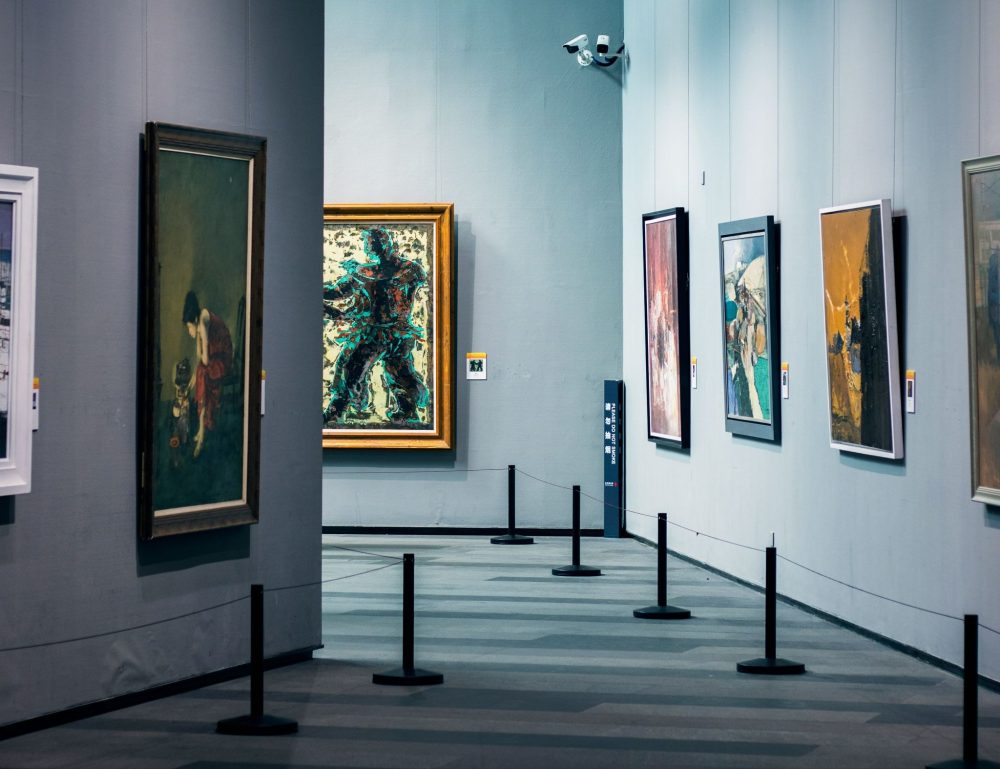
There’s the familiar criticism of high art, that because of the often exorbitant cost of museum tickets, and the general concentration of the “best” museums in expensive cities like San Francisco and New York and Paris and London, high art is in effect only available to those that can afford the experience—an increasingly smaller and smaller demographic. And even then, with the ticket purchased, the traditional museum experience is almost uncomfortably formal, sterile, the space between the viewer and object charged with the tension of surveillance, the boundaries demarked with tape and ropes and sometimes plates of glass, the eyes of guards and ceiling cameras watching you look at the mural or sculpture, watching you watch the video installation. A former teacher of mine, a poet and art lover, told me she disliked art museums because they made her feel constipated.

I don’t especially mind the traditional museum experience, or maybe I’ve just grown accustomed to it. I can’t easily imagine an alternative, a way of being around high art that feels less stiff while also protecting and preserving the art objects. It seems something would have to give. 

I’m reminded of a scene in Garth Greenwell’s novel Cleanness in which the narrator, an American living and teaching in Bulgaria, goes out drinking one night with a group of former students. They gather with their bottles of vodka and cartons of orange juice in a sort of public park or square adorned with a number of marble pillars and cornices, all from antiquity, all in some stage of decay or brokenness. The narrator has a visceral reaction when his former student sets the orange juice carton on top of one of these ancient pillars, using it as a table. But the student pushes back, “ . . . you’re still such an American,” he teases, “we have stuff like this everywhere.” The ancient art existed simply as part of the cityscape; it was there for anyone to touch or sit on or use as a table for their booze. There’s something undeniably democratic about it, the art or artifact made as common and available as a public water fountain or a bench in a park. It makes me want to read that word “American,” in the scene, as “capitalist.”  Whereas the pillar beneath the orange juice has more or less been freed from capital—returned to the people—so much high art, like Littoral Drift, and high archaeology, as we might see in the Egyptian Art Wing of the Met, exists behind the glass plate of money, markets, and valuation. 

Behind the wonder, or next to it, the specter of capital colored almost everything.

My senior year in college, our Art History thesis cohort took a trip to New York, where our instructor, through some friend of a friend, managed to coordinate a private tour of the Met’s painting conservation department. We arrived early to the museum, before it opened, and were escorted through a back entrance to the conservation studios, which I’d expected to look like a sterile, windowless laboratory, all the conservationists in hazmat suits. But the space was gorgeous, warm, with floor-to-ceiling windows on one side, wood tables and stools and easels, the space in reality more like an actual artists’ studio, as though the Rembrandts and O’Keefes had been created there, not just restored. Our guide, Sarah, brought us into the studio and showed us a painting she’d just begun working on, a Renaissance fresco that had been removed from its frame and set across several easels. She walked us through her process, how she removed discolored varnish and old overpaints, how she retouched areas where paint had flaked away, how she “ingilded” abrasions. These people are artists, I thought, listening to Sarah, who wore a smock and magnifying lens and told us about the rates of degradation for different paints. She looked with what seemed authentic wonder at the fresco, a wonder similar, maybe, to mine and my cohort-mates’.  But behind the wonder, or next to it, the specter of capital colored almost everything Sarah said. The fresco was in excellent condition, she told us, for a piece its age, “but even a blemish like this”—we followed her gloved finger to an almost indecipherable irregularity in the paint, the coloration—“even this, if not tended to, or tended to poorly, could drastically impact valuation.” Tens, hundreds of thousands of dollars, she said. She shared the story of an incident she witnessed, a 19th century American portrait dropped, the original frame breaking. “I don’t know what that did to its value,” she said, “but it was a horror story.”

I remember standing there, my awe struck through with disillusionment. 

My mind wandered to a new installation on our college campus. Outside the little Art and Art History building, the school had recently commissioned and installed a large piece by the artist Patrick Dougherty, known for his low-tech, ephemeral outdoor sculptures and semi architectural installations. The piece was made entirely of sticks, sticks woven together into one- or two-stories-high steeples, or tall pointy huts, hollow with a tunnel path through them, so people could pass through, feel surrounded by the work, exist inside of it, and actually reach out and touch the woven-stick-walls. It’s a special experience, being allowed to exercise that childlike instinct to reach out and touch, and also to be allowed, encouraged even, to run one’s hands over the same materials graced, once, by the artist’s hands, for there to exist a physical relationship, across time, between artist and viewer. 

Anyone at any point could have destroyed the Dougherty piece, driven into it with a car or taken a chainsaw to the weave of sticks. But they didn’t. That, too, added beauty to the composition, or my experience of it, that unspoken communal understanding that we will not harm this piece of art, that we will leave the process of decay and gradual degradation to time, just like those marble pillars holding the carton of orange juice in the Bulgarian public park in Cleanness. Collectively, we’d decided to conserve the art—and over time, to let it go. 


I spoke with my professor, after, about my experience in the conservation studio, my dilemmas around preservation and decay and capital, touch and its prohibition, and how it all seemed to swirl between the viewer and the art. He reminded me, over coffee and pastries on the Upper East Side, of the artist Gordon Matta-Clark. I had learned of Matta-Clark in a Postmodernism course, taught by that same professor. He worked in the late 60s, through his death in 1978, and was known for a school or style or philosophy of artmaking he referred to as “Anarchitecture.” Its politics were knit into its name: an art, an architecture, free from governmental systems, free from capital and the high art market. Matta-Clark, who produced some 50 works before he died at age 35, identified buildings and public structures slated for demolition, and on their way to ruin, Matta-Clark made almost sculptural modifications to the buildings. He sawed-in-half a house in New Jersey in 1974, laying bare a sort of cross-section, as one might have seen as a child in those Eyewitness picture books. He dug a wide hole through the floor of an art gallery, and built into its walls—into the Earth of it—a spiral staircase one could actually descend, taking them several yards down below floor-level. In 1975, he made a series of very large cuts through the floor and walls of the wharf building on Pier 52 in Manhattan. Through the cuts in the floor, one could see, or touch, the Hudson River; and through his cuts in the walls, peculiar slants of light fell across the dock, the water, shafts of light one could see, at the right time of day, and walk through. Matta-Clark’s work, generally, was made open to the public when finished. There were no fees or tickets, no rules for how or how not to engage. In fact, his work at Pier 52 was done with no prior permission or permit, so viewers had to sneak through a chain-link fence to experience it. The city issued a warrant for Matta-Clark’s arrest and he was forced to briefly flee the country. None of his projects exist anymore—they were all destroyed or demolished, or in the case of the hole in the gallery floor, filled back in. We know his work only from photographs and accounts of those who saw it.  

Collectively, we’d decided to conserve the art—and over time, to let it go.

No doubt this would have pleased the artist, his art’s ephemerality maintained. But it’s worth noting that many of the photographs taken of his work were later sold for sums I can’t even locate online without paying over $1,000 for the annual “Appraiser” subscription to the database that contains Matta-Clark’s auction data. 

I can envision a past in which the city of New York, having observed the underground interest in Pier 52, decided not to demolish the structure but rather reinforce it, polish it up, and eventually charge $30 per ticket to walk around. Likewise, I can imagine a world in which the Dougherty installation was treated with some sort of preservative chemical and transported to MoMA, left on display for decades. And these pieces might well have maintained some of their impact, their effect on a viewer. But it would all have come at the cost of their ephemerality, their certain and not too distant ruin. Ephemerality would be exchanged for a certain climate-controlled preciousness—Do not touch—as well as market value. Someone would benefit, financially, from their preservation, but it likely would not be the artist benefiting the most, and certainly not the viewer. 


I wonder, is it safe to generalize that touch, or exposure to touch, necessarily devalues a piece of art? Does the very idea that a painting or sculpture has come into direct contact with the public, the viewer’s flesh, make the painting or sculpture worth less money? If this is true, then how powerful a thing touch is. I imagine a scenario in which, across the world, in all the biggest, fanciest museums—all the MoMAs, The Met, The Louvre, the Guggenheims—a group of people coordinated to, all at once, cross the tape lines on the floor and run their hands across all the high-value paintings, the Rembrandts and Basquiats and Dalís and Monet’s Water Lilies. I imagine the paintings’ values all at once plummeting, the paintings themselves largely unaltered, save for the oils from the human hands that touched them. I imagine global art markets collapsing under the weight, the idea, of touch.  

In recent years, in museums across the world, we’ve seen more bold and immediately damaging versions of such organized protest: In early 2025, protesters from the climate activist group Last Generation Canada threw bright pink paint across Picasso’s L’hetaire;  the UK-based coalition Just Stop Oil has been responsible for similar attacks on works by van Gogh and Degas; in August 2024, members of Last Generation Austria poured black oil across Klimt’s Death and Life, and one person glued their hand to the frame—the painting itself, though, was not damaged, as it was encased in glass. I do bristle at these more destructive forms of protests; I’m not interested in purposefully damaging or destroying someone else’s art. But within the idea that canonical high art—Picasso, van Gogh, Degas, Klimt—is a worthwhile target for climate activists, that the art possesses such cultural capital and capital-capital, is this idea that touch, as it pertains to high art, is potent in both what it adds, potentially, to a viewer’s experience of an artwork—see 22-year-old me in rural Vermont, running my hands along the inner walls of the Dougherty installation that was called, I just remembered, So Inclined—and also how touch threatens the capital structures that possess, even fortress, these canonical works. 

I imagine the paintings’ values all at once plummeting, the paintings themselves largely unaltered, save for the oils from the human hands that touched them.

Another figure who comes to mind in relation to art and touch is Alexander Calder. Before my time at SFMOMA, I’d never seen in-person one of Calder’s mobiles, only photos on PowerPoint slides in dark lecture halls. Calder was a tinkerer, and worked across a wide range of media, but he’s best known for these bright, playful mobiles that, to me, look best-suited to dangle above a child’s crib, absently slow-whirling while the child reaches and reaches. SFMOMA had—and still has, as of my writing this—on display a Calder exhibition called “Dissonant Harmony,” which includes a number of his works across media, including little model villages outfitted with motorized trains. But the mobiles are the centerpiece of the exhibition. They hang in their own dedicated gallery, surrounded by windows, the dramatic San Francisco light slanting through downtown high rises, reflecting, creating a certain sparkle in the gallery. Several smaller mobiles, like modest chandeliers, hang around the room’s periphery, while three larger mobiles occupy more prominent positions within the room’s interior; one can walk completely around each of them, 360 degrees. And each is a little different from the others, some composed of black wire, some white, some accented with yellow metal spades, some red, the general shape and composition just a little different in each mobile. 

I recall, written on the wall in big white font against a red background, a quotation from the artist: “Disparity in form, color, size, weight, motion, is what makes a composition.” I liked the quotation, in part, because I could actually see it in the artwork. I could see disparity in the myriad lengths and bends of wire, the different sizes and colors of the spades counterbalancing each other from their respective ends of the mobile. And I could see, or could sense, the underlying desire for motion; these things want to move, to be hung outdoors, maybe, exposed to wind. Calder had gifted one of his large mobiles to the artist Piet Mondrián in exchange for a workspace on Mondrián’s property in Southern France. Mondrián hung it outdoors, where it caught coastal breeze off the Gulf of Lion. 

Toward the end of my time there, SFMOMA organized an event called “Calder in Motion.” People could buy tickets to see, as the title suggested, the mobiles put into motion by specially trained museum staff. I was curious and eager, somehow satisfied that the museum was addressing what I perceived as the elephant in the room, the haunting stasis of these iconic Calder works, the artificial stillness. My press pass got me in for free, so I went both days. I remember standing in the familiar gallery, crowded for the event, almost claustrophobic, and watching the person from the museum gently, precisely set the mobiles into a slow whirl. He used what he called his “Calder push stick,” which looked more or less like an oversized Q-tip. He lined up the head of the Q-tip with the end of the wire, where the dangling spades attached, and carefully pressed—something about his way of doing this reminded me of pushing a canoe or kayak out into a lake, or the sea. A long, slow motion, tender. There might’ve been music streaming overhead. Children watched from the shoulders of their parents.

It was a nice time, if a little awkward. Something about the size of the crowd, the formality of the event, the pricey tickets, stoked my longstanding reservations about high art, access, capital. It all felt misaligned with the very quotidian, wind-chime movement of the mobiles, which in fact I had witnessed once before in that room. 


A year and a half earlier, on a Tuesday morning just after the cyanotype-touching incident with my mother, I arrived at SFMOMA just as they opened. For those first 30 or so minutes, while other patrons checked their bags and coats and bought tickets, I could be alone in this or that gallery. I stood with one of my favorite paintings there, an early Braque, and I spent time with the large Rivera mural they had on display. And I ended up in the Calder gallery, alone for a good while, slow walking around the mobiles, standing close, standing far, taking them all in at once. After maybe 10 minutes like this, I heard a small commotion from the corridor, and turned to see a young kid—five years old? six?—who must’ve wriggled free from his mother. I could see it all happening before it happened, before I actually saw the boy enter the gallery. Or maybe I just wanted to see it, was willing it to happen, rooting for him, egging him on in my head. He came charging into the room, his rainboots clicking against the hard floor, his mother several steps behind, her arms full with their jackets and a disposable camera. She said her son’s name: Julian. She said it again, louder, hurrying to close the distance between them. She reached him just as he reached the mobile, his arm drawn back, winding up, his hand splayed open. It all came together for me then, the mobile in the trees between Mondrián’s home and the sea, the irregular twirl and bounce of it, the trees around it, too, branches bobbing in the wind. My own hand, 10 years earlier, along the rugged weave of the Dougherty outside the art building. The Hudson in late light, in wrinkled motion through the sawed-through slats of Pier 52.  Julian drew back his arm even further. Maybe it’s just how I’ve chosen to remember it, but I think his mother was right there, close enough to reach for his small arm and keep it all from happening. Where was the guard? Julian’s mother let him slap the little red spade hanging low to the ground, and the wind caught the mobile and sent it, however briefly, into motion, slow-whirling in the late morning San Francisco light. Then she took her son’s hand and led him out of the room.

Take a break from the news

We publish your favorite authors—even the ones you haven’t read yet. Get new fiction, essays, and poetry delivered to your inbox.

YOUR INBOX IS LIT

Enjoy absorbing fiction from Recommended Reading on Mondays, strange, diverting work from The Commuter on Wednesdays, and a roundup of our best work of the week on Fridays. Personalize your subscription preferences here.


Original Source Link

Previous Post

‘The inflation outlook has become more concerning’: Consumer prices jumped 3.6% in September

Next Post

WordPress, Wix and Squarespace Compared for Service Businesses

Admin

Admin

PopularPosts

Can a social app fix the ‘terrible devastation’ of social media?

Can a social app fix the ‘terrible devastation’ of social media?

January 5, 2026
How to Design a Path to Growth

How to Design a Path to Growth

November 4, 2025
The 15 Shows We’re Most Looking Forward to in 2025

The 15 Shows We’re Most Looking Forward to in 2025

December 31, 2024
Shares of these Apple suppliers rise, fall with iPhone maker’s stock

Shares of these Apple suppliers rise, fall with iPhone maker’s stock

January 3, 2024

The Walking Dead: Eclipse Dune Officially Unveiled

August 11, 2026
Instagram, TikTok, YouTube finally face day in court over whether they peddle addictive products to kids

Instagram, TikTok, YouTube finally face day in court over whether they peddle addictive products to kids

January 27, 2026

Categories

  • Business (7,923)
  • Events (14)
  • Film (7,837)
  • Lifestyle (5,578)
  • Literature (5,950)
  • Music (7,874)
  • Politics (7,626)
  • Science (7,255)
  • Technology (7,850)
  • Television (7,918)
  • Uncategorized (6)
  • US News (7,960)

RecentPosts

Lance Oppenheim: ‘The line between criminal…

Lance Oppenheim: ‘The line between criminal…

by Admin
October 29, 2026

Barely out of his twenties, Lance Oppenheim has already established...

2026 Screen Music Awards: Full Winners List

2026 Screen Music Awards: Full Winners List

by Admin
October 29, 2026

With four victories, Josh Hogan and Ned Beckley were the...

What We’re Actually Buying in October: Editors’ Favorites

What We’re Actually Buying in October: Editors’ Favorites

by Admin
October 29, 2026

We may receive a portion of sales if you purchase...

The Trailer for the New Author-Adapted PRIDE AND PREJUDICE Just Dropped

The Trailer for the New Author-Adapted PRIDE AND PREJUDICE Just Dropped

by Admin
October 29, 2026

Jane Austen lovers rejoice! A new six-part adaptation of one...

Mbappé is the latest global name to find himself on the wrong side of Chinese patriotism

Mbappé is the latest global name to find himself on the wrong side of Chinese patriotism

by Admin
October 29, 2026

Global brands and celebrities have lost the Chinese market over...

Democratic Socialist Angie Nixon Says She ‘Doesn’t Know’ if She is a Socialist (VIDEO) * The Gateway Pundit * by Mike LaChance

Democratic Socialist Angie Nixon Says She ‘Doesn’t Know’ if She is a Socialist (VIDEO) * The Gateway Pundit * by Mike LaChance

by Admin
October 29, 2026

Screencap of Twitter/X video. During a recent interview with journalist...

Archives

Editor's Picks

Trump Says He Doesn’t Give A Damn That Americans Are Suffering Due To High Gas Prices

Trump Says He Doesn’t Give A Damn That Americans Are Suffering Due To High Gas Prices

October 25, 2026
New mRNA Vaccine Reduces Risk of Melanoma Recurrence by Over 40 Percent

New mRNA Vaccine Reduces Risk of Melanoma Recurrence by Over 40 Percent

October 24, 2026
Todd Blanche refuses to rule out DOJ blocking election certification

Todd Blanche refuses to rule out DOJ blocking election certification

October 23, 2026

Browse By Category

  • Business (7,923)
  • Events (14)
  • Film (7,837)
  • Lifestyle (5,578)
  • Literature (5,950)
  • Music (7,874)
  • Politics (7,626)
  • Science (7,255)
  • Technology (7,850)
  • Television (7,918)
  • Uncategorized (6)
  • US News (7,960)

Useful Links

  • Anti-Spam Policy
  • Copyright Notice
  • DMCA Compliance
  • Earnings Disclaimer
  • Fair Use Disclaimer
  • FTC Compliance
  • Medical Disclaimer
  • Privacy Policy
  • Social Media Disclaimer
  • Terms and Conditions

Copyright © 2022 by Washington Weekly Times. All rights reserved. All articles, images, product names, logos, and brands are property of their respective owners. All company, product and service names used in this website are for identification purposes only. Use of these names, logos, and brands does not imply endorsement unless specified. By using this site, you agree to the Terms of Use and Privacy Policy.

No Result
View All Result
  • Home
  • US News
  • Politics
  • Business
  • Science
  • Technology
  • Lifestyle
  • Music
  • Television
  • Film
  • Literature
  • Contact
    • About

Copyright © 2022 by Washington Weekly Times. All rights reserved. All articles, images, product names, logos, and brands are property of their respective owners. All company, product and service names used in this website are for identification purposes only. Use of these names, logos, and brands does not imply endorsement unless specified. By using this site, you agree to the Terms of Use and Privacy Policy.

We use cookies on our website to give you the most relevant experience by remembering your preferences and repeat visits. By clicking “Accept All”, you consent to the use of ALL the cookies. However, you may visit "Cookie Settings" to provide a controlled consent.
Cookie SettingsAccept All
Manage consent

Privacy Overview

This website uses cookies to improve your experience while you navigate through the website. Out of these, the cookies that are categorized as necessary are stored on your browser as they are essential for the working of basic functionalities of the website. We also use third-party cookies that help us analyze and understand how you use this website. These cookies will be stored in your browser only with your consent. You also have the option to opt-out of these cookies. But opting out of some of these cookies may affect your browsing experience.
Necessary
Always Enabled
Necessary cookies are absolutely essential for the website to function properly. These cookies ensure basic functionalities and security features of the website, anonymously.
CookieDurationDescription
cookielawinfo-checkbox-analytics11 monthsThis cookie is set by GDPR Cookie Consent plugin. The cookie is used to store the user consent for the cookies in the category "Analytics".
cookielawinfo-checkbox-functional11 monthsThe cookie is set by GDPR cookie consent to record the user consent for the cookies in the category "Functional".
cookielawinfo-checkbox-necessary11 monthsThis cookie is set by GDPR Cookie Consent plugin. The cookies is used to store the user consent for the cookies in the category "Necessary".
cookielawinfo-checkbox-others11 monthsThis cookie is set by GDPR Cookie Consent plugin. The cookie is used to store the user consent for the cookies in the category "Other.
cookielawinfo-checkbox-performance11 monthsThis cookie is set by GDPR Cookie Consent plugin. The cookie is used to store the user consent for the cookies in the category "Performance".
viewed_cookie_policy11 monthsThe cookie is set by the GDPR Cookie Consent plugin and is used to store whether or not user has consented to the use of cookies. It does not store any personal data.
Functional
Functional cookies help to perform certain functionalities like sharing the content of the website on social media platforms, collect feedbacks, and other third-party features.
Performance
Performance cookies are used to understand and analyze the key performance indexes of the website which helps in delivering a better user experience for the visitors.
Analytics
Analytical cookies are used to understand how visitors interact with the website. These cookies help provide information on metrics the number of visitors, bounce rate, traffic source, etc.
Advertisement
Advertisement cookies are used to provide visitors with relevant ads and marketing campaigns. These cookies track visitors across websites and collect information to provide customized ads.
Others
Other uncategorized cookies are those that are being analyzed and have not been classified into a category as yet.
SAVE & ACCEPT