WashingtonWeeklyTimes.com
  • Home
  • US News

    Authorities called to Kamala Harris’ Malibu home after strange woman shows up

    Texas Longhorns seek revenge against top-ranked Ohio State after last season’s seven-point loss

    Underdog Promo Code FOXNEWS: Deposit match up to $1,000

    Are We Going Chicken Mad? By Howard Bloom

    Are We Going Chicken Mad? By Howard Bloom

    Former Mets pitcher Al Leiter tells his harrowing 9/11 story of a quiet trip turned tragedy

  • Politics

    Bergan Catholic Defeats Malcolm 31-13

    Biden Judge Halts Planned ICE Holding Facility in California Garlic Country Over Absurd “Septic Tank” Concerns

    Democrats Expect Trump To Cheat In The Midterm

    No Kings Returns to Colorado With Voter Turnout Push

  • Business

    Ex CIA official found with $40 million in gold bars for ‘work-related expenses’ reaches plea deal

    Neuroscientist Jared Horvath: Silicon Valley pushed computers in classrooms, plummeting test scores

    Binge shop while you binge watch with Prime Video’s feature for browsing content-inspired products

    A four-time Fortune 500 CFO makes a huge career bet—joining Polymarket

  • Science

    ‘I’m Really Terrified’: A Mathematician Grapples With AI’s Recent Breakthroughs

    A farmer lost a hammer in his field and went looking for it with a metal detector — instead he found nearly 15,000 Roman coins, gold jewelry and silver tableware buried beneath the soil, one of the richest Roman treasure hoards ever discovered in Britain

    AI researcher Jacob Coxon quit, fearing extinction. Security experts see a familiar fight

    August 2026 Was the Hottest Month Ever Recorded: Copernicus Data

  • Technology

    10 Best Standing Desks Worth Buying in 2026

    Mecka AI nears $500M valuation in Sequoia-led deal amid rush for robot training data

    The 9 Best TV Shows to Stream This Month (September 2026)

    Scammers target hundreds of thousands of crypto owners after Trezor confirms data breach of email provider

  • Lifestyle

    10 Essential Items for Easy + Stylish School Drop Off Outfits

    EVERYDAY CARRY: Domestic | FashionBeans

    What Is Measured After a Building Has Been Dried Out

    Perimenopause Sleep Problems: Causes and What Helps

  • Music

    Lil Durk Acquitted in Murder-for-Hire Trial

    The Roots Talk Hip-Hop Hall of Fame, ‘Endgame’ & Roots Picnic

    The Proclaimers say trans lobby are “truth-phobic” and defend Graham Linehan

    Revisiting Limp Bizkit’s Strange Connection to 9/11

  • Television

    Every Carol Burnett Show Episode Included A ‘Secret’ Message To The Star’s Grandmother

    Anna Pigeon Season 1 Episode 6 Delivers Bombshell Revelations, Family Secrets & Twists!

    ‘The Cheetah Girls: Next Gen’ Wraps Filming

    Before Lanterns, Kelly Macdonald Starred In An Acclaimed Steve Buscemi HBO Series

  • Film

    Back to Buenos Aires – first-look review

    Toronto Purgatory Director Navigates Parents Dark Divorce Comedy

    8 Darkest Justice League Moments in DC History

    Girlhood in Post-9/11 Cinema: Margaret at 15

  • Literature

    Book Riot’s Deals of the Day for September 12, 2026

    September 7 – 11, 2026

    In These Novels by African Women, Coming of Age Is Collective

    Book Riot’s Deals of the Day for September 11, 2026

    Literary Hub » 121 years ago, Russian printers went on strike over commas.

    My Father Called Me His Problem Child

    Book Riot’s Deals of the Day for September 9, 2026

    Literary Hub » Lit Hub Daily: September 9, 2026

    A Debut Novel About Knowing Everything and Nothing

  • Contact
    • About
  • Home
  • US News

    Authorities called to Kamala Harris’ Malibu home after strange woman shows up

    Texas Longhorns seek revenge against top-ranked Ohio State after last season’s seven-point loss

    Underdog Promo Code FOXNEWS: Deposit match up to $1,000

    Are We Going Chicken Mad? By Howard Bloom

    Are We Going Chicken Mad? By Howard Bloom

    Former Mets pitcher Al Leiter tells his harrowing 9/11 story of a quiet trip turned tragedy

  • Politics

    Bergan Catholic Defeats Malcolm 31-13

    Biden Judge Halts Planned ICE Holding Facility in California Garlic Country Over Absurd “Septic Tank” Concerns

    Democrats Expect Trump To Cheat In The Midterm

    No Kings Returns to Colorado With Voter Turnout Push

  • Business

    Ex CIA official found with $40 million in gold bars for ‘work-related expenses’ reaches plea deal

    Neuroscientist Jared Horvath: Silicon Valley pushed computers in classrooms, plummeting test scores

    Binge shop while you binge watch with Prime Video’s feature for browsing content-inspired products

    A four-time Fortune 500 CFO makes a huge career bet—joining Polymarket

  • Science

    ‘I’m Really Terrified’: A Mathematician Grapples With AI’s Recent Breakthroughs

    A farmer lost a hammer in his field and went looking for it with a metal detector — instead he found nearly 15,000 Roman coins, gold jewelry and silver tableware buried beneath the soil, one of the richest Roman treasure hoards ever discovered in Britain

    AI researcher Jacob Coxon quit, fearing extinction. Security experts see a familiar fight

    August 2026 Was the Hottest Month Ever Recorded: Copernicus Data

  • Technology

    10 Best Standing Desks Worth Buying in 2026

    Mecka AI nears $500M valuation in Sequoia-led deal amid rush for robot training data

    The 9 Best TV Shows to Stream This Month (September 2026)

    Scammers target hundreds of thousands of crypto owners after Trezor confirms data breach of email provider

  • Lifestyle

    10 Essential Items for Easy + Stylish School Drop Off Outfits

    EVERYDAY CARRY: Domestic | FashionBeans

    What Is Measured After a Building Has Been Dried Out

    Perimenopause Sleep Problems: Causes and What Helps

  • Music

    Lil Durk Acquitted in Murder-for-Hire Trial

    The Roots Talk Hip-Hop Hall of Fame, ‘Endgame’ & Roots Picnic

    The Proclaimers say trans lobby are “truth-phobic” and defend Graham Linehan

    Revisiting Limp Bizkit’s Strange Connection to 9/11

  • Television

    Every Carol Burnett Show Episode Included A ‘Secret’ Message To The Star’s Grandmother

    Anna Pigeon Season 1 Episode 6 Delivers Bombshell Revelations, Family Secrets & Twists!

    ‘The Cheetah Girls: Next Gen’ Wraps Filming

    Before Lanterns, Kelly Macdonald Starred In An Acclaimed Steve Buscemi HBO Series

  • Film

    Back to Buenos Aires – first-look review

    Toronto Purgatory Director Navigates Parents Dark Divorce Comedy

    8 Darkest Justice League Moments in DC History

    Girlhood in Post-9/11 Cinema: Margaret at 15

  • Literature

    Book Riot’s Deals of the Day for September 12, 2026

    September 7 – 11, 2026

    In These Novels by African Women, Coming of Age Is Collective

    Book Riot’s Deals of the Day for September 11, 2026

    Literary Hub » 121 years ago, Russian printers went on strike over commas.

    My Father Called Me His Problem Child

    Book Riot’s Deals of the Day for September 9, 2026

    Literary Hub » Lit Hub Daily: September 9, 2026

    A Debut Novel About Knowing Everything and Nothing

  • Contact
    • About
No Result
View All Result
WashingtonWeeklyTimes.com
No Result
View All Result
Home Literature

Leslie Jamison Writes A Different Kind of Love Story In “Splinters”

by Admin
March 9, 2024
in Literature
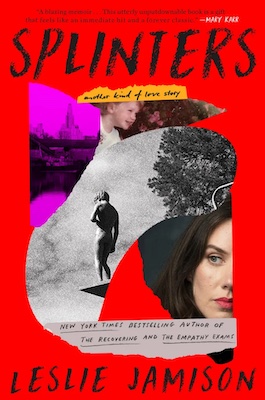
Leslie Jamison Writes A Different Kind of Love Story In “Splinters”


Leslie Jamison’s new memoir Splinters follows the aftermath of divorce and the awakening of motherhood, but it explores desire more than it does any kind of death. Jamison wants to make meaning, to connect, to love, to feel, to mother, to write, and to revise her life endlessly. There are losses and grief along the way, and the entanglements of marriage and motherhood are certainly recurring ghosts that haunt the narrator’s selfhood, as it spreads and ruptures.
Leslie Jamison Writes A Different Kind of Love Story In “Splinters”

The crystalline prose, absurdist humor, and everyday imagism that populate Splinters, however, continually draw us back to the memories and choices that make up a life, in all its messy, irresolvable variation and uncertainty. It’s not a book “about” divorce or motherhood, in other words, but about how we love and want, harm and repair, become and come undone, know and never can, endlessly.

Jamison is, of course, well-established as a master of nonfiction. The Recovering is an epic treatment of addiction and healing; The Empathy Exams and Make it Scream, Make it Burn are each instant-classic essay collections. In Splinters, Jamison turns her equally practiced narrative eye on herself in her first memoir. 

We corresponded about avoiding the binaries of motherhood, writing into shame, and how writing Splinters transformed her.


Amanda Montei: We seem to be having a moment with respect to literary and cultural representations of marriage and divorce, two subjects haunted by moralism. Men, monogamy, romance—all of these spin on an axis in the book, but ultimately, you write about resisting “the delusion of a pure feeling, or a love unpolluted by damage.” Is there something unique about nonfiction, or memoir specifically, that offers the opportunity to write away from such delusions? Your previous nonfiction draws heavily on personal experience, but this book is your first memoir. Did you always know this was the right approach to these subjects, or did you ever consider weaving research and criticism into this book?

Leslie Jamison: I’m grateful to you for this phrasing, haunted by moralism, because it gives me a new way to think about the role of ghosts in the book. From early on, I understood Splinters to be a book about haunting: being haunted by memories of my own marriage when it was full of love and promise, being haunted by the specter of another life in which my daughter was growing up in an unbroken family. (I often think that repeated words function as a psychic X-ray of a book, and in early drafts of Splinters I found the words “ghost” and “haunt” kept showing up over and over again.) But I think there’s a sense in which Splinters is also haunted by certain strains of moralism, too—certainly the notion of moral failure that can attach to divorce, but also the ways that parents, mothers especially, are expected to express their love by their children through various kinds of sacrifice. The book is reckoning with these ethical inheritances, and though there is certainly a vast and fascinating trove of cultural artifacts and histories I could have invoked in this reckoning—the unruly canon of divorce literature, the endlessly interesting (and moralized) history of divorce in America—I can say that this book announced its form and its scope to me quite early.

Splinters is so fully and deeply a book about wanting things, even as it also very much a book about caregiving and gratitude.

From the very beginning, I knew its form—these splinters of prose—and I knew its range: it wanted to stay close to my life, and my body; it wanted to get as deep into consciousness as it could. I wanted it to feel intensely distilled, intensely pressurized, utterly undiluted. When I turned toward cultural history—for example, writing a bit more about the women staying in Reno divorce hotels in the 1920s—the text felt allergic to these inquiries; they felt like grafts that didn’t quite take, like I was turning away from the heat and the pulse.

AM: I found your descriptions of the tedium and rapture of motherhood incredibly delightful—you’re able to capture the absurdity of motherhood and the strain, the many ways in which a mother’s identity is cleaved and confounded, without simply representing the relationship with the baby as a drag. Were there any specific maternal tropes you wanted to avoid while writing this book, or did you enter the process of writing about motherhood in some other way?

LJ: I truly loved your writing about motherhood in Touched Out as well, especially in this particular way: thinking rigorously about the ways many things can be true at once about intimacy and bodily closeness. More than anything, I wanted to avoid the binary I felt looming in so many representations of motherhood: either glorifying it at the expense of representing its hardship, or else somehow articulating this hardship in a way that seemed to efface or exclude its delight, profundity, and wonder. 

With parenting, perhaps because it feels so intense, it can sometimes feel like you are compromising the force of a feeling by letting in another feeling as well, especially one that feels perpendicular. I wanted to let all the feelings in, which felt simply like paying attention to the ways they were already there. 

There’s a moment in the book where I’m trying to tell my ex-husband about a day spent with my infant daughter at the Botanic Gardens, and realizing that the sense of wonder I’m trying to articulate somehow means that the exhaustion of the day is getting lost—but also really wanting to resist the idea that in order to make the labor visible, I have to narrate the whole thing as an impossible hassle. Why can’t it be wondrous and labor at once? That’s one of the milk-drenched battle cries of the book. 

AM: Yes, I loved that moment in the book so much, and I felt that milk-drenched battle cry! Speaking of, desire is central to this book as well—the desire to be an attentive and present mother, but also the hunger for a sexual life, a creative life, a pleasurable life, and for a lover who will care for the mother. A mother who desires anything beyond motherhood is still, I think, quite radical (even though, of course mothers want!). I wonder if you felt the danger and subversiveness of such honesty as you wrote—or perhaps the necessity of it?

LJ: A lover who will care for the mother! Yes, please. Splinters is so fully and deeply a book about wanting things, even as it also very much a book about caregiving (offering others the things they need and want) and a book about gratitude (feeling grateful for many things I hadn’t even known I wanted.) Even as we live in the shadow of a certain hollow Reagan-era 80s feminism of women “wanting it all” and even “having it all,” I think there is still—as you say—all kinds of shame attached to maternal desire. Shouldn’t the mother be more worried about what other people want? She certainly shouldn’t want things that get in the way of satisfying the wants and needs of others. 

The act of mothering my daughter has given me this incredible proximity to consciousness in formation.

Writing into that shame—or the cultural script that makes us feel susceptible to that shame—was absolutely one of the projects of Splinters, especially as I feel acutely aware that my ability to follow multiple veins of desire—wanting to be a mother, and an artist, and a teacher—is absolutely predicated on kinds of material stability not available to so many other mothers. To put it crudely: financial stability makes it possible not only to act on wanting many things but perhaps, even deeper down, to explicitly admit these desires, to grant them room in the psyche. 

While there is difficulty in reconciling these identities— mother, lover, thinker, writer—the book also explores the creative transformation provided by motherhood. Can you share a bit about how mothering has altered your creative and intellectual practice, your perception of the world, your writing, or your sense of attention?

I think this is absolutely another trope of motherhood that I was interested in writing against: the narrative of motherhood and art as necessarily or unequivocally competing gods, always undermining each other in the finite economies of time and attention. There’s a way in which the mother-artist is always pitted against herself, insofar as the two identities on either side of that hyphen are often understood as locked in competition. Feed one wolf and the other starves. And I think it’s important to acknowledge the ways this is true: time and attention are finite economies. No one can clone herself (not yet at least) in order to simultaneously embark on an intricate crafts project with the kid and finish her novel at once. The ability to even try to do both things is often mostly dependent on being able to pay for childcare. All those constraints are real and shouldn’t be sugar-coated away.

But at the same time, there are ways in which motherhood has been transformative and deeply generative for my life as an artist, too—not just because I write about being a mother, but because being a mother has sharpened my curiosity, expanded the range of my investments, and pressurized my relationship to time. The last of these is the most pragmatic. Now that I have a daughter, and her wellbeing is the core of my days, the logistical non-negotiable, there’s a sense of stolen urgency that feels like a heat source underneath the hours of my days—time always feels like I’m moving toward the edge of a cliff, the cliff of running out of time, and that makes me work differently, more feral and focused and ferocious about the time I have. 

As for investment and curiosity, here we go: the act of mothering my daughter has given me this incredible proximity to consciousness in formation. I mean, I truly believe that consciousness is always in formation—we are always changing, we are always dying and becoming—but a kid is learning what clouds are. She is learning that the heart of a whale is as big as a van. She is learning her own capacities for cruelty and compassion. She is learning what it means to have a second gummy bear and give it up. There’s so much to observe, so much to notice, so much to learn from what my daughter is thinking and imagining. (She is six now, and just recently made up an imaginary game she calls, “I think I’m right but I’m not actually right.” The very existence of this game seems like something I could think about for the rest of my life.) So there’s a way that she is teaching me, and asking me to pay attention, in ways that feel new and always renewing. 

AM: I want to ask a question that is the inverse of the what do the men in your life think about this book, what will the baby think question. Here’s what I have: What did writing this book offer you? You write in one section about the importance of understanding what painful or complicated experiences do for us. Has writing this book opened up any other new perspectives for you on craft, creativity, work, identity, caregiving, or love, perspectives that perhaps you didn’t have access to when you began writing this book?

Leslie Jamison Is Hauling Out Her Emotional Baggage


“Make It Scream, Make It Burn” looks for the messy truths underpinning ordinary lives

Sep 23 – Raksha Vasudevan

Interviews

Bird kite


LJ: Writing Splinters has transformed me in so many powerful ways. Here are a few: It’s changed the way I think about memory—sharpened my sense of a certain give and take, where we go back into memory asking it to illuminate certain ideas we have about ourselves and our lives, and maybe it does that work, but it also ambushes us with bits of awareness or challenge we weren’t expecting. It’s given me a clearer sense of friendship and teaching as places where I wanted to direct my care and my love after my marriage unraveled. It’s given me a way to articulate and keep safe the love that existed in my marriage, by writing it down, and a way to hold the care I still feel for my ex-husband, by writing into the arc of witnessing him more fully as a loving and devoted father. More than anything, it’s given me a powerful framework and conviction for this gut-level knowledge I’ve always had, but didn’t always have language for—that I’m truly a student of my daughter; not in a saccharine or easy sense but in a profound and ongoing sense. I learn so much from her ways of being in the world, and from the work and joy of being her mother. 

AM: This book is composed in fragments, but there’s a steady thrum of plot throughout the book as well. One discussion I often have with writing students who want to work in fragments is the necessity of creating some sort of backbone, or establishing some architecture, to sustain the work and pull the reader through the text. Can you share a bit about your process putting the three acts of this book together? What do you tell your students who work in this style about the possibilities or risks of creating a fragmented narrative?

LJ: I couldn’t agree more about the necessary thrum, and the crucial role of architecture in a fragmented work—not necessarily “holding together” the fragments, and certainly not arranging them into something linear, but giving a reader a sense of momentum and purpose. In Splinters, whose title refers to the form of the book (these narrative shards) as well as its content (memories lodged beneath the skin), I wanted to offer the reader two different kinds of momentum to move them through these whittled, glinting daggers of prose: There’s the narrative plotline of what happens—I have a baby, I leave my marriage, I build another kind of life in the aftermath—and then the emotional plotline of reckoning with central core questions: How do I hold joy and grief at once? How do I let my love for my daughter course through my days without feeling that the pain of my marriage ending should somehow negate it? How do I move between various roles (mother, lover teacher, ex-wife, daughter) without feeling split apart, or contradictory? I wanted these questions to feel like intellectual and emotional engines inviting or propelling a reader forward through the prose. 

If plot is a way to ask a reader to come with you on a journey, then I think questions can also function as a different flavor of invitation: Come with me, as I try to reckon with this question, or learn how to live inside of it. Questions can also be a way to help readers find a place for themselves and their own lives in the text, even if they don’t share the particular experiences that it narrates. Even if someone has never had a kid, been married, been divorced, they have probably struggled—in some era of their living—with the question of living through pain and happiness at once, figuring out how to hold both. Asking that question in the text is a way of saying: If you’ve ever wrestled with this question, this book is for you.

Take a break from the news

We publish your favorite authors—even the ones you haven’t read yet. Get new fiction, essays, and poetry delivered to your inbox.

YOUR INBOX IS LIT

Enjoy strange, diverting work from The Commuter on Mondays, absorbing fiction from Recommended Reading on Wednesdays, and a roundup of our best work of the week on Fridays. Personalize your subscription preferences here.


Original Source Link

Previous Post

The Devil Wears Prada’s Jeremy DePoyster Discusses New Song

Next Post

12 Anti-Inflammatory Breakfast Recipes a Nutritionist Loves

Admin

Admin

Next Post
12 Anti-Inflammatory Breakfast Recipes a Nutritionist Loves

12 Anti-Inflammatory Breakfast Recipes a Nutritionist Loves

Suits: LA, Mayfair Witches, You & More Add Cast as Acting Jobs Dry Up Across the Industry

Suits: LA, Mayfair Witches, You & More Add Cast as Acting Jobs Dry Up Across the Industry

Razzie Awards: ‘Winnie The Pooh: Blood and Honey’ Sweeps

Razzie Awards: 'Winnie The Pooh: Blood and Honey' Sweeps

PopularPosts

Actress Cast in ‘Teacup’ – TVLine

Actress Cast in ‘Teacup’ – TVLine

February 28, 2024
PlayStation Plus Free Games Lineup For January 2026 Is Bleak

PlayStation Plus Free Games Lineup For January 2026 Is Bleak

December 26, 2025

3 Trends Worth Investing In, according to Our Fashion Buyers

January 30, 2024
Trump Media reports  million loss for quarter as revenue falls

Trump Media reports $16 million loss for quarter as revenue falls

August 10, 2024
US military research center denies NJ drones are theirs

US military research center denies NJ drones are theirs

December 11, 2024
Dress Code: Squire

Dress Code: Squire

November 27, 2022

Categories

  • Business (7,830)
  • Events (14)
  • Film (7,758)
  • Lifestyle (5,494)
  • Literature (5,876)
  • Music (7,813)
  • Politics (7,531)
  • Science (7,201)
  • Technology (7,756)
  • Television (7,824)
  • Uncategorized (6)
  • US News (7,866)

RecentPosts

10 Best Standing Desks Worth Buying in 2026

by Admin
September 13, 2026

Tips and Frequently Asked QuestionsIs a Standing Desk Worth It?AccordionItemContainerButtonNew...

‘I’m Really Terrified’: A Mathematician Grapples With AI’s Recent Breakthroughs

by Admin
September 13, 2026

Mathematician and author Steven Strogatz starts to cry when he...

Back to Buenos Aires – first-look review

by Admin
September 13, 2026

As a man returns from the brink of death in one...

Every Carol Burnett Show Episode Included A ‘Secret’ Message To The Star’s Grandmother

by Admin
September 13, 2026

Michael Ochs Archives/Getty Images Comedy legend Carol Burnett's wonderfully unique...

10 Essential Items for Easy + Stylish School Drop Off Outfits

by Admin
September 13, 2026

We may receive a portion of sales if you purchase...

Book Riot’s Deals of the Day for September 12, 2026

by Admin
September 13, 2026

Today’s Featured Book Deals $1.99Stay True by Hua HsuGet This...

Archives

Editor's Picks

13 Best Square Watches for Men 2026

September 11, 2026
Dr. Stacy Crevello Guests On “If These Walls Could Talk” With Hosts Wendy Stuart and Tym Moss Wednesday, September 9th, 2026

Dr. Stacy Crevello Guests On “If These Walls Could Talk” With Hosts Wendy Stuart and Tym Moss Wednesday, September 9th, 2026

September 6, 2026

Maven Robotics wants to steal your robot deployment deal

September 10, 2026

Browse By Category

  • Business (7,830)
  • Events (14)
  • Film (7,758)
  • Lifestyle (5,494)
  • Literature (5,876)
  • Music (7,813)
  • Politics (7,531)
  • Science (7,201)
  • Technology (7,756)
  • Television (7,824)
  • Uncategorized (6)
  • US News (7,866)

Useful Links

  • Anti-Spam Policy
  • Copyright Notice
  • DMCA Compliance
  • Earnings Disclaimer
  • Fair Use Disclaimer
  • FTC Compliance
  • Medical Disclaimer
  • Privacy Policy
  • Social Media Disclaimer
  • Terms and Conditions

Copyright © 2022 by Washington Weekly Times. All rights reserved. All articles, images, product names, logos, and brands are property of their respective owners. All company, product and service names used in this website are for identification purposes only. Use of these names, logos, and brands does not imply endorsement unless specified. By using this site, you agree to the Terms of Use and Privacy Policy.

No Result
View All Result
  • Home
  • US News
  • Politics
  • Business
  • Science
  • Technology
  • Lifestyle
  • Music
  • Television
  • Film
  • Literature
  • Contact
    • About

Copyright © 2022 by Washington Weekly Times. All rights reserved. All articles, images, product names, logos, and brands are property of their respective owners. All company, product and service names used in this website are for identification purposes only. Use of these names, logos, and brands does not imply endorsement unless specified. By using this site, you agree to the Terms of Use and Privacy Policy.

We use cookies on our website to give you the most relevant experience by remembering your preferences and repeat visits. By clicking “Accept All”, you consent to the use of ALL the cookies. However, you may visit "Cookie Settings" to provide a controlled consent.
Cookie SettingsAccept All
Manage consent

Privacy Overview

This website uses cookies to improve your experience while you navigate through the website. Out of these, the cookies that are categorized as necessary are stored on your browser as they are essential for the working of basic functionalities of the website. We also use third-party cookies that help us analyze and understand how you use this website. These cookies will be stored in your browser only with your consent. You also have the option to opt-out of these cookies. But opting out of some of these cookies may affect your browsing experience.
Necessary
Always Enabled
Necessary cookies are absolutely essential for the website to function properly. These cookies ensure basic functionalities and security features of the website, anonymously.
CookieDurationDescription
cookielawinfo-checkbox-analytics11 monthsThis cookie is set by GDPR Cookie Consent plugin. The cookie is used to store the user consent for the cookies in the category "Analytics".
cookielawinfo-checkbox-functional11 monthsThe cookie is set by GDPR cookie consent to record the user consent for the cookies in the category "Functional".
cookielawinfo-checkbox-necessary11 monthsThis cookie is set by GDPR Cookie Consent plugin. The cookies is used to store the user consent for the cookies in the category "Necessary".
cookielawinfo-checkbox-others11 monthsThis cookie is set by GDPR Cookie Consent plugin. The cookie is used to store the user consent for the cookies in the category "Other.
cookielawinfo-checkbox-performance11 monthsThis cookie is set by GDPR Cookie Consent plugin. The cookie is used to store the user consent for the cookies in the category "Performance".
viewed_cookie_policy11 monthsThe cookie is set by the GDPR Cookie Consent plugin and is used to store whether or not user has consented to the use of cookies. It does not store any personal data.
Functional
Functional cookies help to perform certain functionalities like sharing the content of the website on social media platforms, collect feedbacks, and other third-party features.
Performance
Performance cookies are used to understand and analyze the key performance indexes of the website which helps in delivering a better user experience for the visitors.
Analytics
Analytical cookies are used to understand how visitors interact with the website. These cookies help provide information on metrics the number of visitors, bounce rate, traffic source, etc.
Advertisement
Advertisement cookies are used to provide visitors with relevant ads and marketing campaigns. These cookies track visitors across websites and collect information to provide customized ads.
Others
Other uncategorized cookies are those that are being analyzed and have not been classified into a category as yet.
SAVE & ACCEPT