
































“Nothing will come of nothing: speak again.” —William Shakespeare, King Lear (1606)
 Amongst the Adirondack woods outside of Hurley, New York is the Maverick Concert Hall, built from unadorned timber and topped with a wood-shingled and corrugated metal roof. On an evening in late August of 1952, an audience gathered here for the premier of nine works, including Pierre Boulez‘s polyrhythmic “First Piano Sonata” and Henry Cowell‘s The Banshee, in which the pianist must manipulate the instrument’s strings. The organizers had used the I Ching to ascertain the program’s order. By fortuitous coincidence, the most notorious composition was performed last. Written by John Cage, already among the most daring of American composers, it would be performed by David Tudor, a brilliant Swarthmore-trained pianist. Louis Menand writes in The Free World: Art and Thought in the Cold War that Tudor “was an indispensable figure in postwar avant-garde music because he was one of the few people in the world who could play it,” a prodigy adept in discordance and atonality, but whose most challenging performance was at Maverick. Sitting down at the piano, Tudor opened his sheet music, started a stopwatch, and closed the fallboard. He then sat silently for 30 seconds while simply turning the score’s pages. Tudor repeated these actions for the second movement, this time for two minutes and 23 seconds, and then for a third movement of one minute and 40 seconds. The score was nothing but a rest lasting for four minutes and 33 seconds.
During the premier of 4’33”, Tudor recalled that the audience was “incensed.” Murmuring in the crowd, some shuffling, then sighing, and finally people getting up to leave as Tudor sat there. Though Cage was the composer of strange and incandescent music—Imaginary Landscape No. 1, which relies on using a phonograph as an instrument; Credo in Us, which uses a radio; and the minimalist and sanctified String Quartet in Four Parts—4’33” is the piece with which he became most associated. Ironically, beforehand Cage most brought to mind noise. The son of a Los Angeles inventor, he made his own instruments from hubcaps and brake drums, and pioneered the prepared piano wherein he placed utensils, screws, and bolts on the strings to produce a jarring cacophony. This was the man who in his 1937 manifesto The Future of Music had written, “I believe that the use of noise to make music will continue and increase,” accurately predicting the advent of electronic music, “which will make available for musical purposes any and all sounds that can be heard.” And now the composer would forever be linked with silence.
 From Cage’s perspective, however, that night Maverick was resplendent with beautiful noises. In a Saturday Evening Post interview from 1968, he recalled, “You could hear the wind stirring outside during the first movement. During the second, raindrops began pattering on the roof, and during the third the people themselves made all kinds of interesting sounds as they talked or walked out.” Sometimes the composition is reduced to gimmick, a pretentious stunt, but Cage had steadfastly worked at 4’33”, using tarot cards rather to decide the exact length of each movement. He would go on to say that it was his favorite piece. Menand explains that this work was “committed to a traditional view of art as a transformative experience, and [Cage and Tudor were] highly disciplined,” with the latter counting out the exact length of each rest. Like much of experimental classical composition or modern art, if taken on its own terms 4’33” is beautiful, a song that can be performed by anyone, anywhere, at any time. If you were at Maverick, you would have heard the cool wind of primordial autumn through the Hudson Valley, the summer’s last crickets singing, the gentle patter of soft rain on a corrugated metal roof. Only the Western suspicion of nothingness causes some to dismiss the composition as joke or flatulence; such is the inability to countenance the absent, the silent, the void, whether in art and music, or nature and mathematics. Drawing from his own fascination with Zen Buddhism, Cage had become enraptured by the possibilities of silence—of nothingness. “It was at once a head-spinning philosophical statement and a Zen-like ritual of contemplation,” writes Alex Ross in The Rest is Noise: Listening to the Twentieth Century, “a piece that anyone could have written, as skeptics never failed to point out, but, as Cage seldom failed to respond, no one else did.”
*
On the hard rock of the ninth-century Chaturbhuj Temple in Madhya Pradash there is an otherwise inauspicious symbol chiseled as part of a calculation of the dimensions for a garden that grew flowers for ritual garlands: “0.” Not the earliest instance of the number zero, but the most tangible of such antiquity, a little circle holding its emptiness within. Indian mathematicians had been using zero for 600 years by this point, for as early as the third-century the Sanskrit Bakhshali manuscript records a black dot inked onto birch bark as representing the strange number of complete absence. Zero had been gestured towards by mathematicians in other places, in earlier centuries: The Egyptians, for instance, used a numeric placeholder for nothing in their base 10 system, a symbol tellingly identical with the hieroglyph for “beauty,” while the Babylonians, within their cumbersome sexagesimal system, signified zero as a merely a gap within numbers, as if something illicit and unspeakable. The Chinese mathematical treatise Sunzi Suanjing deployed a version as early as the first century, and even Ptolemy understood that nothing was often the result of arithmetic. To be out of flax seed, devoid of sorghum, empty of wheat—ancients could understand that. But to have nothing, in a deep, fundamental, elemental, metaphysical way, was contrary to the imagination. And yet nothing is what we got.
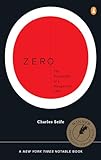

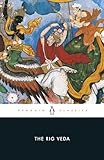 It wasn’t that the Egyptians or Greeks couldn’t imagine zero—none of these cultures were mathematical slouches—but as Charles Seife writes in Zero: The Biography of a Dangerous Idea, the concept was so “abhorrent… that they chose to live without it.” Having no pomegranates or dates left over is one thing; having nothing is something else. To the Greeks and Romans it was disorienting, abhorrent, ungodly. As Lucretius would bluntly state in his poem “On the Nature of Things” from the year 50 BCE, “We cannot conceive of matter being formed of nothing.” What the Indians discovered was different from what the Babylonians, Egyptians, and Greeks had used. Hindu mathematicians posited that nothing is in fact something. For the Egyptians, the universe was born from the Nile; the Babylonian Enuma Elish described a primordial domain of “waters comingling as a single body,” but the Hindu Rig Veda descends into a time before time, when even the “non-existent was not,” a nothing so complete that it can consume even itself. By the seventh-century, 200 before the carving at Chaturbhuj, the mathematician Brahmagupta would confidently write in the Brahmasputha Siddhanta that “Zero divided by zero equals zero,” among other correct arithmetical principles. Whether born from Vedic metaphysics or not, Indian mathematicians discovered that zero is convenient as more than mere placeholder; it is the invisible regent of the base 10 numeric system.
Despite their repugnance at a vacuum, even Westerners would eventually accede to zero’s practicality. By the ninth century, the Persian scholar Muhammad ibn Mūsā al-Khwārizmī was using Hindu numerals, which were transmitted to Al-Andalus in the south of what is today Spain, where they then migrated into Latin Christendom, known forever as Arabic numbers. The Italian polymath Fibonacci, of the famed sequence, was responsible for popularizing Arabic numbers and zero, gushing in his Liber Abaci of 1201 that the “nine Indian figures are 987654321. With these nine figures, and with the sign 0, any number may be written.” A marked improvement over Roman numerals, zero and its nine siblings were a paradigm shift. Nothing, nil, nix, nada, zed, zero. Perhaps because of its similar pronunciation to the word for the mythic Western wind zephyr, Fibonacci used the Italian neologism zefiro, itself a bastardized translation of the Arabic sifr, which in an evocation of the endless, expansive eternity of the desert means “empty,” itself borrowed from the Sanskrit sunya or “void.” Even “empty” conveys something, but a void is the most abject darkness.
 What makes zero fascinating—and troubling—is that despite its unsettling abstraction it’s extremely useful. Zero makes it possible to contemplate the deathless eternity of non-existence, as well as to make change at Starbucks. Robert Kaplan writes in The Nothing That Is: A Natural History of Zero that the “disquieting question of whether zero is out there or a fiction will call up the perennial puzzle of whether we invent or discover the way of things.” Numbers are the most elegant of objects, for only they remain true while being not real, none of them more so than zero itself. What that in turn forces us to confront is whether or not nothing can ever truly mean anything, or if a vibrant thisness must ever float back in, like the sound of crickets on an upstate New York evening.
*
Critic James Fitzsimmons, appraising an exhibition at the Stable Gallery in Manhattan in the fall of 1953, succinctly described the nothingness of 26-year-old painter Robert Rauschenberg‘s White Painting series as a “gratuitously destructive act.” No neophyte himself, Fitzsimmons saw Rauschenberg as trading in cynical gimmicks, found objects from boulders to bicycle seats repositioned and given the aura of art, something done by Marcel Duchamp and Man Ray a generation before. “How dull they seem 25 years after Dada,” wrote the critic. Yet it was White Paintings that particularly incensed Fitzsimmons. The series comprises five paintings, each of them with various numbers of panels. (Specifically: one, two, three, four, and seven panels.) Rauschenberg had applied commercial paint—the same sort produced by Sherman-Williams—and coated it in varying degrees of thickness across his canvasses. As with the ambient noise in the background of 4’33”, the White Paintings manifest differences of shade and darkness, and the compositions appear altered in various lights throughout the day. Hubert Crehan of Art Digest wasn’t buying it; at an exhibition held a year later, he wrote that since Rauschenberg was “[d]etermined to avoid the responsibility of an artist, it is better that he should show blank canvases rather than the contraptions that he has hung in this side show.”
Rauschenberg, the son of fundamentalist Texans, painted the series in 1951 while at the Black Mountain College, an experimental institution in rural North Carolina that had also attracted such luminaries as choreographer Merce Cunningham and engineer Buckminster Fuller. Writing to his friend Betty Parsons that year, he described these “canvases organized and selected with the experience of time and presented with the innocence of a virgin.” For Rauschenberg, it is “completely irrelevant that I am making them—Today is their creator.” To immerse yourself in their monochromatic totality is to experience a paradox of nothingness. “Zero is powerful because it is infinity’s twin,” writes Seife. “They are equal and opposite, yin and yang. They are equally paradoxical and troubling… nothingness and eternity, the void and the infinite, zero and infinity.” Journalists may have been dismissive of the White Paintings, but somebody who wasn’t was a Black Mountain College professor who first saw them in Rauschenberg’s North Carolina studio, an instructor of music named John Cage who described them in his book Silence as “airports for the lights, shadows and particles.” Cage would fully credit Rauschenberg’s paintings as the inspiration for his own 4’33”.
Part of the enigma of Rauschenberg’s paintings and Cage’s composition is that although they’re concerned with nothing, they’re not nothing themselves. They’re minimalist, non-representational, and for Fitzsimmons and Crehan they’re not very good, but what they aren’t is nothing. At best, both 4’33” and the White Paintings are art which gestures towards nothingness, but it’s impossible for them to be nothing. What would art which is nothing even be? Cage composed a song in 1962 entitled 0’0”, the entirety of the score a single sentence which read “In a situation provided with maximum amplification (no feedback), perform a disciplined action.” A song entitled 0’00” can by definition never be played while simultaneously played continuously, since every second is equally divisible by zero. “Dividing by zero,” writes Seife, “allows you to prove, mathematically, anything in the universe.”
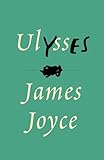
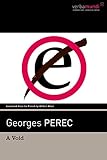 Cage and Rauschenberg’s focus is the same as the apophatic theologians who adhere to an understanding that no positive qualifiers can be applied to anything as ineffable as God, and so a rhetoric of nothing must be used instead. As the third-century Church Father Tertullian argued in Apologeticus, “That which is infinite is known only to itself,” which is equally true of God and nothing, because they’re the same thing. Literature contends with the apophatic at a slant. When somebody says that a novel is “about nothing,” they normally mean that they found it to be boring. That’s not what I’m talking about. None other than Carl Jung wrote a blistering criticism of James Joyce‘s Ulysses in a 1932 issue of the Europäische Revue, complaining that the author had focused on a “day on which, in all truth, nothing happens. The stream begins in the void and end in the void.” Respectfully, lots of stuff happens in Ulysses—Leopold Bloom eats offal, he gets attacked by an antisemite, he goes to a brothel. June 16, 1904 is a memorable day. When we try to imagine a literature that’s actually about nothing, we are silenced—what one doesn’t say is crucial. That’s the method which French author George Perec took in his 1969 novel A Void. Perec was a founding member of the Oulipo, the French “Workshop of Potential Literature,” which was composed of both writers and mathematicians fascinated by formal constraint. Perec’s book is defined by an absence, written entirely without the letter “e,” across an astounding 300 pages. Even more amazingly, A Void was successfully translated into English, where the letter “e” is even more common than in the French. “A gap will yawn, achingly, day by day,” writes Perec, “it will turn into a colossal pit, an abyss without foundation, a gradual invasion of words by margins, blank and insignificant, so that all of us, to a man, will find nothing to say.” As a description of emptiness, and well-crafted; because of the missing letter it’s sublime. Still, it’s hard to say that Perec’s A Void is any more “about” nothing than Ulysses. It’s actually a mystery novel: clues are found, leads are investigated, stuff happens.
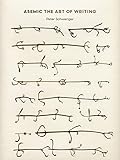 The radical calligraphic tradition known as “asemic” writing more fully skirts the edge of pure being. The term itself was first used in the late ’90s by poets Tim Gaze and Jeff Leftwich, with the former writing in the first issue of the journal Asemic Movement that “anything which looks like writing, but in which the person viewing can’t read any words,” is asemic. The origins of the form are in eight-century China, around the same time that Indian mathematicians began exporting zero. Independent of undeciphered writing, like the ancient Mycenean script Linear B, or the enigmatic fifteenth-century Voynich manuscript that may or may not mean anything, asemic writing is the production of non-existent letters, illusory words, impossible sentences. Peter Schwenger writes in Asemic: The Art of Writing that the “result is a kind of cognitive dissonance: writing is evoked at the same time that we are estranged from it… something that calls for explanation—that is, a stimulus to thought.”
Arguably the first to produce such works was the master calligrapher and Tang Dynasty poet Zhang Xu, a member of the Chinese poetic group the Eight Immortals of the Wine Cup. Known for the flourish of his artistry, Zhang would drunkenly produce gorgeous cursive script, all of it meaningless. Along with his student Huaisu, such asemic calligraphy would become a central spiritual practice of Japanese Zen Buddhism, particularly the drawing of the Ensō, a perfect circle produced when the mind is cleared of everything. As with Cage’s silence filled with noise or Rauschenberg’s absence filled with shadow, so the Ensō has incredible detail, each strand and flourish of the brush producing a slightly different grain each time that the calligrapher draws her perfect circle, which looks exactly like a beautiful black inked number zero.
Or, as another example, consider the English occultist, Rosicrucian, hermeticist, and kabbalist Robert Fludd‘s 1617 account of the universe’s creation The Metaphysical, Physical, and Technical History of the Two Worlds, wherein he promises to reveal the secrets of reality’s creation and so presents a black page. As with the White Paintings, Fludd’s black square isn’t uniform; there are places where the printer’s ink hasn’t adhered equally, where the darkness is both more and less. As if to underscore the relationship between nothingness and its ostensible opposite, Fludd writes at the border of the page (the thin line which is the only portion of not inked): “Et sic in infintum.” And so on to infinity. Eugene Thacker writes in the Public Domain Review that it was as if “Fludd had the intuition that only a self-negating form of representation would be able to suggest the nothingness prior to all existence, an un-creation prior to all creation.” That’s all that can be done to approach nothingness outside of mathematics: nothing can only be alluded to, and what better way than to enlist the aid of blackness, for as Fludd described that primordial zero it was “mist and darkness of this hitherto shapeless and obscured region… dark, and dense part of the abyss’s substance.”
 Another way writers’ approach nothing is by still using superficially comprehensible language, but pushing it to the limits of semantic sense. “We turn over this seeming nonsense with a kind of reflective zest, savoring the difference between what it says and what it means,” writes Kaplan in The Nothing That Is. Whether by paradox or pun, nothing is cornered obliquely. Kaons, the paradoxical statements of Zen Buddhism, that tradition the most comfortable to dwell in what’s empty, often invoke nothingness. “Nothing exists,” says the Zen priest, and the short sentence is nonsensical even though grammatically correct. This sort of statement embodies what’s counterintuitive about nothing, it must “exist” (even our mathematics wouldn’t work without it), but to apply language to it is absurd. Another early instance of playing with nothing’s semantic confusions appears in Homer’s The Odyssey, when Odysseus blinds the cyclops and tells him that his name is “Noman,” so that the poor monster cries that “it is no man that is slaying me.” And in the seventeenth-century, the notorious libertine John Wilmot played with the concept in his atheistic lyric “Upon Nothing.” Critic Stephanie Burt explains in Poetry that Wilmont “relies on a pun, treating ‘nothing’ sometimes as if it were the name of a thing, the opposite of some other thing, and at other times, more properly, as the absence of any nameable thing.” Both Kaons and Wilmot’s lyric show the inadequacies of language: “Ere Time and Place were, Time and Place were not, /When primitive Nothing Something straight begot;/Then all proceeded from the great united What.” A more contemporary example of the same punning is in John Lennon’s lyrics to “Across the Universe” from the album Let it Be. “Nothings gonna change my world,” Lennon pleadingly sings in the chorus, alongside his own Hindu mantra. This can be read two ways; either as a statement of stasis, or if “nothing” is an ineffable something as an axiom of transformation. The question is whether the lyric is about adding by zero or multiplying by it—or dividing by it—which is integral.
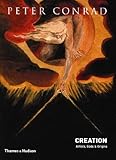
 Nothingness is a field of potentiality, electric sparks of maybe flittering in and out of reality. Nothing is the greatest literature. As with kaons, this can be read two ways—either that it’s impossible to categorize any one work as better than all the rest, or that some ineffable “nothing” is what is literally the greatest work of literature. I err towards the literal, as paradoxical as it might seem. Fiction is sustained through nothingness, it spins elaborate illusions. Miguel de Cervantes‘s Don Quixote is a tangible character, but his status is as imagined as those giants. “Thou hast seen nothing yet,” Cervantes writes, and it is true, a reader has seen nothing. Then there is the question of where authorial inspiration comes from —from the detritus of scattershot reading and misplaced experience, or from the void itself? In Creation: Artists, Gods & Origins, Peter Conrad asks “where our ideas come from. The puzzle of origins… is at its most perplexing and enticing when I think about the inception of art. Every time a sentence is written or a line sets out on a journey across a canvas or a row of notes organized into a melody, we see a world being created.” Obviously, artists draw inspiration from their influences: there was no Cage without Arnold Schoenberg, no Rauschenberg without Duchamp. And yet there are alternative models as well, for as Conrad writes, “To create… meant to make something out of nothing,” for the “creation itself… had no objective existence, no reason to exist at all.” Obviously as writers our texts are a tissue of many inspirations, and yet the example of Genesis posits spontaneously generated creation. What would a creation of no influences even look like? It might sound like 4’33” or look like the White Paintings. For some ancient philosophers, particularly the Stoics and Epicureans, nothing (in the positive sense) was a palliative when confronting death, since nothing isn’t to be feared. “Death, therefore, the most awful of evils, is nothing to us,” wrote Epicurus, “seeing that, when we are, death is not come, and, when death is come, we are not.” (How reassuring this is depends on your disposition.) Nothing and existence are twins in inscrutability, both equally strange and hard to visualize. “Why is there something rather than nothing?” asks William Gottfried Leibnitz in his 1714 treatise Monadology; Martin Heidegger later called this the “fundamental question” in his Introduction to Metaphysics. The earliest form of the query came in the fifth century BCE from Parmenides: “Nothing comes from nothing” was his answer, as good as any response that’s been given.
*
Because the ancient Greeks were so uncomfortable with non-existence, they affirmed that the universe has always been here. Holding to the perennial existence of the universe was dogma in physics until well into the twentieth-century, when both theoretical models and observational data substantiated that there had in fact been a time before time. As early as 1912, astronomers detected a Doppler Shift from distant stars (latter proven by Edwin Hubble to actually be galaxies), the identical phenomenon of wave compression and expansion that explains the change in pitch from a passing car. This alteration in light waves proved that the universe was expanding. Georges Lemaître, a Belgian theoretical physicist and Jesuit priest, proposed that that the universe had once been much smaller— infinitesimally small before it exploded outward creating space and time—and that indeed the universe had first moments. In an article published in a 1931 issue of the journal Nature, Lemaître described the universe’s origin from a “primaeval atom,” now believed to have happened a little under 14 billion years ago. As a faithful Catholic, Lemaître was excited that the universe had a beginning, something that Genesis allegorically indicated. Partisans of Parmenides were less delighted; astronomer Fred Hoyle emerged as the most steadfast detractor of the hypothesis, with Hoyle having slurred Lemaître’s hypothesis in a 1949 BBC interview as being the “Big Bang theory.” To explain the seeming expansion of the universe, Hoyle proposed the alternate “steady state theory,” which claimed that some unexplained phenomenon continually created new matter which gave the appearance of expansion, even while space and time were eternal. In 1964, however, physicists Arno Penzias and Robert Wilson were able to detect the slight cosmic background radiation that was the after-echo of Lemaître’s primeval atom, conclusive evidence that the universe had an origin, and that at one point there had been nothing. The faint whispers of that cataclysmic birth permeate all creation, speaking to us of the time when there was no time, even hidden within the sound of radio static.
Centuries before Lemaître, the doctrine of Creatio ex nihilo held that God generated existence from nothing, a direct rebuke to Parmenides and the eternal universe of the Greeks. Translations of Genesis are variable—arguably the ex-nihilo rendering is inaccurate—but by the third-century it had become the preferred interpretation. First associated with Theophilus of Antioch in the third century, by the fourth the Church Father Ephrem the Syrian would confidently write in his commentary on Genesis that “it is evident that heaven and earth came to be from nothing.” A radical shift in Western consciousness, this embrace of nothingness. That the Rig Veda and Genesis share nothingness is perhaps a clue as to why zero was embraced when it was introduced to Christendom. To imagine that God created the world from nothing is to imagine nothing, and that’s to court madness, and also to imagine that the latter encompasses the former. “One may wonder, ‘What came before?’” asks physicist Andrei Linde in an interview from Awake! magazine. “If space-time did not exist then, how could everything appear from nothing?” He argues that this “remains the most intractable problem of modern cosmology.” In the fourth-century, St. Augustine had an exasperated answer when queried about that question: “[God] was preparing hells for people who inquire into such profundities.”
Which is hilarious, and also not what he said. Augustine actually offered up this reply an example of the precise answer that shouldn’t be given Rather Augustine admitted,as he did often, that “I am ignorant of what I do not know.” Nothing, ultimately, exists beyond physics and metaphysics, it’s something wholly total, alien, and other, and yet only this non-existence beyond non-existence makes it possible for there to be a something.
Sixteen years ago, in a laboratory on the campus of Brandeis University, psychologist Irene Pepperberg discovered that a 28-year-old African grey parrot named Alex could conceive of zero. Able to count groupings of colored blocks, when all of the objects were removed from in front of him, Alex correctly identified the result as “none.” Later, when asked what the difference was between two blocks of identical shape, size, and color, Alex responded the same way. Possessor of over 100 words and the only animal recorded to have asked a question (he wanted to know the name of the color grey), Alex had the intelligence of a two-year-old child, according to Pepperberg, though most humans can’t use zero until kindergarten. Alex joined a rarefied group of creatures capable of subtracting a number from itself, including crows, squirrel monkeys, chimpanzees, and even honey bees.
Zero threads through existence, not-being and being inseparable from each other, as everything is built on a foundation of that which is not. Without the rest, there is no music; without the interior, there is no bowl. To live without meaning is to live for itself, the purest form of equivalence that there is. Both nothingness and infinity are closer than our very heartbeats. On the evening before Alex unexpectedly died, he turned to his guardian and said “You be good, I love you. See you tomorrow,” as wise and true as anything ever said. Like all of us, he either merged with nothing or the infinite, but if you’ve been paying attention, you already understand that there is no difference.