





























There are good shows. There are bad shows. And then there are the shows that made us question our own taste while binge-watching an entire season in a single weekend.
You know the ones — plot holes you could drive a truck through, dialogue that feels AI-generated (before AI was even a thing), and characters who make increasingly bizarre decisions while we scream, “WHY are you like this?!” at our screens.
And yet… we kept watching.

Whether it was nostalgia, hot people making bad choices, or the kind of unhinged storytelling that dares you to look away, these shows managed to hook us, even when we knew better.
Some were once great and lost the plot. Others were pure chaos from day one. But all of them carved out a space in our hearts precisely because of their messiness.
This isn’t about hate-watching. This is about love-watching something that made absolutely no sense but brought us joy, confusion, and just the right amount of cringe.
These are the objectively bad TV shows we couldn’t stop watching, even when we really, really wanted to stop.
Nip/Tuck
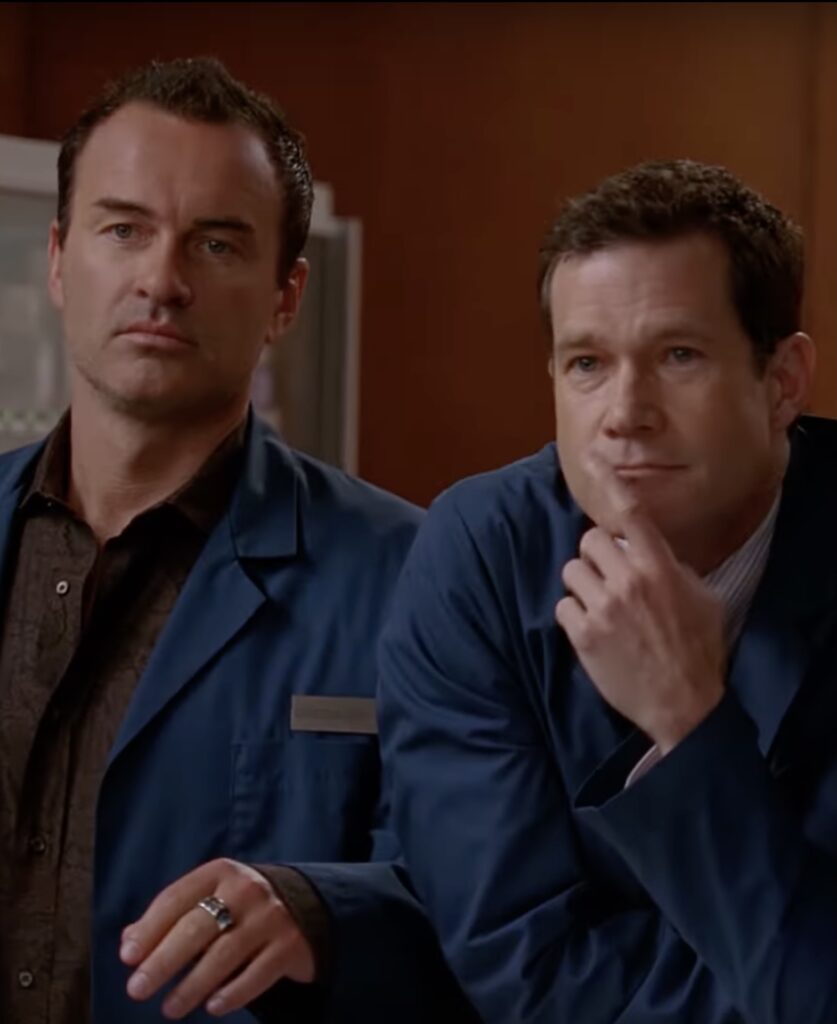
“Tell me what you don’t like about yourself.” Apparently, nothing was off-limits. Nip/Tuck started as a provocative, glossy drama about two plastic surgeons in Miami, but quickly spiraled into a chaotic fever dream of sex, murder, body horror, and general absurdity.
Storylines veered from shocking to straight-up camp, with serial killers, organ thieves, and incestuous twists all making regular appearances. It got so outrageous that by Season 5, it was hard to tell if the show was still trying to be edgy or if it had just become a parody of itself.
And yet… we couldn’t look away. Julian McMahon and Dylan Walsh smoldered, and their morally bankrupt bromance was weirdly compelling. Each week promised a new cosmetic procedure, an even bigger scandal, and at least one scene that made us go, “Did that just happen?”
The show knew how to seduce its audience with shock, awe, and a lot of bare skin, along with just enough heart to keep us invested.
By the end, it was a flaming mess of Botox and betrayal, but Nip/Tuck deserves credit for pushing boundaries.
It wasn’t good TV. But it was memorable, and in the golden age of antiheroes and envelope-pushing dramas, this one slashed its way into the cultural conversation — scalpel first.
Under the Dome

Stephen King adaptations are always a gamble, but Under the Dome had such a solid hook: an invisible barrier drops over a small town, cutting them off from the rest of the world. Intriguing!
But somewhere between that premise and the three long seasons that followed, the show got completely lost in its own dome. Characters changed motivations at the drop of a hat, the rules of the dome kept shifting, and by the time alien eggs showed up, most of us had mentally checked out.
But here’s the thing: we still watched. Partly out of stubbornness — once you’re in, you want to know how it ends. And partly because the ensemble was strong (Dean Norris gave it everything), and the pacing kept us coming back.
Every week promised some new sci-fi twist or death-defying escape that we hoped would start making sense eventually. Spoiler: it never did.
Under the Dome is a classic case of potential squandered by network bloat and sci-fi chaos. It wasn’t good. But it scratched an itch — an end-of-the-world, mystery-box itch — and for a while, that was enough.
Pretty Little Liars
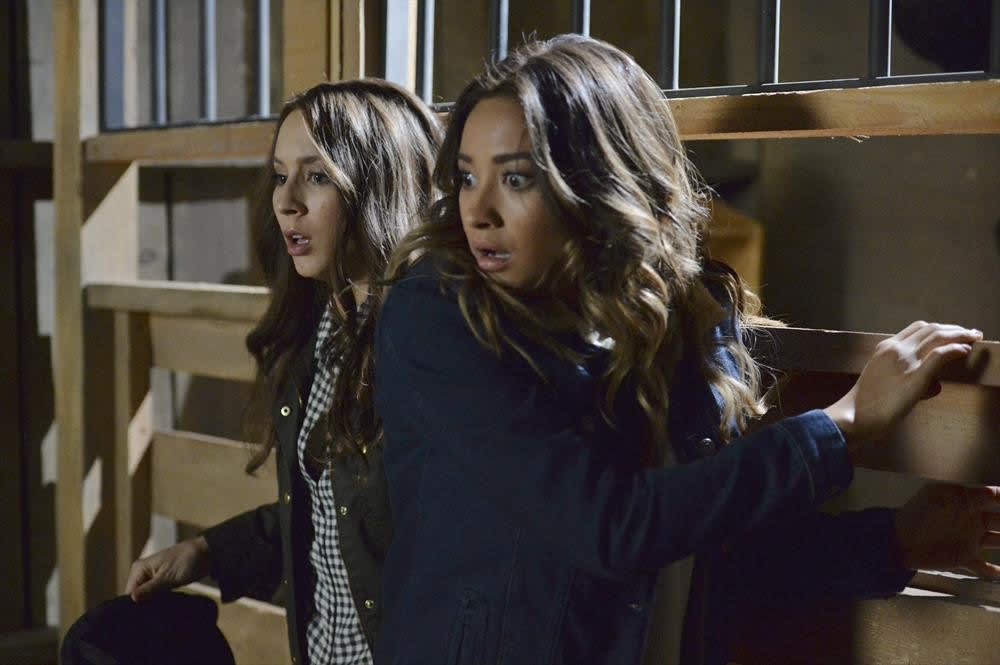
This show was pure nonsense, and we loved every second of it.
What started as a dark, teen-centric whodunit turned into a convoluted game of “Guess the A” with an ever-expanding cast of characters, masks, secret twins, fake deaths, and increasingly absurd reveals.
There were so many timelines, red herrings, and plot holes that we needed a murder board just to follow along.
And still… we tuned in. Religiously. Because PLL had mastered the art of the cliffhanger. It didn’t matter if what we were watching made sense — we just needed to know what insane thing would happen next.
The girls’ fashion was flawless, the relationships were steamy, and the show had an eerie aesthetic that felt like Halloween all year round. It was teen soap noir at its most addictive.
By the end, it was like the writers had completely untethered from reality, but Pretty Little Liars knew what it was: a ridiculous, drama-filled escape that never stopped escalating. It was never about answers. It was about the ride.
Zoo

Zoo asked a simple question: what if animals turned on us? It should’ve been a tightly wound sci-fi thriller. Instead, it became one of the most bonkers shows CBS has ever greenlit.
Lions forming kill squads? Check. Animal/human hybrids? Yup. Science that made zero sense? You bet. By Season 3, people were talking to mutant bears in a post-apocalyptic wasteland. It was like the writers were playing Mad Libs with the script.
And yet, it was weirdly delightful. James Wolk and company threw themselves into the chaos with such earnestness that you couldn’t help but root for them.
And the pacing? Absolutely unhinged. You never had time to process the last absurd thing before the next one hit you like a herd of stampeding elephants.
Zoo was dumb. Objectively. But it was also never boring. It was popcorn TV in its purest form — just smart enough to keep you watching, and just dumb enough to make you question your life choices.
Scandal
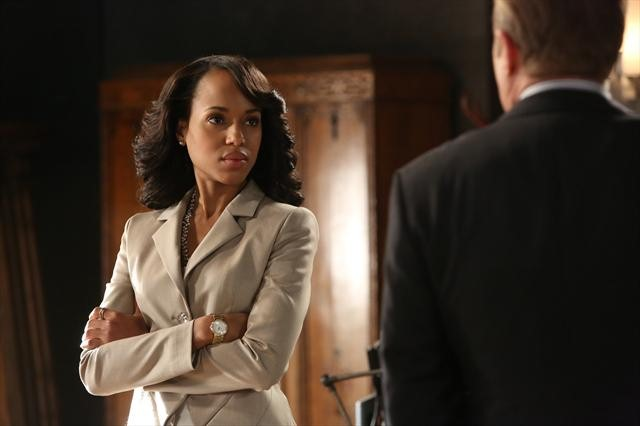
Olivia Pope ran a crisis management firm, wore the hell out of a white coat, and had a thing for the President. Sounds reasonable, right? Not after Scandal hit Season 3.
Shonda Rhimes took what started as a sleek, political fixer drama and turned it into a soap opera with murder, rigged elections, secret spy agencies, and characters monologuing while drinking red wine the size of their heads. The plotting got so tangled that even the characters looked confused.
But here’s the thing — Scandal was never supposed to be subtle. It was a gladiator-style spectacle that leaned into the madness.
Kerry Washington made Olivia magnetic, and the pace was so breathless that you could ignore the fact that nothing made sense anymore. It was juicy, wild, and messy — in the best way.
You couldn’t call it prestige TV, but Scandal gave us must-see moments and iconic GIFs. It lived in the same space as How to Get Away with Murder — utterly unhinged, yet impossible to quit. And honestly? That’s entertainment.
Riverdale

What started as a moody, subversive take on the Archie Comics universe quickly became a glitter-drenched, genre-hopping fever dream.
By Season 2, Riverdale had abandoned anything resembling logic and went all in on organ-harvesting cults, serial killers with Dungeons & Dragons fetishes, underground fight clubs, and maple syrup empires.
By the end, it was time travel, superpowers, and musical episodes every five minutes. The tone was chaotic neutral, and we loved it for that.
Despite everything, we kept showing up. Because Riverdale was never about cohesion — it was about vibes.
The cast was absurdly attractive, the line deliveries were meme-worthy, and the sheer audacity of the plot twists kept us in a state of giddy disbelief. One minute, Archie was a vigilante boxer; the next, he was in jail for a crime he didn’t commit. Sure, why not?
It was nonsense. Beautiful, bold, absolutely bonkers nonsense. But if you could suspend your disbelief — and your sanity — it was also one of the most entertaining rides on TV. Long live the chaos.
The 100

Post-apocalyptic teens returning to Earth? Great hook.
But The 100 (The Hundred, not The One Hundred) evolved into something else entirely: a series that continually reinvented itself, killed off fan favorites, and asked deep questions about survival — before unceremoniously face-planting into philosophical mumbo jumbo and a finale that rewrote its own rules.
Somewhere between the City of Light, the flame chip, and transcendence, things got… murky.
And yet, there was no looking away. The moral gray zones, shifting alliances, and escalating stakes made for genuinely gripping drama. Clarke, Bellamy, Octavia — these were messy, compelling characters we couldn’t quit, even when the show itself seemed to be actively trying to lose us.
Every time it went off the rails, it pulled us back in with some new high-stakes twist.
It was frustrating. It was thrilling. It was never quite what we wanted, but we kept hoping it would get back to what it once was. And even when it didn’t, we still wanted to see how it all ended — no matter how bizarre the journey.
Manifest

A plane disappears, and the passengers return five years later. Sounds like a Lost reimagining, right?
Manifest leaned hard into the mystery — visions, callings, government conspiracies, biblical references — but it was like five different writers had five different shows in mind and smashed them together.
The dialogue was clunky, the pacing was uneven, and the mythology made less sense the more it was explained.
And yet, it was catnip. That central question — what happened to Flight 828? — was just compelling enough to keep us guessing.
The emotional stakes around lost time, broken relationships, and unexplained phenomena gave the show a heartbeat beneath the sci-fi absurdity. And when NBC canceled it, fans made enough noise to resurrect it on Netflix. That counts for something.
Manifest was never a masterclass in writing, but it delivered exactly what you wanted in a comfort binge: intrigue, soap-level drama, and just enough mystery to click “Next Episode.” Sometimes, that’s all it takes.
Arrowverse (Arrow, The Flash, Supergirl, Legends of Tomorrow, etc.)
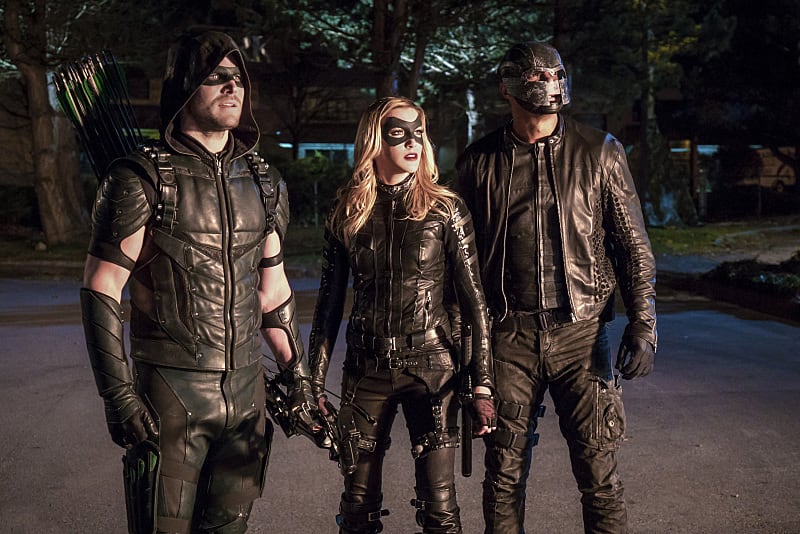
The CW’s superhero empire started with a brooding vigilante and exploded into a multiverse-spanning juggernaut. But let’s be real: for all its ambition, the Arrowverse often looked like cosplay with a budget.
The dialogue could be painfully earnest, plots repeated themselves, and The Flash in particular had a villain-of-the-season template that wore thin. The crossovers? Fun in theory, exhausting in execution.
Still, we watched. Religiously. Because the characters mattered. These shows created a shared universe long before Marvel got Disney+, and there was genuine joy in watching beloved heroes team up, fail, grow, and crack one-liners mid-crisis.
Legends of Tomorrow even leaned into the absurdity and became a cult favorite for how little it took itself seriously.
The Arrowverse had its missteps (so many), but it gave us years of comfort TV with heart, heroism, and just enough nerdy payoff to keep us in the fight. Sometimes “bad” is just another word for “boldly overextended.”
Falling Skies
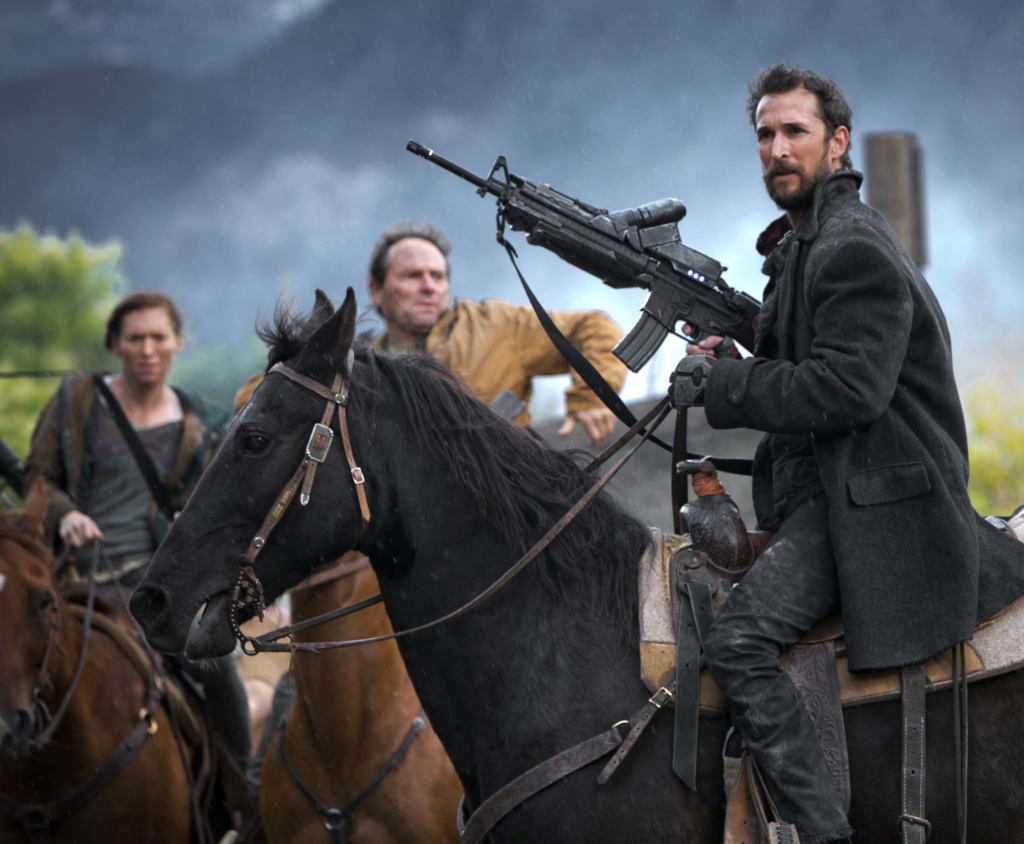
Aliens invade. Humans fight back. It sounds simple, but Falling Skies often made things complicated in the most baffling ways.
For a show about resistance and survival, it sure spent a lot of time meandering through side plots, introducing new alien species with vague motivations, and repeating the same “Should we trust them?” dynamic over and over. Also: those alien kids were just… weird.
But Noah Wyle anchored the chaos with a surprising amount of gravitas, and when the action clicked, it really clicked.
The family dynamic and scrappy underdog feel gave the show its soul, even as the mythology turned into a tangle of glowing tech and prophecy nonsense. It was the kind of show that made you say, “That episode was dumb,” right before hitting play on the next one.
Falling Skies was middling sci-fi with moments of brilliance and long stretches of nonsense, but it scratched the post-apocalyptic itch and gave us aliens who at least tried to be different. That counts for something… right?
The Blacklist

On paper, The Blacklist was a slam dunk: James Spader playing a criminal mastermind who surrenders to the FBI under mysterious conditions? Yes, please.
And for a while, it delivered, with twisty plots, morally questionable alliances, and Spader chewing every piece of scenery like it was a five-course meal.
But as the show went on (and on… and on), it devolved into a repetitive procedural with a mythology so tangled it made Lost look straightforward.
Yet somehow, we stayed invested. Because The Blacklist was never about logic — it was about the vibes. Spader’s Red Reddington was magnetic, weird, unpredictable, and often the only reason to tune in.
The weekly blacklisters were hit-or-miss, but the show’s commitment to absurd undercover shenanigans kept it entertaining in that “don’t think too hard” kind of way.
Was it good? Not really. Did we know what the hell was going on with Liz and Red by the end? Absolutely not. But Spader in a fedora delivering poetic monologues about betrayal and soufflés? That was reason enough to watch.
The Secret Life of the American Teenager

Teen pregnancy. Family values. Sounds wholesome enough until you realize Secret Life had some of the most wooden dialogue and bewildering character choices in all of teen drama history.
Every conversation sounded like it was written by an alien trying to mimic human emotion, and every problem was met with a Very Serious Speech. And don’t get us started on the musical chairs of relationships and moralizing monologues.
And still, we were hooked. There was something almost hypnotic about how bad it was, like watching a school play where everyone forgot their lines but kept going anyway.
You never quite knew how the characters would behave because consistency wasn’t in the script. The sheer earnestness of it all somehow made it impossible to turn off.
It was melodrama masquerading as an after-school special, but for all its faults, it treated teen issues with a weird kind of sincerity. We may have laughed at it more than with it, but we watched. Oh, we watched.
Cobra Kai
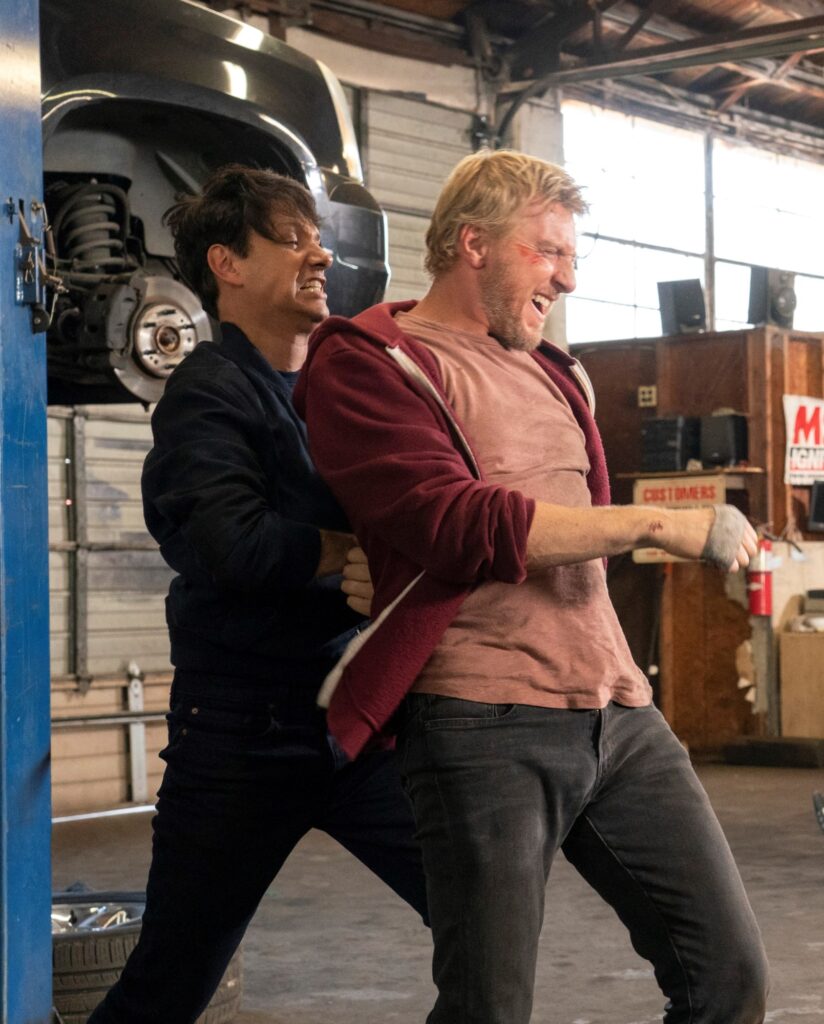
Look, we’ll be honest — Cobra Kai isn’t objectively bad in the same way some of these other shows are — at least not in the beginning.
But it absolutely leans into cheesy, over-the-top melodrama, cartoonish villains, and the kind of fight choreography that sometimes looks like a high school stage production of Mortal Kombat.
The idea that every adult in the Valley is emotionally stunted because of a high school karate tournament? Hilarious.
And yet, it’s also brilliant. It balances nostalgia with heart, giving depth to characters that once felt like stock archetypes.
Johnny Lawrence’s redemption arc is genuinely moving, and the show never takes itself too seriously, which makes the ridiculousness easier to swallow. It’s like comfort food from your childhood — cheesy, a little stale, but oddly satisfying.
Is it good TV? Depends on who you ask. But it’s undeniably fun TV. And honestly, who among us wouldn’t throw hands over the All Valley Championship?
You

This show is objectively bonkers. It wants to be a psychological thriller, a romantic satire, a murder mystery, and a dark comedy — all at once. And somehow, it is all of those things.
Joe Goldberg is a creepy stalker and serial killer, yet the show constantly dares you to root for him. And we do. That’s the twist. We do. Even when he’s spiraling into narcissistic rants and piling up bodies like it’s a to-do list.
The plotlines? Ridiculous. Joe fakes his death, becomes a dad, moves to the suburbs, infiltrates an elite London social club… and no one ever seems to notice he’s a walking red flag. And yet, You is compulsively watchable.
Penn Badgley’s narration turns every episode into a twisted TED Talk, and the pacing is so fast, you never have time to question how insane everything is.
It’s trash. It’s art. It’s satire disguised as smut and smut disguised as commentary. We’ll keep watching as long as Joe keeps talking. Just don’t let him babysit.
13 Reasons Why

The first season, based on Jay Asher’s book, was a conversation starter — an emotionally fraught exploration of teen suicide and the aftermath of trauma.
But then the show kept going … and going. And by Season 4, it had spiraled into ghost visions, high school murder coverups, and a deeply questionable approach to mental health. The messaging got muddy, and the handling of serious issues often felt more exploitative than enlightening.
But it was gripping. Even when we hated what the show was doing, we couldn’t look away. Each season promised more secrets, more confessions, and just enough melodrama to keep us wondering how much darker it could get. (Spoiler: it got very dark.)
The performances — especially Dylan Minnette and Brandon Flynn — gave the mess some weight.
13 Reasons Why tried to be a public service announcement and a teen thriller at the same time. It didn’t always succeed. But for better or worse, it was a show that demanded to be talked about — and that alone kept people tuning in.
And Just Like That…

Sex and the City was a cultural phenomenon: witty, stylish, messy in a fun way, and anchored by the once-relatable Carrie Bradshaw. So when And Just Like That… arrived, promising to update the franchise for a new era, we were ready to toast it with a Cosmo.
What we got instead was… well, a reboot that seemed embarrassed by its own legacy. The writing veers into cringe territory, the dialogue feels like a Twitter thread come to life, and the show tries to cram decades of social progress into every single scene, whether it makes sense or not.
And yet? We’re watching every awkward dinner party, every overexplained moment of self-discovery, and every time Carrie says or does something so disconnected from human reality, we question whether she’s ever met another person.
We watch because we want it to be good. We missed these women. And despite its flaws, it still has flickers of that old spark, especially when Miranda and Charlotte aren’t being rewritten as walking apology tours.
And Just Like That… is not Sex and the City. It might not even be good. But it’s still a conversation starter, still a window into evolving femininity, and still giving us reasons to scream at the screen. If nothing else, it proves that even messy, misguided sequels are hard to resist when nostalgia’s involved.

So what if the writing was clunky or the plot went off the rails around Season 2? These shows gave us something better than perfection — they gave us entertainment. They gave us cliffhangers we couldn’t resist, characters we irrationally loved, and weekly doses of chaos that made us feel alive.
Sometimes, the mess is the magic. And if watching a genetically modified zoo animal team up with a rogue FBI agent to stop a government conspiracy (or whatever was happening on screen that week) made us happy? That’s reason enough.
We’ll always have our prestige dramas and beautifully crafted finales, but deep down, we’ll also keep a special place for the shows that made no sense and all the sense at once.
And just like that… we’ll probably watch them again.
What’s your favorite bad show? Shoot us a comment down below and join in the fun!
-
Original Power Cast: Where Are They Now?
You may be wondering what the original cast of Power has been up to since the series ended in 2020. Well, we’ve got you covered here!
-
Parenthood Cast: Where Are They Now?
Parenthood just celebrated its 15th anniversary. Come find out what the cast has been up to in our latest Where Are They Now.
-

Scandal Cast: Where Are They Now?
Scandal is headed to Netflix soon, and it had us wondering what the cast has been up to lately. Come find out!
The post 19 (Objectively Bad) Shows We Couldn’t Stop Watching appeared first on TV Fanatic.