


































Open a kitchen cupboard, a bathroom cabinet, a bag of animal feed, and you are looking at a ledger of extinction. The margarine, the lipstick, the bar of soap, the chicken raised on soy meal: nearly all of it traces back to a handful of oil crops grown thousands of miles from where the finished thing gets used. Coconut, oil palm, soybean. Cheap, versatile, everywhere. And, according to a new global accounting, responsible for far more lost species than anyone had pinned down before.
By 2020, the world’s oil crop fields had committed roughly 1.5 percent of all land-dwelling plant and vertebrate species to potential long-term extinction, purely through the land they occupy.
That comes from a team led by Stephan Pfister at ETH Zurich, writing in Nature Food. They built spatial maps of where 19 oil crops actually grow, layered on satellite data and agricultural statistics, then ran the whole thing through a model of global trade that follows a soybean from a Brazilian field all the way to a steak on a plate in Shanghai or Stuttgart. The result is the first attempt to tally the biodiversity cost of oil crops across their entire supply chain, from seedling to shopping basket. “From the perspective of environmental protection, biodiversity loss is as big a problem as climate change,” says Pfister, explaining why he wanted the numbers in the first place.
And the numbers are bigger than the field expected. The 1.5 percent estimate is almost three times higher than an earlier reckoning, mostly because the new work pays attention to where crops sit and how intensively the land is farmed, rather than treating a hectare in Borneo the same as a hectare in Kansas.
Three crops, three quarters of the damage
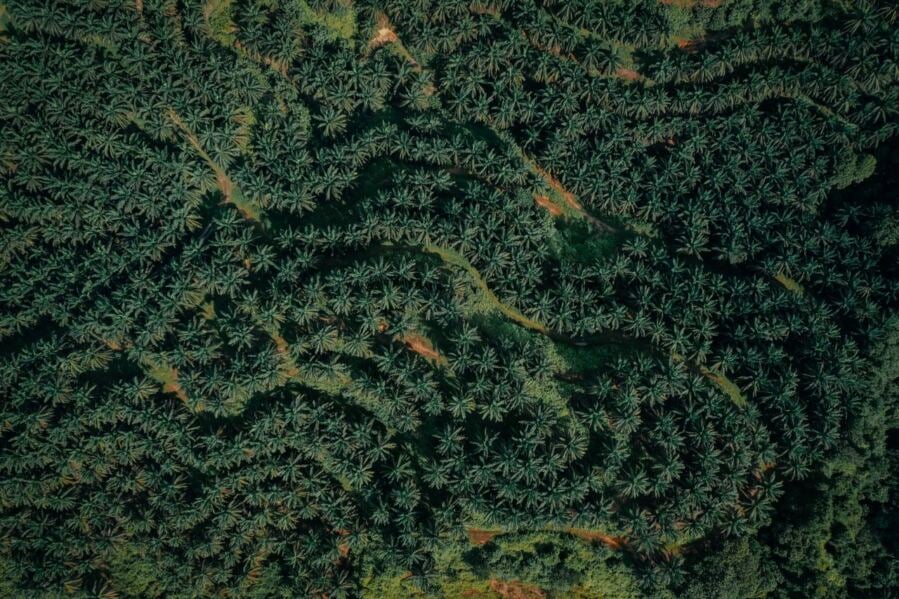
Of those 19 crops, the story collapses onto just three. “Three of which caused a particularly large share of the impacts: oil palm, soybean and coconut,” says Shuntian Wang, a doctoral student on the team. Together they account for around three-quarters of the biodiversity loss the study attributes to oil crops. What makes the split so striking is how little land some of them need to do it. Oil palm covers under a tenth of global oil crop area yet drives about a third of the harm; coconut, on less than 4 percent of the land, manages nearly a quarter. Soybean, by contrast, sprawls across 39 percent of the area and accounts for only 18 percent of the damage.
Geography explains the lopsidedness. Oil palm and coconut are tropical creatures, bound to the wet belt around the equator where Southeast Asian rainforest holds some of the densest, most irreplaceable biodiversity on Earth. Clear a hectare there and you erase species that exist nowhere else; clear a hectare of temperate cropland and the loss, while real, is shallower. So tropical regions, with just 43 percent of the harvested area, soak up 78 percent of the impacts. Even within a single crop the contrast bites: the United States grows about 26 percent of the world’s soybeans but carries 7 percent of soybean’s biodiversity burden, while Brazil, on a similar slice of land, carries 60.
The damage gets posted somewhere else
Here is the part that ought to make wealthy consumers shift in their seats. More than half of all this loss is outsourced, exported through trade to the places that grow the crops while the benefits land elsewhere. The pattern is stark at the national scale. China outsources roughly 77 percent of its oil-crop biodiversity footprint, the EU around 79, North America a remarkable 86. Between them, the EU, China and the United States are on the hook for over 80 percent of these externalised impacts. The EU’s signature is palm oil pulled in from Indonesia; China’s is soybean, most of it crushed into cake and fed to pigs and poultry to satisfy a soaring appetite for meat.
What drove the surge, though, was not the thing most people would guess. Between 1995 and 2020 the impacts climbed by about 80 percent, and population growth turns out to be the junior partner. Using a technique that splits the increase into its causes, the team found that rising consumption per person did most of the lifting, contributing roughly three-quarters of the net rise. China’s per-person demand nearly quadrupled over the period. Tellingly, the average European still leaves a far heavier oil-crop footprint than the average Chinese consumer, so the gap is one of trajectory, not yet of parity.
There is a sting in the tail for green policy, too. As the EU has leaned into bio-based materials, bioplastics, biodiesel and the rest, to shave its carbon emissions, its demand for tropical oil crops has climbed, and its non-food biodiversity impacts have more than doubled. Cutting one planetary problem can feed another. Worth remembering before the next switch to something labelled renewable.
None of this unwinds quickly, which is rather the point. Because the metric counts long-term extinction debt, the damage already done lingers even if the bulldozers stop tomorrow. “Even if there is no new deforestation, the impact of current agriculture remains,” says Pfister. His preferred remedy is less about guilt-tripping shoppers and more about where the money goes: “An important lever is investing in better production and in the protection of ecosystems in countries of origin.” The trouble is that demand is slippery, and squeeze it in one place and it tends to pop up in another. Whether the world can hold that line, on a crop most of us never knowingly buy, is now the open question.
Frequently Asked Questions
Why does palm oil cause so much more harm than soybean if there’s far less of it?
It comes down to where each crop grows. Oil palm is confined to tropical regions where rainforest holds species found nowhere else, so clearing land there erases biodiversity that cannot be replaced. Soybean, mostly grown in temperate and subtropical zones, displaces fewer unique species per hectare. That is why oil palm drives about a third of the damage on under a tenth of the land.
What does it mean that biodiversity loss is “outsourced”?
It means the country consuming a product is not the country paying the ecological price. When the EU imports palm oil or China imports soybean for animal feed, the species loss happens in Indonesia or Brazil, not at home. More than half of all the impact in this study is displaced this way, with the EU, China and the United States together responsible for over 80 percent of these externalised effects.
If we stopped clearing new forest tomorrow, would the problem go away?
Not for a long time. The study measures long-term extinction debt, the species that ongoing land use will eventually push out even without fresh deforestation. As the researchers put it, the impact of current agriculture remains regardless. Simply farming the existing land continues to apply pressure on ecosystems.
Is switching to bio-based plastics and biofuels making things worse?
It can, at least for biodiversity. As the EU expanded bio-based materials to cut carbon emissions, its demand for tropical oil crops rose and its non-food biodiversity impacts more than doubled. Reducing one environmental problem can intensify another, which is why the researchers urge weighing both before assuming a renewable label means lower harm overall.
https://doi.org/10.1038/s43016-026-01375-4
Quick Note Before You Read On.
ScienceBlog.com has no paywalls, no sponsored content, and no agenda beyond getting the science right. Every story here is written to inform, not to impress an advertiser or push a point of view.
Good science journalism takes time — reading the papers, checking the claims, finding researchers who can put findings in context. We do that work because we think it matters.
If you find this site useful, consider supporting it with a donation. Even a few dollars a month helps keep the coverage independent and free for everyone.