WashingtonWeeklyTimes.com
  • Home
  • US News

    California drug bust seizes over $800K in cocaine at traffic stop

    Bear spray saves Alaska runner from brown bear attack on trail

    Dolly Parton misses Dollywood appearance as doctor cites ‘health issues’

    Sean Payton takes vicious shot at Falcons home crowd after humiliating first half

    Bronx man faces hate crime charges after Central Synagogue attack

  • Politics

    Former Democrat Activist Explains How the Party Got Captured by the Radical Left (VIDEO) * The Gateway Pundit * by Mike LaChance

    Speaker Mike Johnson Goes On Fox News And Dies A Slow And Painful Death

    U.S. Passport Power Slips in Global Rankings

    Minnesota Secretary of State THREATENS James O’Keefe, Cam Higby For Going Undercover in Muslim Garb and Easily Exposing State’s Insane ‘Voter Vouching’ System

  • Business

    Harvard fund discloses $2.2 billion stake in Musk’s SpaceX

    How college students can manage their finances while in school: Here are 7 things to do

    Tariff refunds are juicing corporate profits and GDP, as tailwinds converge to propel growth to 4.3%

    AI is creating a new wave of philanthropists. The system they’re walking into is broken

  • Science

    People form judgments about a stranger’s trustworthiness and competence after seeing their face for just one-tenth of a second — and Princeton researchers found that more viewing time did surprisingly little to change the impression, mostly making people more confident in it.

    AI Could Help Fossil Fuel Companies Create More Emissions

    Early Neanderthals were probably striking sparks to make fire in England 400,000 years ago — roughly 350,000 years earlier than the previous convincing evidence, revealed by baked earth, heat-shattered handaxes and pieces of pyrite found at Barnham.

    Puerto Rico Is Rationing Water. It Could’ve Avoided It by Harvesting Rainwater

  • Technology

    Retrospec Joe Rev 2 Review (2026): Putting the ‘Joy’ in Joyride

    Woman claims her stepfather used Grok to transform childhood photo into explicit imagery

    This Beautifully Weird Necklace Is Secretly a USB Drive

    Self-driving trucks are officially testing on California highways

  • Lifestyle

    7 Compact Cameras Perfect for Your Vacation

    Clothing I Don’t Regret Buying: Items Worth Every Penny

    What Our Team Is Currently Loving

    Top 10 Snowboarding Resorts For Beginners

  • Music

    11 Best Technical Death Metal Albums of the 2000s

    Queens of the Stone Age Reveal New Album Title & Release Date in Teaser Video

    Watch Julia Jacklin Cover Sugar Ray’s “Every Morning”

    Romeo Santos Launches Fundación Los Santos to Support Kids With Autism

  • Television

    Julie Newmar’s Star Trek Episode Originally Had A Much Darker, More Complex Ending

    Big Brother Spoilers: Veto Winner Could Set Up Major Chaos This Week

    ‘Crew Girl’ Cast Guide: Get to Know the Actors in Netflix’s YA Rowing Drama

    Why Lila Hoth From Reacher Looks So Familiar

  • Film

    House Of The Dragon’s Tyland Lannister Returns In New Game Of Thrones Release

    Reckon with the Flesh: The Fly at 40

    When Dudley Moore Intoxicated Audiences in ‘Arthur’

    10 Movies To Watch If You Love Jurassic Park

  • Literature

    Literary Hub » Miranda July, Jamel Brinkley, and More on Their Favorite (Re)reads

    Book Riot’s Deals of the Day for August 15, 2026

    August 10 – 14, 2026

    39 of the Best YA Graphic Novels and Comics of 2026

    Literary Hub » The Rumpus is launching a Spanish-language magazine.

    Northeast Indian Literature That Interrogates the Nation

    Book Riot’s Deals of the Day for August 14, 2026

    Why I Founded Gaza Publications During the Genocide

    My Sex Appeal Can Kill a Man at 10 Paces

  • Contact
    • About
  • Home
  • US News

    California drug bust seizes over $800K in cocaine at traffic stop

    Bear spray saves Alaska runner from brown bear attack on trail

    Dolly Parton misses Dollywood appearance as doctor cites ‘health issues’

    Sean Payton takes vicious shot at Falcons home crowd after humiliating first half

    Bronx man faces hate crime charges after Central Synagogue attack

  • Politics

    Former Democrat Activist Explains How the Party Got Captured by the Radical Left (VIDEO) * The Gateway Pundit * by Mike LaChance

    Speaker Mike Johnson Goes On Fox News And Dies A Slow And Painful Death

    U.S. Passport Power Slips in Global Rankings

    Minnesota Secretary of State THREATENS James O’Keefe, Cam Higby For Going Undercover in Muslim Garb and Easily Exposing State’s Insane ‘Voter Vouching’ System

  • Business

    Harvard fund discloses $2.2 billion stake in Musk’s SpaceX

    How college students can manage their finances while in school: Here are 7 things to do

    Tariff refunds are juicing corporate profits and GDP, as tailwinds converge to propel growth to 4.3%

    AI is creating a new wave of philanthropists. The system they’re walking into is broken

  • Science

    People form judgments about a stranger’s trustworthiness and competence after seeing their face for just one-tenth of a second — and Princeton researchers found that more viewing time did surprisingly little to change the impression, mostly making people more confident in it.

    AI Could Help Fossil Fuel Companies Create More Emissions

    Early Neanderthals were probably striking sparks to make fire in England 400,000 years ago — roughly 350,000 years earlier than the previous convincing evidence, revealed by baked earth, heat-shattered handaxes and pieces of pyrite found at Barnham.

    Puerto Rico Is Rationing Water. It Could’ve Avoided It by Harvesting Rainwater

  • Technology

    Retrospec Joe Rev 2 Review (2026): Putting the ‘Joy’ in Joyride

    Woman claims her stepfather used Grok to transform childhood photo into explicit imagery

    This Beautifully Weird Necklace Is Secretly a USB Drive

    Self-driving trucks are officially testing on California highways

  • Lifestyle

    7 Compact Cameras Perfect for Your Vacation

    Clothing I Don’t Regret Buying: Items Worth Every Penny

    What Our Team Is Currently Loving

    Top 10 Snowboarding Resorts For Beginners

  • Music

    11 Best Technical Death Metal Albums of the 2000s

    Queens of the Stone Age Reveal New Album Title & Release Date in Teaser Video

    Watch Julia Jacklin Cover Sugar Ray’s “Every Morning”

    Romeo Santos Launches Fundación Los Santos to Support Kids With Autism

  • Television

    Julie Newmar’s Star Trek Episode Originally Had A Much Darker, More Complex Ending

    Big Brother Spoilers: Veto Winner Could Set Up Major Chaos This Week

    ‘Crew Girl’ Cast Guide: Get to Know the Actors in Netflix’s YA Rowing Drama

    Why Lila Hoth From Reacher Looks So Familiar

  • Film

    House Of The Dragon’s Tyland Lannister Returns In New Game Of Thrones Release

    Reckon with the Flesh: The Fly at 40

    When Dudley Moore Intoxicated Audiences in ‘Arthur’

    10 Movies To Watch If You Love Jurassic Park

  • Literature

    Literary Hub » Miranda July, Jamel Brinkley, and More on Their Favorite (Re)reads

    Book Riot’s Deals of the Day for August 15, 2026

    August 10 – 14, 2026

    39 of the Best YA Graphic Novels and Comics of 2026

    Literary Hub » The Rumpus is launching a Spanish-language magazine.

    Northeast Indian Literature That Interrogates the Nation

    Book Riot’s Deals of the Day for August 14, 2026

    Why I Founded Gaza Publications During the Genocide

    My Sex Appeal Can Kill a Man at 10 Paces

  • Contact
    • About
No Result
View All Result
WashingtonWeeklyTimes.com
No Result
View All Result
Home Science

Native Americans Were Gambling, Exploring Probability Millenia Before Their Old World Counterparts

by
April 3, 2026
in Science
Native Americans Were Gambling, Exploring Probability Millenia Before Their Old World Counterparts


Key Takeaways

  • Recent research uncovers that Native American hunter-gatherers used two-sided dice over 12,000 years ago, predating Old World examples by more than 6,000 years.
  • The identification of these ancient dice involved a four-part morphological test, distinguishing them from tools or decorative objects.
  • Dice games may have fostered social interactions by creating contexts for exchange among disconnected groups, emphasizing fairness.
  • The continuity of dice usage across various cultural periods reflects both adaptability and a deep-rooted tradition in North America.
  • Understanding the role of women in this gaming tradition and the absence of dice from eastern North America remains an open question.

Hold a small piece of bone in your palm. One face is scored with parallel lines; the other is plain. You close your fingers around it, shake once, and let it fall. Something happens that you neither control nor fully understand, and yet the game proceeds, scores are kept, goods change hands. You have just done what Robert Madden, a PhD student at Colorado State University, has now documented people doing on the western Great Plains as long as 12,000 years ago, in the closing centuries of the last Ice Age. Twelve thousand years. That is not a small revision to the history of chance.

The study, published this week in American Antiquity, argues that Native American hunter-gatherers were manufacturing and using two-sided dice thousands of years before the oldest known examples from Bronze Age societies in Mesopotamia, the Indus valley, and the western Caucasus. As Madden puts it, “Historians have traditionally treated dice and probability as Old World innovations.” The archaeological record, it now appears, says otherwise.

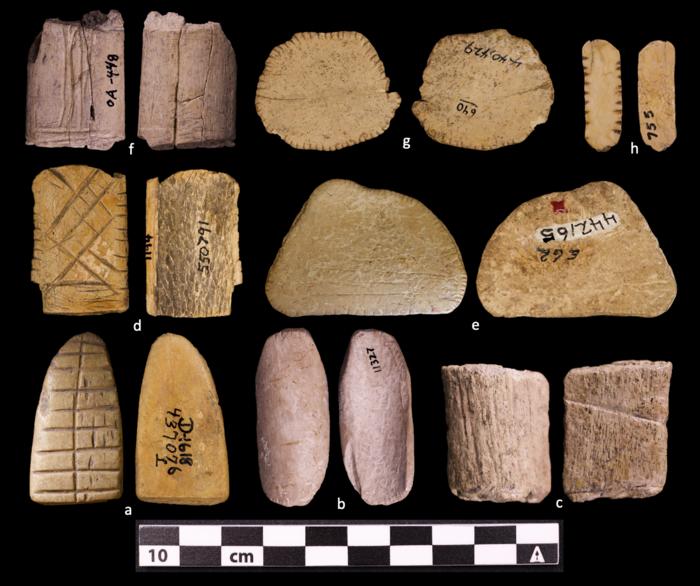
The problem with prehistoric gaming pieces has always been identification. For more than a century, excavations across North America turned up small, carefully worked objects labelled, with varying confidence, as “gaming pieces.” But without a principled way to distinguish an actual die from a decorative object or a tool by-product, no one could say much with certainty. Madden’s contribution is to solve that identification problem first, before attempting to answer the antiquity question. Working from Stewart Culin’s 1907 compendium Games of the North American Indians, a 809-page survey of 293 sets of historic Native American dice from 130 tribal groups, he derived a four-part morphological test: two-sided, non-perforated, made of bone or wood, with sides distinguished by applied markings or colour, appearing in cross-section as flat, plano-convex, concave-convex, or convex-convex, and small enough that two or more could be held in the hand and cast.

Were these really dice and not some other type of object?

The study addresses this directly by deriving a strict four-part test from a database of 293 sets of documented historic Native American dice, rather than relying on resemblance or intuition. Objects that pass all four criteria, being two-sided, non-perforated, made of bone or wood, with distinguishable faces and the right size and shape to be held and thrown, fit seamlessly into the known tradition of dice use that runs unbroken from the past 2,000 years to the present day.

How do these dice compare to the oldest ones found in the rest of the world?

The oldest known dice from the eastern hemisphere date to around 3,500 BC, appearing in Bronze Age contexts in Mesopotamia, the Indus valley, and the western Caucasus. The Folsom dice from Wyoming, Colorado, and New Mexico predate these by more than 6,000 years. Even later North American examples, some 7,000 to 8,000 years old, still predate the Old World’s earliest examples.

Does this mean ancient Native Americans understood probability theory?

Not in the formal mathematical sense, no. What the study argues is more interesting: that by generating, observing, and recording random outcomes in structured, repeatable games, Folsom-period people were creating the exact conditions in which probabilistic regularities can be perceived and relied upon, even without algebra. Formal probability theory, developed in Europe in the 1600s, grew from studying dice games. The Pleistocene Plains version was doing something structurally similar, thousands of years earlier.

Why did ancient peoples gamble so widely and for so long?

Scholars who study Native American gambling argue that dice games functioned as social technology, creating a rule-governed, fair context for exchange and interaction between groups who had no preexisting relationship. The fairness of a dice game, grounded in equal probability, allowed strangers to trade goods and information on neutral ground. That adaptive function may help explain why the practice persisted across every major cultural period and subsistence strategy in North American prehistory.

Applied to the published archaeological record across three years of searching, that test yielded 659 diagnostic and probable dice from 57 sites in 12 states, spanning roughly 13,000 years of North American prehistory. The oldest cluster comes from Folsom-period sites in Wyoming, Colorado, and New Mexico.

The Folsom cultural complex dates to between 12,845 and 12,255 years before the present. These were mobile hunter-gatherers on the Great Plains, best known for the finely worked projectile points they left embedded in bison bones. What the Agate Basin site in eastern Wyoming, the Lindenmeier site in northern Colorado, and the Blackwater Draw site in New Mexico also contain, it turns out, is dice. Twenty of them, across the three locations: flat bone discs, concave-convex split-bone pieces, and plano-convex rib sections, many of them marked with edge incisions or faint traces of red pigment on one side. Madden visited the Smithsonian Institution, the University of Wyoming Archaeological Repository, and the Denver Museum of Nature and Science to examine these objects directly. They are not casual or ambiguous finds.

The comparison with the Old World is stark. The earliest known dice from the eastern hemisphere appear around 3,500 BC, or roughly 5,450 years before the present, in Bronze Age contexts in Mesopotamia and the Indus civilisation. The Folsom dice predate them by more than six thousand years. Even later North American examples, including seven-thousand-to-eight-thousand-year-old dice from the Sudden Shelter and Cowboy Cave sites in Utah, still predate the earliest known Old World examples by a considerable margin.

Historians of mathematics have long identified the invention of dice as an important early step in humanity’s evolving understanding of randomness, the intellectual precursor that eventually, via Cardano, Galileo, Fermat, and Pascal in the sixteenth and seventeenth centuries, produced formal probability theory. The connection is not metaphorical. Dice games produce a simplified, repeatable stream of random events that can be observed and scored over time, creating exactly the kind of structured experience from which regularities like the law of large numbers can be perceived, even without algebraic notation to express them. Madden argues that ancient Native American dice players were, in a practical sense, doing precisely that: generating, observing, and relying on probabilistic patterns in ways that demanded some working understanding of how chance actually behaves.

Whether that understanding was explicit or intuitive is impossible to know. The ethnographic record hints at something more than casual superstition: Zuni tradition describes dice games as reflecting celestial forces governing human fate, with outcomes decided not by divine will but by chance itself. These are not accounts of people who thought randomness was nothing.

The social function of gambling may be equally significant. Scholars of later prehistoric periods have argued that dice games in North America functioned as a mechanism for integrating otherwise disconnected groups, creating a rule-governed context for exchange and interaction that could operate outside existing social relationships. Dice-playing required a shared understanding of fairness, which meant an implicit acknowledgement of equal probability on both sides of a throw. That the archaeological record shows dice at both the Agate Basin and Lindenmeier sites, both of which have been proposed as possible Folsom communal aggregation locations based on their size and assemblage diversity, is potentially meaningful.

The persistence of the tradition is perhaps equally striking. Dice appear at sites associated with every major period of North American prehistory, from Paleoindian through Archaic and Late Prehistoric, and they turn up among groups with radically different subsistence strategies, from mobile bison hunters to sedentary Pueblo agriculturalists. That continuity, Madden suggests, reflects genuine adaptive fitness, not mere conservatism. Today, more than 250 tribes operate more than 500 gaming locations in the United States, generating over $40 billion in annual revenue. The arc from a small scored bone thrown on the Pleistocene Plains to a modern casino floor is unbroken.

One curiosity the study raises without resolving: no prehistoric dice were identified from eastern North America, despite the well-documented presence of dice games among eastern tribes in the colonial period. Whether that absence reflects a genuinely western-only origin that spread east only under the disruptions of colonialism, or merely a gap in the published record, is currently unclear. It is, Madden notes, a question worth investigating. As is the gender dimension: an analysis of the ethnographic record by an earlier scholar found that more than 80 percent of documented Native American dice games were played exclusively by women. The possibility that women were the primary early movers in both the social and intellectual dimensions of this 12,000-year tradition is not, on the evidence available, something that can be ruled out.


DOI / Source: https://doi.org/10.1017/aaq.2025.10158


Quick Note Before You Read On.

ScienceBlog.com has no paywalls, no sponsored content, and no agenda beyond getting the science right. Every story here is written to inform, not to impress an advertiser or push a point of view.

Good science journalism takes time — reading the papers, checking the claims, finding researchers who can put findings in context. We do that work because we think it matters.

If you find this site useful, consider supporting it with a donation. Even a few dollars a month helps keep the coverage independent and free for everyone.


Related


Original Source Link

Previous Post

Joel Kinnaman’s Crime Thriller ‘Bishop’ Joins Amazon’s Library of Crime Series

Next Post

The Best Samsung Galaxy S26 Cases (2026): S26, S26+, and S26 Ultra

Next Post
The Best Samsung Galaxy S26 Cases (2026): S26, S26+, and S26 Ultra

The Best Samsung Galaxy S26 Cases (2026): S26, S26+, and S26 Ultra

Suspect in Loyola student’s killing faces new federal gun charges filed

Suspect in Loyola student's killing faces new federal gun charges filed

AI adoption isn’t the hard part, it’s building employee agency

AI adoption isn't the hard part, it's building employee agency

PopularPosts

34 travel products our editors can’t leave home without

34 travel products our editors can’t leave home without

June 3, 2022
The Morning Show To End With Season 5 On Apple TV

The Morning Show To End With Season 5 On Apple TV

July 23, 2026
Good Doctor Spinoff The Good Lawyer Cancelled at ABC: Kennedy McMann – TVLine

Good Doctor Spinoff The Good Lawyer Cancelled at ABC: Kennedy McMann – TVLine

November 10, 2023
Hims 85% Wegovy and Ozempic discount is latest step on a journey to make medicine less ‘paternalistic,’ exec says

Hims 85% Wegovy and Ozempic discount is latest step on a journey to make medicine less ‘paternalistic,’ exec says

May 21, 2024
Feds Spent At Least 7 Million Spent on Fighting “Misinformation”

Feds Spent At Least $267 Million Spent on Fighting “Misinformation”

December 17, 2024
‘Chicago P.D.’ Season 11 Synopsis, ‘Upstead’ Spoilers, News [PHOTOS] – TVLine

‘Chicago P.D.’ Season 11 Synopsis, ‘Upstead’ Spoilers, News [PHOTOS] – TVLine

December 21, 2023

Categories

  • Business (7,757)
  • Events (12)
  • Film (7,687)
  • Lifestyle (5,439)
  • Literature (5,803)
  • Music (7,741)
  • Politics (7,457)
  • Science (7,129)
  • Technology (7,682)
  • Television (7,750)
  • Uncategorized (6)
  • US News (7,790)

RecentPosts

Literary Hub » Miranda July, Jamel Brinkley, and More on Their Favorite (Re)reads

by
August 16, 2026

The Case for Dipping Back In This first appeared in...

11 Best Technical Death Metal Albums of the 2000s

by
August 16, 2026

The 2000s — headbangers were being served nü-metal by the...

Harvard fund discloses $2.2 billion stake in Musk’s SpaceX

by
August 16, 2026

Harvard Management Co. disclosed a $2.2 billion stake in SpaceX,...

Former Democrat Activist Explains How the Party Got Captured by the Radical Left (VIDEO) * The Gateway Pundit * by Mike LaChance

by
August 16, 2026

Screencap of YouTube video. Evan Barker is a former Democrat...

California drug bust seizes over $800K in cocaine at traffic stop

by
August 16, 2026

NEWYou can now listen to Fox News articles! California authorities...

Retrospec Joe Rev 2 Review (2026): Putting the ‘Joy’ in Joyride

by
August 16, 2026

The entry-level Joe Rev was created in this same spirit—a...

Archives

Editor's Picks

Sunny Dancer review – sunk by puerile humour

August 13, 2026

Scott Bakula Officially Accepts Nomination As Star Trek President

August 12, 2026

Spotify will label ‘AI Persona’ profiles and exclude their music from recommendations

August 11, 2026

Browse By Category

  • Business (7,757)
  • Events (12)
  • Film (7,687)
  • Lifestyle (5,439)
  • Literature (5,803)
  • Music (7,741)
  • Politics (7,457)
  • Science (7,129)
  • Technology (7,682)
  • Television (7,750)
  • Uncategorized (6)
  • US News (7,790)

Useful Links

  • Anti-Spam Policy
  • Copyright Notice
  • DMCA Compliance
  • Earnings Disclaimer
  • Fair Use Disclaimer
  • FTC Compliance
  • Medical Disclaimer
  • Privacy Policy
  • Social Media Disclaimer
  • Terms and Conditions

Copyright © 2022 by Washington Weekly Times. All rights reserved. All articles, images, product names, logos, and brands are property of their respective owners. All company, product and service names used in this website are for identification purposes only. Use of these names, logos, and brands does not imply endorsement unless specified. By using this site, you agree to the Terms of Use and Privacy Policy.

No Result
View All Result
  • Home
  • US News
  • Politics
  • Business
  • Science
  • Technology
  • Lifestyle
  • Music
  • Television
  • Film
  • Literature
  • Contact
    • About

Copyright © 2022 by Washington Weekly Times. All rights reserved. All articles, images, product names, logos, and brands are property of their respective owners. All company, product and service names used in this website are for identification purposes only. Use of these names, logos, and brands does not imply endorsement unless specified. By using this site, you agree to the Terms of Use and Privacy Policy.

We use cookies on our website to give you the most relevant experience by remembering your preferences and repeat visits. By clicking “Accept All”, you consent to the use of ALL the cookies. However, you may visit "Cookie Settings" to provide a controlled consent.
Cookie SettingsAccept All
Manage consent

Privacy Overview

This website uses cookies to improve your experience while you navigate through the website. Out of these, the cookies that are categorized as necessary are stored on your browser as they are essential for the working of basic functionalities of the website. We also use third-party cookies that help us analyze and understand how you use this website. These cookies will be stored in your browser only with your consent. You also have the option to opt-out of these cookies. But opting out of some of these cookies may affect your browsing experience.
Necessary
Always Enabled
Necessary cookies are absolutely essential for the website to function properly. These cookies ensure basic functionalities and security features of the website, anonymously.
CookieDurationDescription
cookielawinfo-checkbox-analytics11 monthsThis cookie is set by GDPR Cookie Consent plugin. The cookie is used to store the user consent for the cookies in the category "Analytics".
cookielawinfo-checkbox-functional11 monthsThe cookie is set by GDPR cookie consent to record the user consent for the cookies in the category "Functional".
cookielawinfo-checkbox-necessary11 monthsThis cookie is set by GDPR Cookie Consent plugin. The cookies is used to store the user consent for the cookies in the category "Necessary".
cookielawinfo-checkbox-others11 monthsThis cookie is set by GDPR Cookie Consent plugin. The cookie is used to store the user consent for the cookies in the category "Other.
cookielawinfo-checkbox-performance11 monthsThis cookie is set by GDPR Cookie Consent plugin. The cookie is used to store the user consent for the cookies in the category "Performance".
viewed_cookie_policy11 monthsThe cookie is set by the GDPR Cookie Consent plugin and is used to store whether or not user has consented to the use of cookies. It does not store any personal data.
Functional
Functional cookies help to perform certain functionalities like sharing the content of the website on social media platforms, collect feedbacks, and other third-party features.
Performance
Performance cookies are used to understand and analyze the key performance indexes of the website which helps in delivering a better user experience for the visitors.
Analytics
Analytical cookies are used to understand how visitors interact with the website. These cookies help provide information on metrics the number of visitors, bounce rate, traffic source, etc.
Advertisement
Advertisement cookies are used to provide visitors with relevant ads and marketing campaigns. These cookies track visitors across websites and collect information to provide customized ads.
Others
Other uncategorized cookies are those that are being analyzed and have not been classified into a category as yet.
SAVE & ACCEPT