















.jpg "8 New Albums You Should Listen to Now: Olivia Rodrigo, Kelsey Lu, and More")








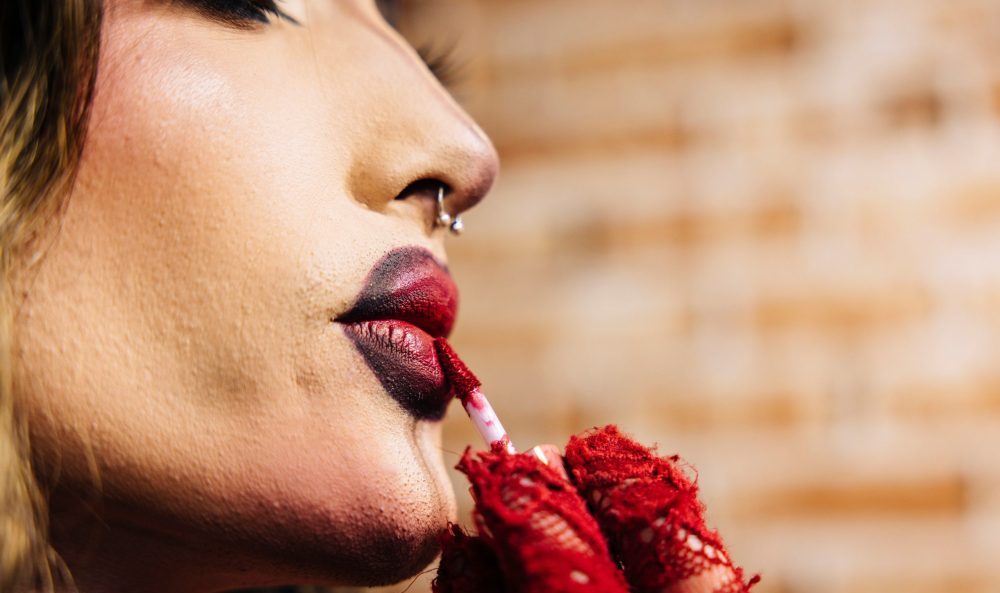


Why is the act of painting one’s face so charged with gendered implications? How might makeup smear the lines drawn between “feminine” and “masculine”? And what can drag culture teach all of us about the role of artifice—and art—in constructing identity?
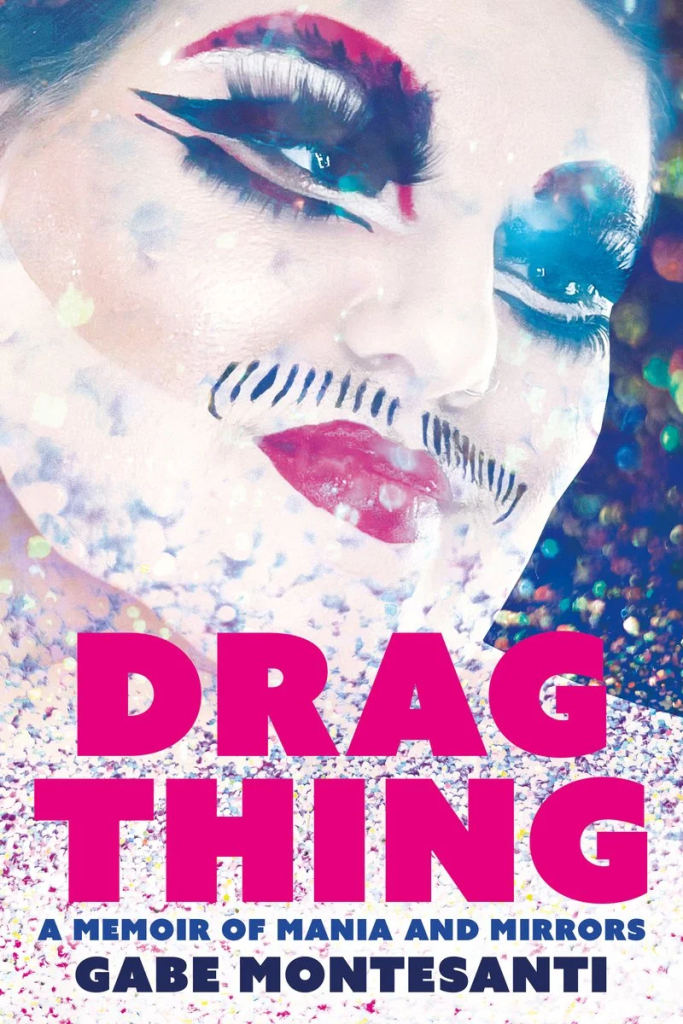
Although our books differ in genre and scope, they shimmer with striking similarities. Montesanti’s Drag Thing is a memoir by a millennial writer raised in Michigan and Alaska; G’Sell’s Lipstick is cultural criticism written by an author about a decade older. But a quick glance at the covers reveal the books’ obvious connection: makeup, glam, and the undeniable pleasure of self-adornment.
An ode to alternative drag culture, although not without forays into the mainstream, Drag Thing explores Montesanti’s mental health crisis and how it becomes entangled with her onstage persona. Starting out as a drag king, she soon becomes a “drag thing”—a performer who defies gendered classification. Set against a backdrop of increasing danger for queer and trans people, Drag Thing is both high camp and a rallying cry for building queer community as a form of resistance.
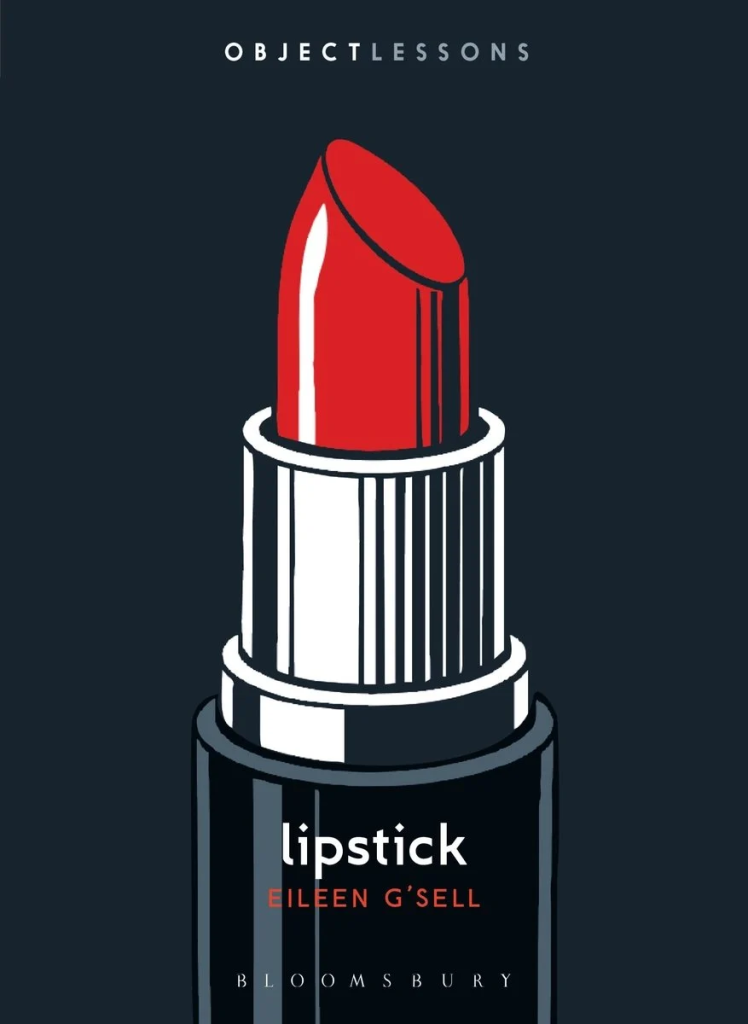
Rather than a traditional history of the object, Lipstick is a roving exploration of gender, sexuality, power, and performance—from MAC to Glossier, from Marilyn Monroe to Chappell Roan. Crucially, the book includes the voices of women (cis and trans) and nonbinary folks interviewed by the author in 2024. The final chapter, “A Femme-Friendlier Future?”, honors the ways in which changing attitudes toward lipstick reflect larger generational shifts.
Both books aim for multi-faceted—and glittery—forms of truth-telling. We conversed online to discuss our books, the power of radical reinvention, and the magic that comes with it.
Eileen G’Sell: You describe the art of drag as an intoxicating blend of “grandiosity . . . exaggerated personas too large to be contained by any conventional human body . . . and sometimes offensive self-confidence and self-admiration.” As you experimented with being a “drag king” versus a “drag thing,” how did your approach to painting the face evolve?
Gabe Montesanti: I am surprised how suddenly my evolution from “king” to “thing” happened. When I started performing as a king, I was painting my face with three layers of concealer, followed by bronzer to accentuate my temples and widen my nose, and I always topped it off with an eyeliner mustache. At that point, before I discovered “thingness,” I was aiming for some version of a working-class, heterosexual version of Fender Bender. All it took was one trip to Mimi’s Beauty Supply and I was an uncategorizable “drag thing.” There were several big changes to my wardrobe, and some small changes to my face like fake eyelashes, but the most significant change was the lipstick.
EG: Really? That’s fascinating. Lipstick really can be identity-reconfiguring. It just changes the way your face looks more than anything else.
GM: I put black lipstick on my lips and a pink matte lipstick mustache that perfectly matched my 14 dollar wig. Maybe if I had read your book around this time, Eileen, I would have had some clue why lipstick was a portal for me into the complicated territory of “thingness.” It wrenched me into another version of a performative self: one that craved whimsy and reinvention and despised classification.
Lipstick was a portal for me into the complicated territory of ‘thingness.’
EG: For both of our books, the ability to visually reinvent yourself is key—which can be a real challenge when it comes to doing justice to it in writing. What motivated you to include your own illustrations?
GM: Drag Thing is a book about self-invention, self-creation, and art. I had two partial versions of the manuscript. One was a traditional, full-text version, and one had a watercolor on every page and a small amount of text. Arsenal Pulp Press bought the book, and together, we designed a hybrid version that worked better than both versions I had previously: 41 watercolors placed only where they really counted.
EG: In your hand-drawn images, many of the figures present two faces or silhouettes. Given that your book candidly explores your experience with bi-polar disorder, was that double-face motif intended as a gesture to what you were going through?
GM: I never thought that I was drawing people with two faces to represent the poles of my disorder. I was just drawing, which evolved into this somewhat cubist style soon after I was diagnosed with bipolar disorder. But I still sometimes flip through the notebooks from group therapy sessions when I was crawling out of my skin with mania. The therapist gave me colored pencils, hoping I could chill out, or at least not distract the other people who were talking. I drew anything that came into my buzzing mind, but the double faces were a constant motif. Only about a year later during COVID lockdown when I was doing a virtual art group with some roller derby friends did I realize that my faces might be trying to tell me something.
EG: I love how openly your book, both in prose and in image, questions not only gender essentialism, but the idea that sexual orientation itself is fixed. You write of a drag king who took joy in complicating “queer girl desire” through performative maleness onstage. In the process of writing, did you find yourself encountering any new forms of desire—for the queer subjects you write about or for yourself?
GM: The first king I witnessed was in Houston, at age 19, when I had recently come out and was learning more about drag history. That king was sexy, and I couldn’t take my eyes off of him. But like Madonna for you, he also opened up an entire new realm of possibilities for who I was becoming. I guess you could say I desire myself when I don’t doubt myself. That’s a big theme in the book: selfhood. Since Drag Thing opens at an emotional low, I naturally encountered a lot of queer people in the drag scene who fully embodied what I thought of as a full and complete self, or who knew exactly who they were when they stepped into their persona. Those were the people I desired: to be with or to become, especially in the beginning.
I desire myself when I don’t doubt myself.
EG: Like your book, if more subtly, Lipstick traces an attraction to self-adornment and performance to a working-class, Catholic, Midwestern background—where, in my case at least, bright lipstick felt rebellious rather than capitulatory to patriarchy. Your book engages more directly with family trauma, and how drag helped you reinvent yourself in light of estrangement. Did you feel closer to your family in writing about them so closely? Or was it more a way of carving out a space for yourself outside their conservative, homophobic parameters?
GM: I was once in a poetry class with francine j. harris, and we were talking about how the only way to write about a hole is by describing the dirt left around the hole. How else can one possibly write about nothingness? I guess I felt the same way as I was trying to write about my family. All I had was nearly 10-year-old information to try to describe the grief of an absence. I’m not sure if that made me feel closer to them or further away. What I do know is that I had no idea that so many forms of grief would surface in this book when I started it. Now that I’ve written two books that required full immersion, I have realized that’s just part of the gig. I can’t go in thinking I know where I’ll end up or what the themes will be. I just have to live it . . . and take a lot of notes.
EG: In a way, memoir might prove its own sort of drag. What are the challenges in representing yourself in such a pivotal and creative—but also torturous—time of your life? How does the art of writing about queer identity, joy, and pain compare to performing in front of a live audience?
GM: I definitely believe memoir is a sort of drag. In workshops, I was taught not to refer to myself or the writer as “I” or “you,” but as “the narrator” or, even more fittingly, “the persona”—a way of acknowledging that the persona depicted on the page is just a description of the you who has a body. One of the most challenging parts of representing myself during the time depicted in Drag Thing is that it is incredibly vulnerable, but so is drag. It takes nerve to be a writer, knowing that anything could happen once those stage lights flicker on and the curtains open.
Some of my favorite moments in Lipstick were where you touched on how a painted lip crossed into drag or gender deviance, commenting, “Bowie’s and Poison’s heterosexuality [was] intact; Boy George’s and RuPaul’s homosexuality inferable.” Many drag artists would agree that putting on makeup can be a form of art, not conformity to fashion or method of self-improvement. What are the most significant examples of this distinction between art and fashion or self-improvement that you’ve witnessed?
I have no interest in appearing ‘naturally’ beautiful in a feminine way. Artifice is it for me.
EG: Part of why I wanted to write about lipstick specifically is that it has long been such a conspicuous signifier of femininity—so much so that even when cis, straight men might dally with nail polish or eyeliner these days, it’s unusual for them to paint their lips. But at the same time, as is the case with drag especially, challenging the typical hyper-femininity affiliated with bright lip color can be a source of play.
In my second chapter, “Painted Ladies and Painted Men,” I build off philosopher Becca Rothfeld’s argument that, as she put it in her essay collection All Things Are Too Small, “the aesthetic resides in excess and aimlessness, in wants that spill far beyond the narrow bounds of need.” To address your question about art versus “self-improvement,” when a person—usually a woman—feels the need to paint her lips to perk up her femininity, then at best it can be a creative take on a practical goal, not art. Lipstick is art when the goal and effect is to be excessive—even disruptive—for its own sake. That’s why lipstick often feels the most “artful” outside the context of cishetero femininity.
GM: I totally see that excess and disruptiveness in drag. Have you ever seen yourself, as a cis woman, as a kind of drag artist?
EG: I have never performed in drag onstage, but I’ve long embraced unexpected, excessively bright lipstick shades as a way of denaturalizing my own femininity. The older I get, the more it feels aberrant. It’s my own everyday micro-drag, I suppose. I have no interest in appearing “naturally” beautiful in a feminine way; artifice is it for me. And as I write in the book, looking fake feels more honest.
GM: I love that. As a person who has rejected lipstick at various points of her life and also embraced it, I resonated with the paragraph in which you asserted your love of lipstick while also asking the question, “Was I, like millions of other women, unwittingly participating in my own subjugation by painting my pucker a piquant pink?” You immediately answer that question. Of course not. But then came this line: “I’m inclined to see vanity as neither vice nor virtue . . . But just because something isn’t inherently good or bad doesn’t mean it can’t lead to good and bad outcomes for different people.” Why did you choose lipstick out of all the cosmetics that are perhaps neither vice nor virtue?
EG: Quite simply, because lipstick transforms the face the most overtly and the most efficiently. It’s also the beauty tool conflated the most with femininity, which is why phrases like “lipstick lesbian” or “lipstick feminist” even exist and conjure up a sense of inherent contradiction—even though, as I argue in the book, they needn’t!
Self-adornment has always felt risky, erotic, and daring.
GM: Lipstick was the key ingredient in transforming my aesthetic from “king” to “thing”—unlocking that discovery was really important for both of us. You mention the pressure to adopt a more subdued style, but say, “I’d rather be a gadfly in a glittery dress (and a matching lip) than conform to what feels bland and predictable.” I totally agree. You say in the acknowledgments that almost 100 people contributed to a lipstick questionnaire and made themselves available for conversation and follow-up questions. How did that process of collecting data change your own lipstick habits? I’m thinking of your interview with Smitha, a Gen Z woman who witnessed slut-shaming and stigmatization of girls who wore bright lipstick in middle school.
EG: A woman from an older generation than Smitha might have felt judgmental or protective of a young teen wearing lipstick. Collecting so many stories from women and nonbinary people across generations threw into relief what I already suspected: Attitudes toward self-objectification and self-adornment are predicated largely on when and how you grew up. If anything, writing the book made me feel more empathetic—both to women older than me who experienced more overt forms of sexism and the strict beauty standards that usually came with them, and younger women who don’t necessarily see beauty culture as fraught or sexist at all.
Writing the book also made me feel more queer in a lot of ways. My fascination with lipstick, fashion, color, excess—none of it really felt attached to attracting a male partner at any point in my life. If anything, my flamboyance has been a turn-off with straight men! Self-adornment has always felt risky, erotic, and daring in ways that I think are linked to my own attraction to both the hyper-femme and hyper-masc. I grew up fishing with my uncles and wrapped the worms around my fingers as rings. Who does that?
GM: Mad respect for finding the bling anywhere you could! You were way more imaginative than me with the worms. I loved seeing photographs of you as a girl—in addition to the images of pop culture icons, suffragettes, and historical advertisements. What was the selection process like for the visuals? And, out of all the questionnaire answers you received, how did you pick the handwritten ones published in the book?
EG: Securing image rights was mighty difficult, but imperative for representing key lipstick icons like Grace Jones and kd lang, the first openly lesbian brand ambassador for a lipstick. With both the images and handwritten testimonies, I chose those that conveyed a narrative and identity that was entirely not mine. I’m a pasty white, femme-presenting xennial. There is no reason to include images of other women in this category—or close to it—if my goal is to reflect the fabulous spectrum of lipsticked faces over the last half century. As far as the handwritten stories, they are separated into generations, to reflect a salient lipstick memory for one particular woman (some cis, some trans, some gender-fluid). Handwriting is another means of visually reflecting both generational and gendered expectations and norms—which is why I wanted to include it. It’s also very personal, even vulnerable, as arguably every woman’s relationship to self adornment is at some point.