







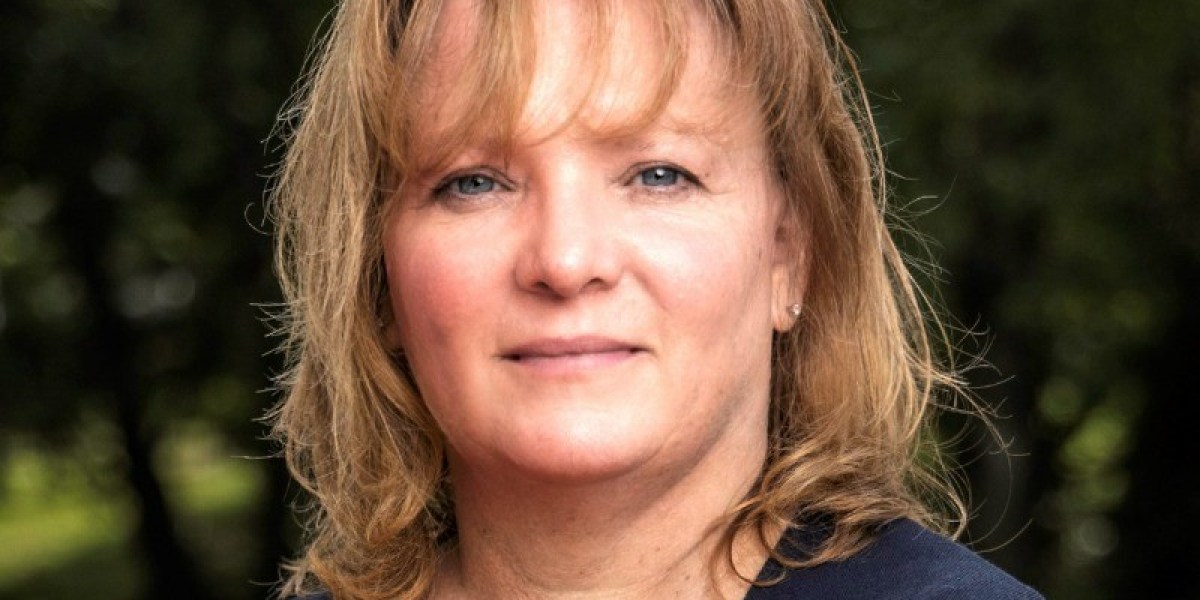



























It was like any Monday morning at Seattle Central College, the community college where Stacey Levine has taught creative writing for fifteen years. Arriving at work, she sat down at her office desk—a bulletin board with lightly crumpled world maps pinned up behind her—and fired up Facebook. A friend from Elliott Bay Book Company, the well-loved local bookshop, had tagged her in a post with a link to the Pulitzer website. “I noticed there were three or four people from Seattle who were finalists,” she tells me via video call, seated at the very same office chair, nearly a year after that day in May. “That’s when I saw my name. It’s kind of sad that I found out from Facebook.”
Before being named a 2025 Pulitzer fiction finalist, Levine’s novel Mice 1961 had received only two reviews in publications of note, 3:AM Magazine and the Washington Post. Published by the small Oregon imprint Verse Chorus Press, it follows a day in the life of two reclusive sisters in an uncanny Floridian dimension at the height of Cold War hysteria. It’s a deeply weird book, a kind-of coming-of-age comedy with no easy takeaway, full of twangy dialogue that reads like an alien in a human suit going “hello fellow Earthlings.” Sentences often seem straightforward until, hilariously, they don’t, as when one character proclaims: “Miami is a paradise that starts with the sun.”
Who are you, Stacey Levine? The literary world wondered in the wake of the announcement.
Nobody would have picked it as a contender for their Pulitzer betting pool—least of all Levine. Juicier still, the announcement was accompanied by rumors of a kerfuffle in which the Pulitzer Board appeared to override its jury’s nominations. “I couldn’t sleep that whole night,” Levine recalls, “and the next morning I had these emails from the New York Times. I had to call in sick because I just couldn’t think.”
Who are you, Stacey Levine? The literary world wondered in the wake of the announcement, so much that I found myself discussing it with a tipsy stranger in line at a New Orleans wedding bar. But the St. Louis native, author of three novels and two short-story collections, has been beloved by a cult readership since the mid-90s for her defiant non-commercial style, and cherished by friends and collaborators as something of a local legend in the Seattle underground. And now, with Mice 1961 reissued last week by Ecco, she’ll have the resources at her disposal to reach new fans. And she accomplished this feat without ever giving much thought to the so-called market.
*
The down-home Miami of Mice 1961 is unfathomable compared to what it is now, a place where the children of exiled oligarchs the world over come to crash their Aston Martins. The book takes place in the fictional neighborhood of West Horn, about as far as you can get from the Miami Beach that Joan Didion once described as a place where “the air conditioning is pushed to that icy point where women may wear fur coats over their diamonds in the tropics.” There, in a world of lunch counters, sock hops, and old-timers waxing rustically on rocking chairs, live two sisters of about twenty, Mice and the elder Jody, whose mother has recently died, “somewhat in the middle of things.” It is the afternoon of the big spring social down at the Crescent Tender Bakery, and at home in the apartment where the orphans live with their maid—an escaped mental patient named Girtle—Mice is, frustratingly, nowhere to be found.
Growing up, Levine preferred listening to speaking, which accounts for her ventriloquist’s interest in language.
That’s because she is being chased through the streets by a group of teenage bullies yelling such epithets as “Milk Face,” “Whitey-White,” and “Popcorn Head.” Mice has albinism, as well as something not quite right in the head, and spends most of the book running and hiding, either from these cartoon teens or from Jody’s nagging that she should get a job, meet boys, and try her best to fit in. Her older sister knows better than anyone that West Horn, this howdy-doo vision of post-war suburbia they call home, a nostalgic fever dream of corn-fed American culture, can be a cruel, cruel place to those who don’t. “On afternoons either sunny or ashen gray in any neighborhood,” Levine writes, “sulfurous steam does not rise from street vents; trees do not creak; ghosts don’t fly; but common, crass human ill will is everywhere.”
“What is going on with Florida? Is it just your personal sandbox?” a friend once asked Levine. Mice 1961 is her second novel set in Florida, following Frances Johnson in 2005. She’s not exactly sure why she keeps turning to it as a setting, except that it’s distinctive—“botanically, culturally”—and that she once, as a teenager, worked as a “governess” for a family in Fort Lauderdale. Being from Missouri, and a self-described “phrase hunter,” also helped her evoke the local parlance with the absurdist twist that is her trademark. “I grew up with phrases like ‘I don’t give a tinker’s damn about that,’” Levine continues. “Some of that is in there, and some I just make up.”
*
Growing up, Levine preferred listening to speaking, which accounts for her ventriloquist’s interest in language. This came in handy as an undergraduate at the University of Central Missouri’s journalism school, where she recalls one professor with no thumb or index finger on one hand, who would gesticulate, “his little stumps wiggling,” while yelling about the virtues of brevity: “Adverbs! Get rid of the adverbs!”
She was a rock journalist for a decade or so, first in DC and later when she settled in Seattle. She even had a column in The Stranger, during the golden age of this once-legendary rag, where she interviewed people about their jobs. “I never recorded them,” Levine explains. “I trained myself to write things down with a pencil and fill it in right after the interview, while I could still remember.”
Though it may read, in many ways, like a computer simulation, the old Miami of Mice 1961 is equally drawn from life.
Seattle was an artist’s paradise. She moved into a house of musicians, paid cheap rent, and collaborated constantly on whimsical one-off projects. She ran in the same circles as Kathleen Hanna; released a spoken-word record for the era-defining Olympia label Kill Rock Stars; and wrote a libretto for a puppet opera scored by the cellist Lori Goldston, who used to perform with Nirvana. While completing her master’s degree at the University of Washington, she lived in the back room of the restaurant where she waited tables.
Jobs are a central preoccupation of hers. Specifically, the difficulty of finding and keeping one. In her debut novel from 1997, Dra—, the eponymous protagonist, newly of working age, receives a letter congratulating her “for her desire to be employed,” and inviting her to apply for one at the Employment Office. Unable to decide between two entry-level options—one focused on classifying dust by type, the other on monitoring a “small water pump”—she is banished by an all-powerful Manager to a closet down the hallway. There, she is instructed to “get into the bed, urinate fully, and wait quietly for me to come in.” The next day she is shipped off to her first job, also within the confines of this impossibly vast building, which involves shoving film canisters down a pneumatic tube.
Equal parts Kafka and Terry Gilliam, the setting was inspired by the University of Washington Medical Center, where she and a few other “disaffected friends” worked after grad school. “It’s the weirdest building with hallways so long you can’t see the end of them,” she says. “There’s basement one and basement two. I worked in the emergency room, and part of my job was to do errands, so I was roaming all over the place.” The idea for Dra—, this workplace horror story that feels like a spiritual precursor to HBO’s Severance, came to her one day when she wandered down to the hospital’s surplus storage room:
“I went down into one of those basements and there were these cages—I didn’t know what they were. Old-fashioned medical equipment. Really gruesome stuff. I can still see the exact areas of the Medical Center I had in mind for certain scenes, like when Dra— cuddles up with a couple on the floor, right outside the Medical Ethics department. I was trying to develop this ironic, tongue-in-cheek narrative that I’ve kept at since, which I think is still there in Mice 1961, though reduced and changed.”
*
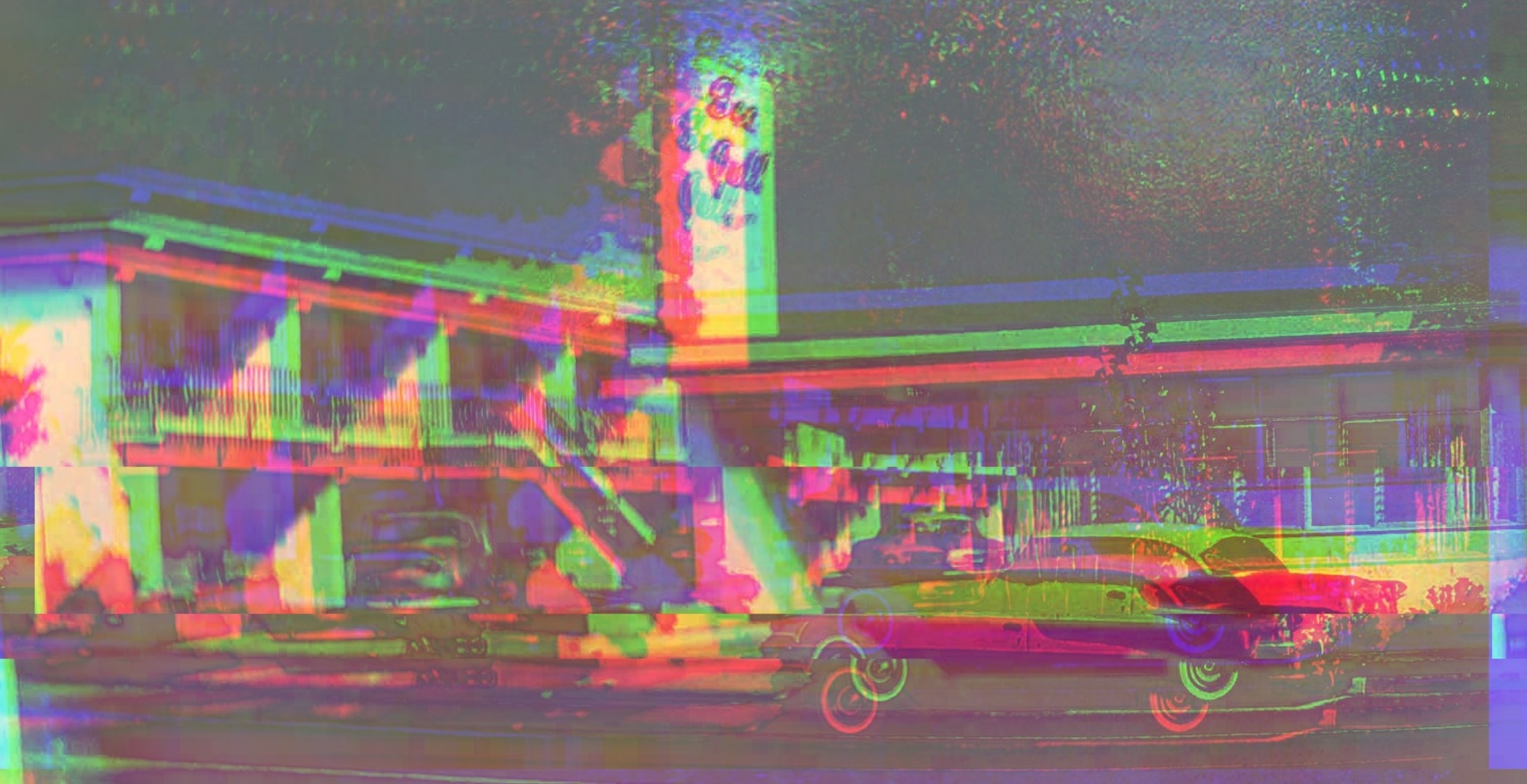
Though it may read, in many ways, like a computer simulation, the old Miami of Mice 1961 is equally drawn from life. In its early stages, Levine only knew the book would be another coming-of-age story, about two sisters, one of whom has albinism. After happening upon a memoir by the only surviving pilot of the doomed Bay of Pigs invasion (“dreadfully written, but full of details”), she decided it had to take place in Cold War Miami, featuring a version of this real-life pilot, who recounts spending days and weeks waiting for his CIA handlers to show up with briefcases full of cash.
She got a small grant to fly down to Miami, rent a car, and get to know the place. She visited the Bay of Pigs Museum & Library; the Miami Beach Botanical Garden; and the site of a notoriously horrific orphanage that inspired the character of Girtle, the escapee-turned-live-in maid. Armed with photos and locations from Facebook groups and other websites where old folks share memories of a long-gone Florida, Levine visited a residential neighborhood called Coral Way where you can still see “hints of the old.” She renamed it Reef Way and made it the book’s main thoroughfare.
Darkness lurks behind the sunny nostalgia, she says: “In that era, it was, you know, let’s conquer this land, displace the native people, and make this beautiful city for ourselves.” And Mice 1961 is full of cruelty and selfishness, but also people trying awkwardly to be tender, though it’s as if nobody ever taught them how. Reading the book’s big finale, a riotous party scene that convenes all forty-something characters, I kept thinking, this is America: poorly socialized weirdos who seem to sleepwalk through life; hysterical and hostile to outsiders; susceptible to rumor and conspiracy; yet deeply invested in keeping up this howdy-neighbor small-town fantasy. Truly a paradise that starts with the sun.