











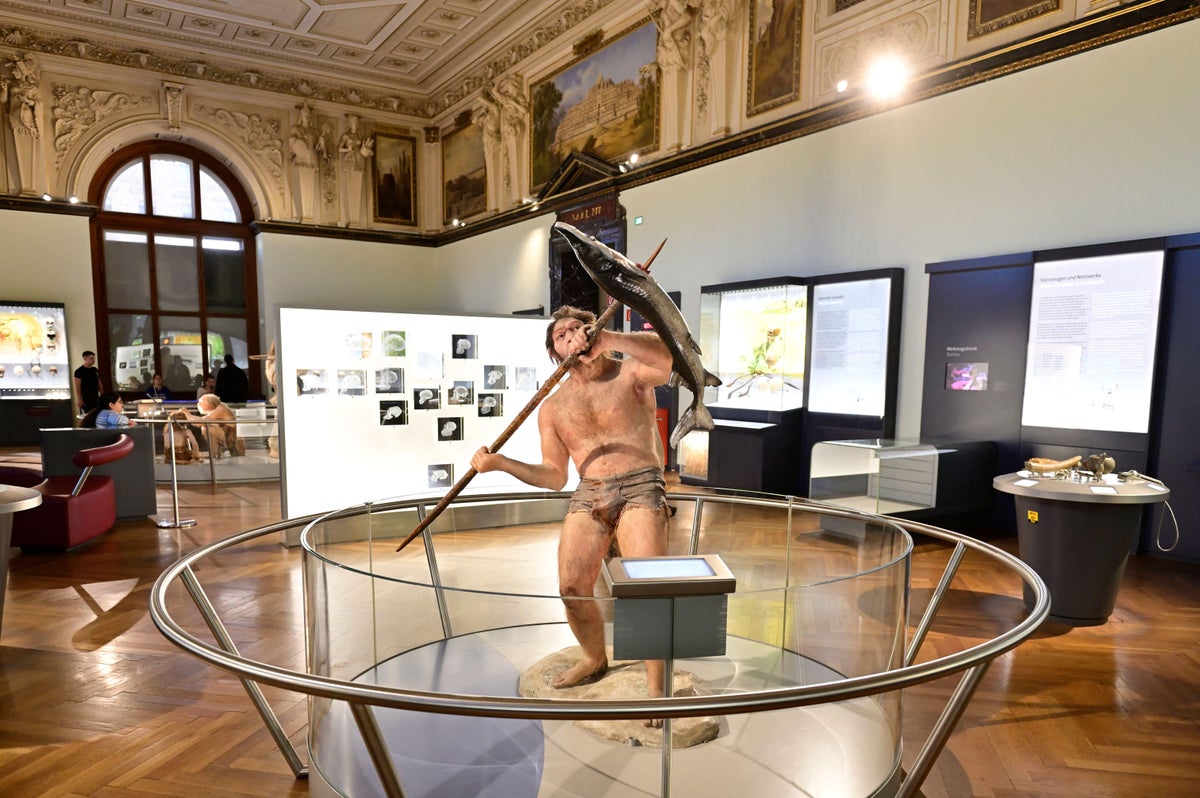











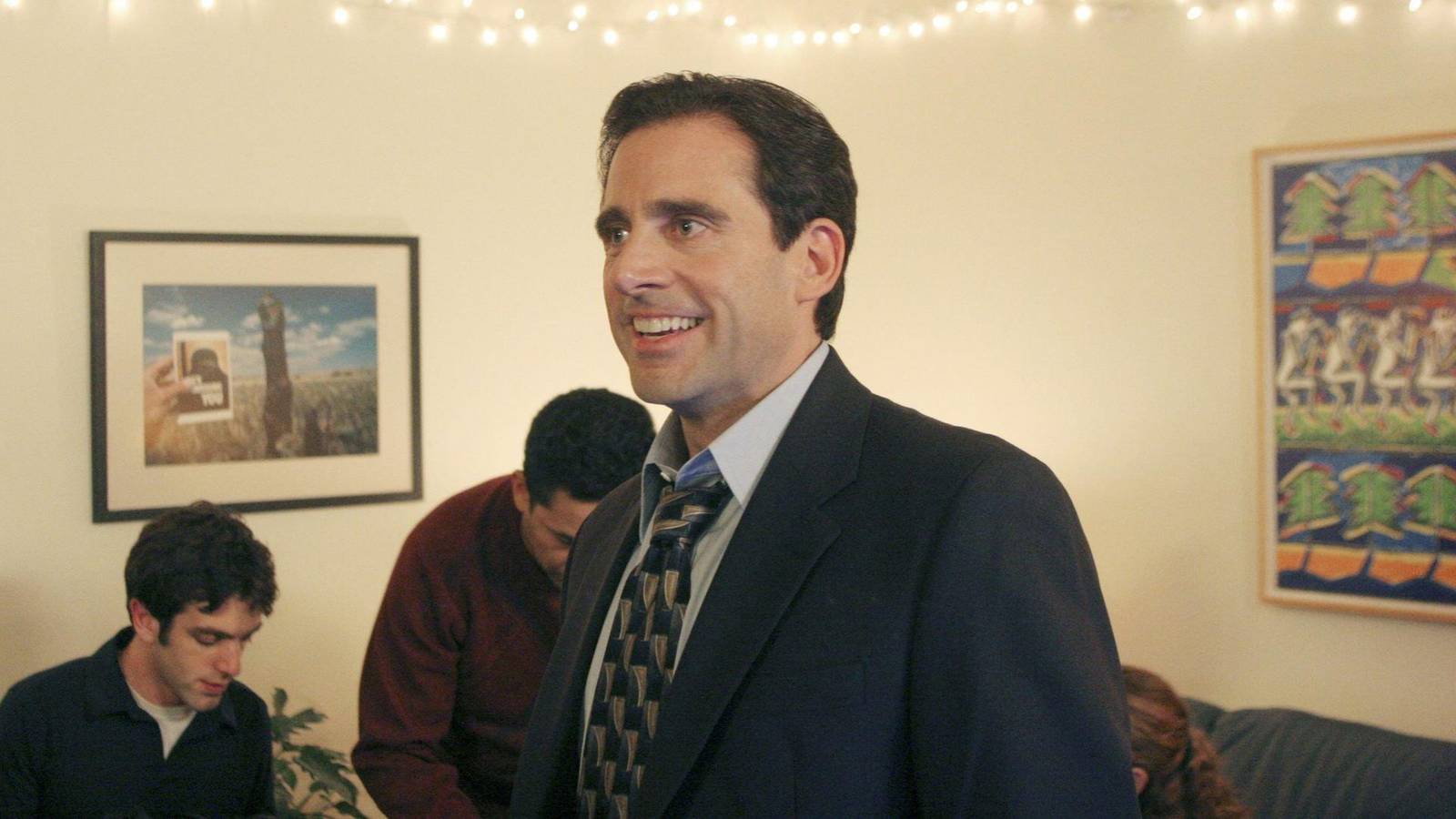






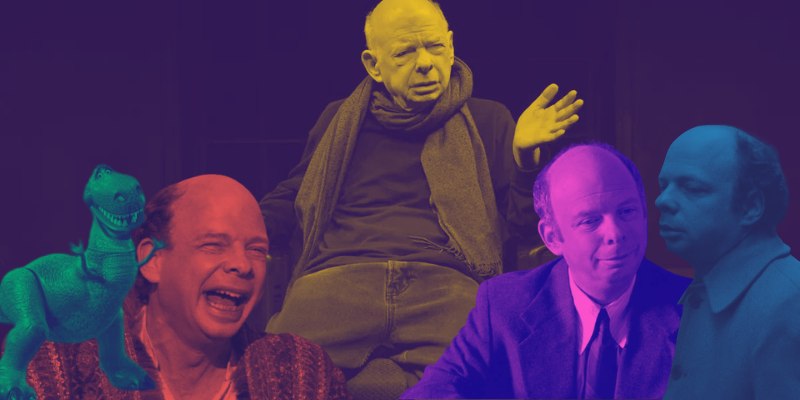
You may know him as Vizzini, the self-identified brains behind Princess Buttercup’s thwarted kidnapping. Or as Mr. Hall, the sexually frustrated Debate teacher who brings out the best in another blonde 90s icon. Younger fans may see him as Blair Waldorf’s step-dad, while the freshmen film nerds (c’est moi) first saw the twinkle during that famous dinner with André.
That’s right, people. I’m talking about your favorite character actor, Wallace Shawn. Right now in New York, the man of a dozen dear faces is the toast of the town. But this time the laurels are settling on his writing.
Shawn, the son of a New Yorker editor and longtime partner of a celebrated fiction writer, has been making knotty, ruminative plays about death and troubled institutions for as long as he’s been acting. And this May, he’s arrived at the Greenwich House Theater with his first new work in years. It’s a buzzy production. What We Did Before Our Moth Days stars John Early, Hope Davis, Josh Hamilton, and Maria Dizzia. Shawn developed it with his longtime collaborator, André Gregory—that very same André, from dinner.
Since its opening, Moth Days has caught the eyes and hearts of a public that was apparently hungry for knotty rumination on troubled institutions. In this case, the one on trial is the nuclear family. But-wait-there’s-more.
In a thrilling double bill, Shawn himself has been performing his 1990 monologue The Fever on the same stage, nights when the moths are dark. The Fever depicts an American tourist’s unraveling as he tries to square systemic injustice with his own privilege. All from a bathroom floor, mid a bout of food poisoning.
This sick spiral entails a primer on Capital, guilt-soaked childhood memories, and observations about a nascent revolutionary movement in what could be Mozambique. George Prochnik in The Paris Review described the piece as “effectively a conversion story, from solipsism to Marxism.” Which, I grant, sounds like a recipe for a mighty didactic evening of theatre.
And some folks, like The Joyce Carol Oates, have claimed as much. But I’m in the loud crowd that finds Shawn’s descriptions of the hamstrung bourgeoisie magnetic and eerily of-the-moment.
But I do wonder, why should this be? When there are so many (annoying) pieces of art about the predicament of the well-meaning liberal, and everyone I know has half-read Capital and lived to feel guilt about it? In The Fever, Shawn’s undimmable riz is certainly a selling point. But I suspect it’s something else that makes the piece burn so hot.
Shawn is one of our more conspicuously literary dramatists, in that the language tends prose-y in his plays. There’s not much conversation. People speak in elegant, full thoughts, and they don’t interact much. Moth Days is also a quartet of monologues, delivered out to a dark audience. When I caught that show last Wednesday, I was struck by the static stage picture. Four people, in seats, for three hours? What even makes this a theatrical event?
Or as Moze Halperin put it in a glowing review for the New York Review of Architecture, “Who but Wallace Shawn and André Gregory… would dare serve up this steaming brew of Sleepytime and manage to make such a riveting night of theater?”
Gregory has insisted that the uncommonly sedate design of Moth Days is, if not dramatic, dialectic by design. (Capital, again!) And as Prochnik observed, Shawn characters “talk in terms that suggest they are presenting not just their story, but also their case.”
In Moth Days, we adjudicate the unraveling family. We hear all sides of “the story” leading up to its demise. In this way, the audience does have a role to play in a Shawn joint: we’re the jury.
Compelling as it is to be given a task—let alone be held in the voices and micro-gestures of many tremendous performers—I couldn’t help but wonder if the reading experience for either of these plays wouldn’t be about as involving. Because the incantation, in both pieces, is the language. Text wraps around you like a dreadful whisper, with an eye to suffocate.
I think The Fever goes down like a tonic precisely because of its spareness, its lack of spectacle. Absent the bells and whistles so common to theatre today, one is forced to pay close attention to the words, which then invite the same kind of introspection that our narrator’s enduring.
Put another way? Maybe one’s less a witness than a reader in a Shawn play. Which is funny, given how much of us know the man by sight.
What I’m really saying is: if you can’t get to New York to catch the last couple weeks of these stirring ruminations in person, don’t stress terribly much. They are wonderful, worthwhile evenings at the theatre, but you can experience the dread on the page, too.
Which Wally must know, because he convinces in so many forms.