


























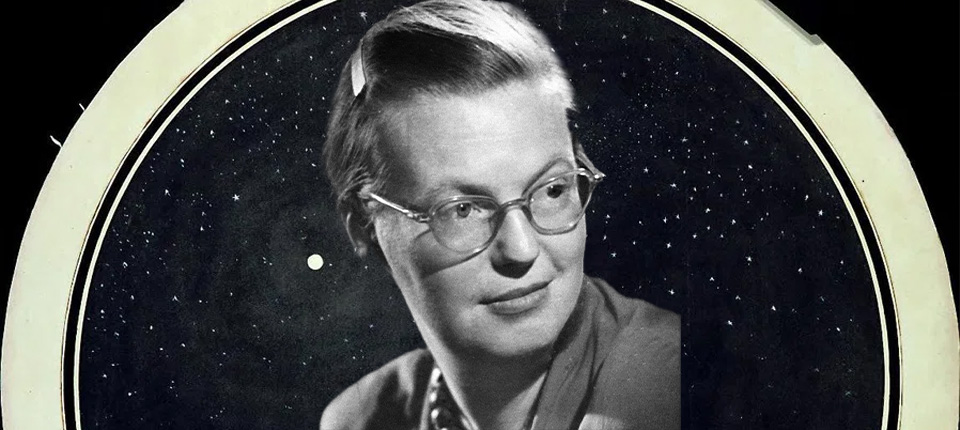






An introduction from the author
“Blue Spark” came about when the incredible writer and editor Jennifer Kabat asked me to contribute to a nonfiction publication she’d started with three fellow writers: Janet Steen, Greg Olear, and Sean Beaudoin. I was terrified. I said yes. I ran a subject by her, and we decided on a deadline. But every time I started, I was horrified by my writing. Writing fiction, I felt in control. Writing nonfiction about myself was mortifying. Even writing in a journal was mortifying. I had only let a few autobiographical paragraphs slip into publication before, in a brief piece about my dad’s short stories. When I confessed that I was stuck with my essay for her, Jennifer told me to pretend I was just writing an email to her. She is the “Dear Reader” of “Blue Spark.” Imagining her—unconditionally curious and accepting—I managed to get something down, and then unclench my fists and fling it into the world in spite of its profound imperfectness.
The central events chronicled here occurred in 2001 and 2002. I wrote it in the summer of 2013. I thought I was far away from the self who had experienced these things. “Blue Spark” was mostly written in the public library of Saugerties, New York. Most of the time, I was nauseated while I wrote. I told myself the nausea was related to eye strain, and I went to an eye doctor. I had headaches while writing, too, which I told myself were from the poor ergonomics of the chairs and tables at the library. But part of me knew that I was sick from the responsibility I felt toward everyone who appeared in the essay (but of course, they’re not themselves, I thought, they are the versions that my brain has edited, presumptuously), and by the people who aren’t mentioned but who were present for—or part of—the things that happened. I felt sick knowing that perception is so freakish, that if even a leaf or a towel seems to be yellow for one person, but green for another, the things I was writing about—collective tragedy, intimate moments with a spouse—could appear to be the wrong color, even if they were completely true for me. And finally, writing meant remembering in a way that felt like I was performing an autopsy on a version of myself that had died, as if I were poking around in old organs that had been pickled.
Pete Walker’s Complex PTSD came out a few months after this essay was published. Bessel van der Kolk’s The Body Keeps the Score came out the next year. Broad awareness of Complex PTSD, with which I was diagnosed in 2001, was nascent. I remember telling people that I’d received that diagnosis, and being met with confusion: Wasn’t PTSD something only combat veterans had? Now you can open up an app on a phone and see a person who isn’t a person—rather, an avatar of a person, a completely fictitious wise woman or pacific man created by artificial intelligence—speaking words written by artificial intelligence, culled from scraps of human writing, about healing complex trauma with tapping, breathing, self-forgiveness, and so on.
I couldn’t help being embarrassed when using the word trauma with sweetly confused people way back when. I am embarrassed now. Whatever I’ve endured, I say to myself, I’ve actually been quite lucky. I’ve survived after all. Shouldn’t that be enough? The psychiatrist who diagnosed me with C-PTSD in 2001 declined to prescribe medication. He said that what I was displaying—endless tears, full body shaking—was my system having a natural and even healthy response to what I’d experienced. He didn’t want to interrupt my process. I’m glad he allowed me to feel so completely, even though I continued to feel so completely for so long that I wreaked terrible havoc. Without that doctor’s decision I may not have learned to write about myself. Numerous studies have shown that writing about trauma helps contain it. Writing was certainly a start, but it wasn’t until this piece was published that I truly began to feel some relief.
“Blue Spark” and conversations I had with Jamie Fisher are small threads in her complex, comprehensive biography of Elliott Smith, Nobody Broke Your Heart, forthcoming this month. That book, which I read in galley form, and the occasion of its birth got me thinking about this piece again and drew me back into it.
In 2013, I wanted to write about being in a young body in love, about passionate ambition, music, fame, and friendship. Those things got all tangled up with other things. Coming back to this piece, it’s clear to me that the marrow of these human experiences—the ones that made us all feel so alive—has mutated beyond recognition. Then, epidemics still came and went, our president was thoughtful, and my little baby had not yet experienced the captivation of a glowing screen. Now, at times, we do still sing, dance, cry together, and fiercely lust. I hope we will remember how exquisite it all felt.
I’m grateful to The Weeklings for first publishing an absurdly long essay. And to Electric Literature—where I’ve dreamed of seeing this piece live again—for doing the same.
“Blue Spark,” Part One by Nelly Reifler
Chapter I
1. Come here, Dear Reader, and I will tell you a story. It’s not a happy story; it’s not an easy story to tell. And I’m going to ask you for a favor: One of the people in the story became famous while I knew him, and then he died. I am hoping you can put aside your own knowledge of this person and hear this tale from my life.
2. I walked in on the aftermath of an intervention. Elliott had played a very short set, and I vaguely remember being startled and disappointed by it. It was the Knitting Factory, September 1997. “Friends staged an intervention in Chicago in the middle of the Either/Or tour,” said Jonathan Valania in his article “Emotional Rescue” for Magnet Magazine. The way I remember it was this: I threw open the door to the green room, the way I had done the last time he played at the club. There he was, on the grungy sofa again. But now, friends I mostly didn’t know or had only met in passing—a few of his Portland friends and newer friends from his year of dropping into and out of New York—surrounded him, leaning against the ugly brown laminate conference table and the emergency exit door. Beautiful Joanna was there, looking anguished and pissed off, arms crossed. I had no idea if she was still Elliott’s girlfriend. When I had met her the year before, she was (or seemed to be) giddily happy with him. Now Elliott got up and hugged me and explained that an intervention was underway and that he would soon be checked into a facility in Arizona. He did not seem to be suffering over the pain he had caused others. Misery was missing. From his raised eyebrows and the scornful twist in his voice, he made it clear to me that he was disappointed in his friends for staging an intervention. It seemed to be a kind of embarrassing joke to him, almost like a practical joke. This was New York City, but he mentioned Chicago. Now I understand that the intervention had actually occurred earlier, at a friend’s house in Chicago—but the participants had agreed to let him play this Knitting Factory gig. It’s been hard to get the facts straight.
3. Facts. They’re why I write fiction. I don’t trust memory to be solid any more than I trust smoke.
4. The smoke in the Knitting Factory used to get so thick it became a kind of solid and floated downward. Sometimes you’d have to push it aside to see the person you were talking to. Your throat would always be sore by the end of the night. You’d feel desiccated the next morning. This was before Bloomberg. This was back when I would still drink mixed drinks in bars and clubs, and I had a watery greyhound in my hand. On this particular night in September 1997, I was madly in love with the man I wound up marrying, Noah. We were young, not even 30, but old enough to imagine we were made of organized atoms. Life burned bright, hormones surged, and we were the most beautiful people who had ever existed. New love is self-righteous: Nobody has ever felt this way before, its anthem goes, and you will triumph. In my memory the crowd at the Knitting Factory is jubilant, and I can see glimpses of the girls’ late summer dresses, and I can see everybody’s shining faces in the mirror behind the bar. Then I made my way upstairs, pulling Noah by the hand, and found the somber scene I’ve described.
5. Fifteen months earlier, April 1996, in the same smoky room: I’d found Joanna, and we hugged. I’d met her for the first time the night before. Elliott had proudly introduced me to her through a wall of smoke at the Gate in Brooklyn. The Knitting Factory, a tall, boxy room, with a balcony and stage lights, was maybe a little step up from Brownies and the Westbeth Theater, where he’d played in the past. Nobody deserved success more than Elliott did. All of his friends knew: He had just signed a publishing deal for 30,000 dollars, which was an unimaginably large sum. He’d gotten a fan note from John Doe. 27 is an age when you can still feel so much hope; one’s joy at a friend’s newfound fame is not complicated by worry, envy, or cynicism. I still remember the conversation I had with Joanna that night, shouting through the smoke near the bar. On this visit to New York, she and Elliott had spent a lot of time visiting with Alexander, another college friend who was now living in Brooklyn. “He’s so sweet,” she said. “He’s the smilingest person I’ve ever met.” I remember that she said exactly these words because I remember pausing. I had never heard anybody use that adjective, smilingest, before.
For many of us it was a good time, a happy time, because our bones and flesh insisted it must be.
6. The Vortex of Evil existed in a recessed rectangle of Alexander’s brick wall. It had, not too long before this night at the Knitting Factory in 1996, nearly driven him mad. He’d called me, and I had gone over to his place on Douglass Street to help him deal with the terror and suffering. It was almost too much for him, living with that vortex. After I went and did what I could (that is, nothing), Buddhist monks came over to purify it. Alexander was a great sculptor who worked in metal, but he’d stopped making art when a young woman fell on one of his sharp, steel pieces and badly hurt herself. Now he had a business making things out of metal, and in the back of his cavernous shop he had a living space built of hastily thrown up sheetrock and plexiglass. Anyway, I knew the Alexander smile that Joanna was talking about when she said smilingest, and I knew that it didn’t mean he was happy. I nodded, though, at what she said. In my mind I saw the vortex, but I pushed it aside. For many of us it was a good time, a happy time, because our bones and flesh insisted it must be. But looking back, Dear Reader, Alexander’s Vortex feels like a crack or a window onto the grayscale future. What is a Vortex of Evil, you ask? Well, I can’t really tell you, but he believed in it, so I treated it as real. I’ve never been someone who can tell if a person is in a chemically altered state. When I was a child, the grownups around me were often in such a state. I’ve always treated as real what people see, feel or comprehend due to the chemicals they’ve introduced to their brains.
7. “Elliott is in a very good mood and plays forever!” the music blog Ohmpark tells its readers, who might want to download a bootleg of that night in July 1997.
8. It reminds me of the pick-up-sticks I played with as a child: If you pull one brightly dyed wooden stick out, everything collapses, even the sticks that aren’t touching the one that’s been removed. When somebody dies in a manner that feels premature or shocking, there’s always a surge of bizarre responses. The reverberations travel incredibly far, considering what a small biological event death is. The anguish of the still-living reacting to a sudden death can take unpleasant forms. Some people become self-aggrandizing; they inflate their intimacy with the dead person or they display tragic public guilt, as if they could have somehow saved the deceased. If the dead person happened to be a great artist, a famous and great artist whose work moved hundreds of thousands of people, and thousands of people considered themselves his friends, this effect is amplified to the extreme. Admirers who met the person once may claim to have been his best friend. I really believe that this kind of behavior isn’t a symptom of narcissism, but rather a convulsive reflex brought about by a glimpse of the uncloseable distance between life and death. In other words: It’s a symptom of fear. Still, it’s the reason I haven’t ever been able to tell this story. I’m uncomfortable with talking about a subject about which so many people feel they know the truth. I know that each of us has our own truth. Perhaps, Dear Reader, you know this, too. If so, you understand the rabbit hole of subjectivity, the mutability of the real.
9. 1988, A boy who believed he was a vampire would hang out on a branch in a sad black nylon cape. Members of the Society for Creative Anachronism practiced jousting among the low, young trees. It was the path next to Franklin Patterson Hall, where many of Hampshire College’s social science classes met and Joan Braderman taught her bracing Film Theory and History Class. I was introduced to Elliott there: Elliott Stillwater Rotter. A strange name, but many kids had renamed themselves, and these new names were treated as real names. He had long hair, dyed red, and he was walking with his girlfriend, who had the same red hair, that spring of1988. It was a passing introduction, and I remember that this boy and his girlfriend reminded me of the twins in Diane Arbus’ famous photograph—they matched completely.
10. If you, reader, paid any attention to sad white music in the 1990s, you know Elliott’s trajectory from that time onward: His college band Heatmiser reformed in Portland and put out a couple of EPs and a few albums of okayish, appealing rock music that didn’t quite come together in recordings. You might recall, though, that their live shows were incredible. Meanwhile, Elliott went back to recording songs that he wrote on his own (I remember that he had come into college with cassettes of his songs, which a one-armed boy played for me during an awkward dorm room interlude), and in 1994 Cavity Search Records put out an album, Roman Candle. Kill Rock Stars then released Elliott Smith in 1995 and Either/Or in 1997. In 1997, he crossed the line between secret cult genius to genuine famous person: His song “Miss Misery,” which had been part of the Good Will Hunting soundtrack, was nominated for an Oscar. He lost to Celine Dion. DreamWorks put out his next two albums, XO and Figure 8. His music seemed to be nearly universally loved; he was one of those artists about whom few could find anything bad to say. Nobody begrudged him this success. He had problems with depression; he publicly self-medicated, and as he became more famous, a persona developed which was inseparable from the depression and alcohol and drug abuse. Later, in the early oughts, he slipped or skidded into severe ill health—both mental and physical—and more serious substance abuse problems. He died in 2003. His posthumous double album, From a Basement on the Hill (ANTI-, 2004) was mixed by Rob Schnaapf and Joanna Bolme. And it is perfect.
11. When Elliott died in 2003, college friends told me I had to write about him. In our knobby, amoebic group, I was the one who had become the writer. (Actually, there were several great writers in that group, but I was the person who’d just had a book published). Alexander commanded me to do it, and I gave his order particular weight. I waited for almost 10 years, Dear Reader, because of the post-mortem problem I have just described. What could I say about Elliott that nobody else would say? I was never his girlfriend; we weren’t in a band together. I am shy, and I rarely write about things from my own life, except in ornately sublimated fictional forms. My tendency is to assume that nothing is about me. The thought of Elliott’s name being a kind of show horse upon which a piece of my writing would ride turned my stomach. So I resisted for this reason, as well. I waited until I couldn’t put off telling my own story any longer.
12. He gradually became a friend that I knew and adored for 15 years after that first meeting on the path. We had many lovely times together, often in bars and at parties. He was the first person to buy a book of my writing—a small chapbook I’d stapled by hand—and he told me that he found my stories almost too sad to read. He never did anything to hurt or even annoy me, other than eventually hurting himself so much and occasionally making music to which I wasn’t partial. It’s not that we weren’t close when we were in the same space; we just never crossed the line where we expected anything of each other. We had plenty of conversations over the years about childhood, divorced parents, high school, romantic relationships, Smashing Pumpkins, the Pixies, The Minutemen, etc., the East vs the West Coast, marriage, the difference between writing songs and writing stories, and friends’ pets’ health issues. Could it have been different?
13. The days before cell phones. Once, in 1996, in the midst of a dramatic breakup, I came back to a pile of messages on the answering machine in my Brooklyn apartment. I dumped my bag on the bed and pressed the “play” button. The messages were all from Elliott: He was in a pit of depression, he said over and over in different ways; he was feeling lost and lonely and desperate to talk. Please, he said, would I call him back and please could we hang out. He’d never spoken like that to me before, and I was alarmed. When I called him back, his roommate gave me a phone number in Boston. I reached him at Mary Lou Lord’s place, and he sounded strange on the phone. Now I realize he was drunk by the time I called. I also realize he must have felt let down by me, having left those messages and receiving no response for days. When he was back in Brooklyn, it was impossible to speak with him about those messages: He evaded and joked.
He couldn’t let something be, couldn’t let it rest until it was perfect—but nothing would ever be perfect.
14. Blue Spark. In the fall of 1988 I was falling in love with Dylan, a handsome, grieving, kind boy whom others thought of as sort of an asshole. One October night he held my hand in the back of Elliott’s big, American boat-like car during a trip to the Dairy Mart. A few nights later, Dylan and I squeezed together, almost like children, on his college-issued mattress; the next morning we looked through his mementos of his father, and he wept, and I became his girlfriend. Dylan started a band with his best friend, Billy Greene, and Elliott. One day I stood outside the lounge in Dakin, the dormitory where Dylan lived, and I listened to the band practicing. Elliott was singing and playing guitar, and the song was X’s “Blue Spark.” It is a great song, and it was being butchered. Afterward I said to Dylan, “You know, Elliott is a terrible singer. What are you going to do?” As it turned out, Elliott was a great singer, and later on his voice became a kind of hypnotic, aching aural dream machine. But in 1988 his voice didn’t do what John Doe and Exene Cervenka’s voices did together, and besides, he was 18. Neil Gust joined the band, and they named the new three-guitar lineup Heatmiser.
15. Conversation #1. One day, about a year later, I was taking a break from baking at the Bridge Café—that was my campus job; sometimes I made really good things like cardamom cake or apple pie, but often I fell back on recipes from the Eagle Condensed Milk cookbook—and Elliott had finished a draft of a history paper after pulling an all-nighter. Elliott was serious about school, and in the context of Hampshire College, where you could practically get credit for covering a Frisbee with tinfoil or tacking tampons to cardboard with map pins, his studiousness stood out. A friend who knew him then describes him as “intimidatingly brilliant.” His professors wanted him to publish his writing in academic journals. He did not. He lived on a hall of ragtag stoners; they punched holes in the walls between their rooms so that they wouldn’t have to get up to pass the bong. Elliott didn’t take part in the bong Olympics, but he’d occasionally come into the lounge that was their Olympic stadium to play a new song for his hall mates. I, somewhat incongruously, hung out on this hall, as well. I, too, attended but did not participate in the bong Olympics.
On this day he’d been awake for over 24 hours working on his paper, and he was still dissatisfied. It wasn’t perfect. For a teenaged boy, he was remarkably self-aware. He told me that he totally knew this was his problem, and it had been his whole life: He couldn’t let something be, couldn’t let it rest until it was perfect—but nothing would ever be perfect. He understood that nothing could ever be perfect. Still, he’d delay handing papers in, and he’d find himself avoiding his teachers or making dumb excuses. Because it was imperfect, nothing he did ever felt finished. He asked me how I knew if something I’d written was done; I remember being thrown off by his question.
Nothing ever felt done to me, either. But I think I wasn’t, at that point, taking anything I did seriously enough to care if it were done or not—forget perfect. I’d made a splash with my writing as a teenager, believe it or not, and I’d been an over-achiever in high school; I’d entered Harvard as a sophomore at age 17, and then promptly fell apart, and my complete breakdown had landed me in the university’s psychiatric facility. So by the time I was sitting at that grimy table in the glorified corridor that was the Bridge Café (it was literally a bridge between the library and the gym, with a gallery displaying map-pinned tampons downstairs), I thought of myself as a weary has-been, someone who’d shown a lot of promise and had already failed. I told Elliott what was true for me: that nothing ever feels done, and that you just have to find a way to live with the discomfort.
16. But I’m having a very hard time living with the discomfort now, Dear Reader. It’s analogous in some ways to the Heisenberg principle. Let’s call it the Stillwater-Rotter Phenomenon. This summer I wanted to write a story from my life, a story about trauma and this one very weird thing I did once, which was to say a final goodbye to someone who was still very much alive. But the person I said goodbye to, an old friend whom I hadn’t seen in a few years, was famous—famous in a way that inspired cult-like devotion from his fans. I’ve been working on these pages for months, attempting to separate the fact that I had a friend to whom I said goodbye from the fact that this person in my weird goodbye story was a kind of rock star. I’ve found myself reading interviews with him and combing fan websites; I’ve looked at bootleg sites, lyric sites, and setlist.com. I’ve spoken to his biographer on the phone. I’ve tried writing the story as if Elliott had never become famous, or pretending that it is likely you’ve never heard of him; after all, there are far more struggling artists who can’t stop drinking and who mix their alcohol with fucked up combinations of drugs than there are well known ones. But I’m running into this problem, which is that fame changes the person who is its subject, the way that atoms behave differently when they are being observed. I couldn’t write a story about Elliott as if he were non-famous Steven Smith because fame changed Elliott.
17. The dramatic breakup I was going through in 1996, when I was out of town and missed Elliott’s pleading calls, was my breakup with Dylan. In 1991, upon my graduation from college, we had moved to San Francisco. Things weren’t easy. It was the Bush recession, we were underemployed, and I was sick with an illness that a dozen doctors had either been unwilling to diagnose or called psychosomatic. By the time a nurse practitioner had found the cause of my sickness, and the cause turned out to be an asthma medication that Dylan was taking, the relationship had hit a kind of wall. It had become one of those domestic arrangements in which you’re sleeping in the same bed as your best friend—which, you might remember, was how it began. We returned to the East Coast for graduate school—an MFA in film for Dylan, and one in writing for me—and decided to get married. We planned a wedding. And then, a couple of months before we were to wed, I met Noah while working a shift (Exit Door) at the Park Slope Food Coop. When Dylan went upstate for his final summer at Bard, I had a drink with Noah at Jonny Mack’s, a neighborhood bar in the southern end of Park Slope, when that part of the neighborhood was still half boarded-up storefronts and shady bodegas. I had two greyhounds, actually. There was a lot about Noah that I didn’t like—his sandals, the cartoonish drawing on his business card, his affection for Counting Crows—and yet I was completely chemically overwhelmed by him. He had dark, deep brown eyes and smooth skin that I wanted to touch. I was smitten on the atomic level. That night, I didn’t sleep, and I writhed with mysterious, punishing knee pain.
18. Billy Greene never became famous. Like Elliott, he was a preternaturally gifted boy. He was a brilliant animator, artist, and drummer. I mentioned him before, Dear Reader; he was Dylan’s best friend from childhood, and in 1988, when I transferred into Hampshire, Billy came in from UCSC and Dylan from UVM. The two boys were like brothers, I think. Billy could be hard to reach, exceedingly private, and this sometimes bugged Dylan, who was hard to reach in his own way. But it was an unconditional relationship; no bump—band quarrels, for instance, or lack of communication—would rattle them enough to affect the fundamental fact of their bond.
Don’t be slick, I begged him, bringing my hand down hard on the long wooden table where we sat.
In 1994, when Dylan and I moved to Brooklyn from San Francisco, we got an apartment next door to Billy and his girlfriend. (Lori Berenson, its previous tenant, had gone to Peru and gotten involved with the Tupac Amaru Revolutionary Movement; she would become one of the most famous political prisoners of our time; Billy’s girlfriend said that she used to blast The Doors at top volume.) Billy began giving me drumming lessons. We’d meet at Context, a hive-like block of studio and rehearsal spaces on Avenue A. I wasn’t terrible. I wasn’t good. I was probably teachable, and Billy was patient.
19. At a party in Billy’s apartment, he handed me the new solo CD by Elliott and encouraged me to listen to it. Elliott had sent it to him. We were standing in Billy’s narrow kitchen, the mirror image of our narrow kitchen next door. I took the CD from him, and didn’t think about it until a few days later, when I stuck it in the portable CD player I had hooked up to my car’s cassette deck. I was dumbstruck, of course. I was even more awed by my old friend when, soon after that, I first saw him play those solo songs and realized that the things he did with the acoustic guitar—which I thought were tricks from the mixing room—were actually made by his fingers and six strings.
20. After Elliott moved to Los Angeles in 1999 he no longer called me when he was in New York. I didn’t take it personally; he stopped calling a lot of his old friends. We heard that he wasn’t doing well—in a new way. We were worried. There had always been, in Elliott’s sweet ambition to be a rock star, the potential for a rock star crash. We heard that he was seeing a bad psychiatrist, or a couple of different pill doctors. We heard that he was disoriented and—no surprise—drinking too much. Later we’d hear that he was smoking crack in the studio. We’d hear that he’d become difficult to work with: grumpy and paranoid. I heard a story of him holding up a Ziploc bag full of pills, trying to figure out which ones were which, and then just taking a few of each.
21. Conversation #2. But before all that, after the intervention, later in the fall of 1997, Dylan was visiting New York. Noah had recently moved into the 16th Street apartment where Dylan and I had lived for the last 10 months we were together. Noah and I spent our nights on the bed that Dylan and I had bought through the New York Press classifieds; we used the coffee pot I had given Dylan for his 27th birthday. Now Dylan and I were trying to stay friends. There was to be a summit, the first time Dylan and Noah would have a beer together. It just so happened that Elliott gave me a call to see if I wanted to get a drink—and somehow I dragged him into the boyfriend summit, along with Alexander, who lived near the bar where we were all to meet, The Gate. Elliott seemed fine. Great, actually. We didn’t speak of the intervention. I don’t remember much about how it went with Dylan and Noah, but I vividly remember the conversation with Elliott.
He told us that Gus Van Sant was using a song by him in his new movie. We all congratulated him—it seemed like a big break, even bigger and more impressive than the publishing deal. I asked Elliott what his next album was going to be like, and he said that he was finally going to have enough money to use strings. No! I said. No strings. Too cheesy. Strings aren’t cheesy, he said, not necessarily. Look at the Beatles, he said, the way they used strings. My point exactly, I said. I slugged some wine and remembered the conversation we’d had about his history paper; I knew that there was some ideal, some kind of perfect glassy symmetry that he was reaching for in his music. And now people were going to give him money to obsess about it. Don’t be slick, I begged him, bringing my hand down hard on the long wooden table where we sat. I was being bossy, actually a bit of a jerk, and he got annoyed. He asked why I wouldn’t trust him to make the right decisions about his own music. We were having a little argument. Perhaps if I had been aware of Lou Reed’s “Street Hassle” at the time, or if I’d thought about Rick Danko’s fiddle, I would have been less mean about strings. It’s a good thing I have become a writing teacher; now, bossing people around about their work is my job. I did try my best, though, to love those Dreamworks albums of Elliott’s.
Part two of “Blue Spark” will be available next week, on August 12.