
































Movies often meet us where we are, and it’s surprising how much our perception of them can change when we return to a film after several decades. This is certainly the case with many of the most iconic movies of the 2000s, as shifting cultural expectations, changes in the cinematic landscape, and even knowledge that comes from viewers simply growing up can change how we view a film retrospectively.
From comedies that tapped into the cultural zeitgeist of their time to kids’ stories that take on a whole different meaning when seen from an adult perspective, revisiting older movies can highlight how much we have changed, both as individuals and as a society. This stands as a powerful reflection of progress and the shifting gears of time.
Other examples showcase just how outdated certain modes of thinking have become, as once lauded films come across as dodgy and offensive upon reflection. It can sometimes be shocking to watch characters act and think in ways that nobody would today, and see that it’s presented as totally acceptable within the world of the film.
Movies are products of the time out of which they were produced, and even if the 2000s feels like a relatively modern era, it’s clear that a lot has changed over the past quarter of a century. While our perceptions of these movies are quite different from what they were when they first hit theaters, that doesn’t take away their iconic status, as all these movies hold a special place in pop culture, even today.
Finding Nemo (2003)

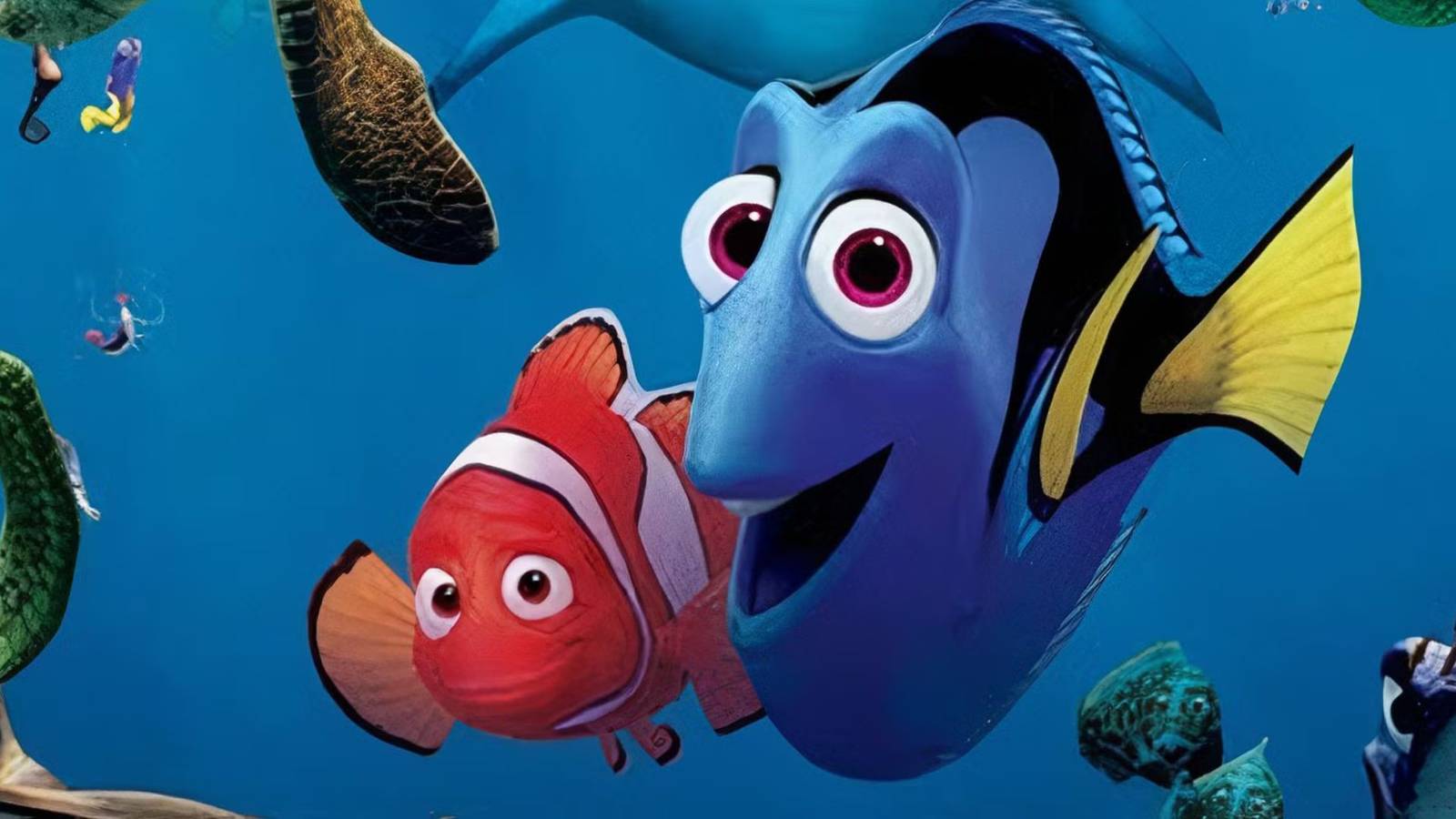
As a kid watching Finding Nemo in 2003, this underwater adventure felt filled with kooky characters, and it was impossible not to be won over by the sheer absurdity of the forgetful Dory. But, revisiting the film as an adult, Marlin’s search for his only surviving son has a lot more to say about anxiety and parenting than first meets the eye.
With a shocking opening that sees an entire row of fish eggs, save one, devoured by a barracuda, Nemo’s survival as Marlin’s only child, and his vow to protect him, will resonate deeply with new parents. This was a story about far more than a simple ocean adventure, instead exploring the dangers of overprotection, the need to let go, and the quiet courage it takes to trust those we love to find their own way in the world.
Lilo and Stitch (2002)

On first glance, Lilo and Stitch is a family-friendly sci-fi about a little girl adopting a wild extraterrestrial as her ‘dog.’ But when you dig a little deeper, this story reveals itself as a raw story about grief, poverty, and two sisters trying not to be torn apart by the system. Building on themes of found family, watching as an adult, it’s impressive how the film emphasizes acceptance, unconditional love, and redemption.
Lilo and Stitch stands out as one of Disney’s greatest and most underappreciated releases, and its universal themes harken back to classic releases like Dumbo. While kid viewers will immediately connect with the wild antics of Stitch, for anyone returning to this story after some life experience, the way Nani stepped up to protect Lilo is the real appeal.
Mean Girls (2004)

Mean Girls is one of the most quotable teen movies of the 2000s, whether it’s the cutting insults of Regina George or memorable one-liners like “four for you, Glen Coco!” Yet it’s also a story of discovering one’s own identity, as the homeschooled Cady Heron (Lindsay Lohan) is thrust into a social hierarchy she doesn’t quite understand and forced to sink or swim.
Watching Cady attempt to navigate the complexities of high school politics hits differently as an adult, and it’s impossible not to reflect on your own school days while doing so. It’s heartbreaking to see her undervalue her friendships with Janis and Damien in favor of the Plastics’ popularity, but these are lessons she has to learn for herself in this thoughtful coming-of-age tale.
Juno (2007)

When Juno was first seen as a teenager, it was easy to relate to the awkward dynamic between Michael Cera’s Paulie Bleeker and 16-year-old Juno MacGuff, played by Elliot Page. Watching a young girl navigate an unplanned pregnancy and the decision to put her child up for adoption introduced complex themes for a younger viewer, along with discovering the music of The Moldy Peaches along the way.
Yet, revisiting Juno today, these aren’t the elements that stand out. Instead, the darker undercurrents of Jason Bateman’s Mark Loring are impossible to ignore. The way a character who should have served as a protective, paternal figure instead oversteps boundaries feels deeply unsettling, and in hindsight, his behavior comes across as undeniably creepy.
Love Actually (2003)

Despite being an undeniable Christmas classic that countless viewers return to every holiday season, Love Actually is deeply problematic. Few films have aged worse when viewed through a modern lens than this Richard Curtis hit, with nearly every storyline crossing a social boundary in ways that leave a sour taste in hindsight.
From the Prime Minister (Hugh Grant) teetering on the edge of a global scandal as he leverages his power to pursue a much younger staffer, to Colin Firth’s character overstepping clear boundaries with his housekeeper, who doesn’t even speak enough English to meaningfully consent, it’s clear that in the 2020s, Love Actually is actually dodgy.
Idiocracy (2006)

In the two decades since Idiocracy first hit theaters, its message of a dumbed-down society feels like it’s only become more pertinent. With widespread political instability, mass misinformation, and even a former reality TV star in the White House, it’s not difficult to relate some of the themes and ideas presented in Idiocracy to today’s cultural landscape.
Mike Judge hit the nail on the head with this social satire, but it didn’t quite resonate with viewers at the time, as it bombed at the box office. Yet, as cult classics often do, it found its audience years later and definitely hits different when viewed through a 2020s lens.
The Hangover (2009)

The Hangover was one of the most successful comedies of the 2000s and made stars of its main trio, Bradley Cooper, Ed Helms, and Zach Galifianakis. As the outrageous tale of a bachelor party gone extraordinarily wrong, director Todd Phillips pushed things to the absolute limit in a way that signaled it as an immediate comedy classic.
However, revisiting The Hangover today, things feel different, and that’s because they unfortunately milked this franchise for all it was worth. With two sequels, the existence of The Hangover trilogy retroactively undermines the power of the original, and its legacy is tainted by oversaturation and failing to recognize that sometimes less is more.
500 Days of Summer (2009)

500 Days of Summer told the doomed love story of Tom (Joseph Gordon-Levitt) and Summer (Zooey Deschanel) in non-linear fashion and stands out as one of the most original rom-coms of the 2000s. While many view Tom’s longing for real love as romantic, reflecting on the film today, his entitlement was clear as he continually failed to take onboard Summer’s lack of desire for a serious relationship.
Gordon-Levitt himself has even spoken about how often people get the film wrong, and for the movie’s 10th anniversary told Entertainment Weekly that people shouldn’t view Summer as the villain of the story. He described Tom as a character who “develops a mildly delusional obsession over a girl onto whom he projects all these fantasies” and explained “that’s falling in love with the idea of a person, not the actual person.”
Borat (2006)

The shock comedy of Borat worked incredibly well in 2006, as Sacha Baron Cohen used the character of a clueless Kazakh journalist to satirize prejudice, ignorance, and casual bigotry across America. The mockumentary style exposed Western attitudes in a way that felt both uncomfortable and sharply observant, delivering its commentary through absurd, often cringe-inducing encounters.
However, certain aspects of Borat sit in stark contrast to modern sensibilities, and it’s clear that the portrayal of Kazakhstan often crossed into territory that many now view as insensitive. The more divided reception to the 2020 sequel, Borat Subsequent Moviefilm, further suggests that the character’s shock value and cultural impact had lessened, with its approach feeling less fresh and more dated.
Iron Man (2008)

Watching Iron Man back in 2008 was a total revelation, and it stood out as one of the greatest comic book adaptations of all time. Following up on the incredible appeal of Christopher Nolan’s The Dark Knight, Iron Man had a more lighthearted sensibility that leaned more into the upbeat feeling of a comic book, while also revitalizing Robert Downey Jr.’s career for a new era.
Iron Man was great at the time, but rewatching the movie today with the context of the entire Marvel Cinematic Universe makes for a wholly different experience. This was not just one singular superhero film, but stands as the inception point of a franchise that changed the movie landscape entirely and opened the doors to countless more adventures, heroes, and even a multiverse.