WashingtonWeeklyTimes.com
  • Home
  • US News

    California drug bust seizes over $800K in cocaine at traffic stop

    Bear spray saves Alaska runner from brown bear attack on trail

    Dolly Parton misses Dollywood appearance as doctor cites ‘health issues’

    Sean Payton takes vicious shot at Falcons home crowd after humiliating first half

    Bronx man faces hate crime charges after Central Synagogue attack

  • Politics

    Former Democrat Activist Explains How the Party Got Captured by the Radical Left (VIDEO) * The Gateway Pundit * by Mike LaChance

    Speaker Mike Johnson Goes On Fox News And Dies A Slow And Painful Death

    U.S. Passport Power Slips in Global Rankings

    Minnesota Secretary of State THREATENS James O’Keefe, Cam Higby For Going Undercover in Muslim Garb and Easily Exposing State’s Insane ‘Voter Vouching’ System

  • Business

    Harvard fund discloses $2.2 billion stake in Musk’s SpaceX

    How college students can manage their finances while in school: Here are 7 things to do

    Tariff refunds are juicing corporate profits and GDP, as tailwinds converge to propel growth to 4.3%

    AI is creating a new wave of philanthropists. The system they’re walking into is broken

  • Science

    People form judgments about a stranger’s trustworthiness and competence after seeing their face for just one-tenth of a second — and Princeton researchers found that more viewing time did surprisingly little to change the impression, mostly making people more confident in it.

    AI Could Help Fossil Fuel Companies Create More Emissions

    Early Neanderthals were probably striking sparks to make fire in England 400,000 years ago — roughly 350,000 years earlier than the previous convincing evidence, revealed by baked earth, heat-shattered handaxes and pieces of pyrite found at Barnham.

    Puerto Rico Is Rationing Water. It Could’ve Avoided It by Harvesting Rainwater

  • Technology

    Retrospec Joe Rev 2 Review (2026): Putting the ‘Joy’ in Joyride

    Woman claims her stepfather used Grok to transform childhood photo into explicit imagery

    This Beautifully Weird Necklace Is Secretly a USB Drive

    Self-driving trucks are officially testing on California highways

  • Lifestyle

    7 Compact Cameras Perfect for Your Vacation

    Clothing I Don’t Regret Buying: Items Worth Every Penny

    What Our Team Is Currently Loving

    Top 10 Snowboarding Resorts For Beginners

  • Music

    11 Best Technical Death Metal Albums of the 2000s

    Queens of the Stone Age Reveal New Album Title & Release Date in Teaser Video

    Watch Julia Jacklin Cover Sugar Ray’s “Every Morning”

    Romeo Santos Launches Fundación Los Santos to Support Kids With Autism

  • Television

    Julie Newmar’s Star Trek Episode Originally Had A Much Darker, More Complex Ending

    Big Brother Spoilers: Veto Winner Could Set Up Major Chaos This Week

    ‘Crew Girl’ Cast Guide: Get to Know the Actors in Netflix’s YA Rowing Drama

    Why Lila Hoth From Reacher Looks So Familiar

  • Film

    House Of The Dragon’s Tyland Lannister Returns In New Game Of Thrones Release

    Reckon with the Flesh: The Fly at 40

    When Dudley Moore Intoxicated Audiences in ‘Arthur’

    10 Movies To Watch If You Love Jurassic Park

  • Literature

    Literary Hub » Miranda July, Jamel Brinkley, and More on Their Favorite (Re)reads

    Book Riot’s Deals of the Day for August 15, 2026

    August 10 – 14, 2026

    39 of the Best YA Graphic Novels and Comics of 2026

    Literary Hub » The Rumpus is launching a Spanish-language magazine.

    Northeast Indian Literature That Interrogates the Nation

    Book Riot’s Deals of the Day for August 14, 2026

    Why I Founded Gaza Publications During the Genocide

    My Sex Appeal Can Kill a Man at 10 Paces

  • Contact
    • About
  • Home
  • US News

    California drug bust seizes over $800K in cocaine at traffic stop

    Bear spray saves Alaska runner from brown bear attack on trail

    Dolly Parton misses Dollywood appearance as doctor cites ‘health issues’

    Sean Payton takes vicious shot at Falcons home crowd after humiliating first half

    Bronx man faces hate crime charges after Central Synagogue attack

  • Politics

    Former Democrat Activist Explains How the Party Got Captured by the Radical Left (VIDEO) * The Gateway Pundit * by Mike LaChance

    Speaker Mike Johnson Goes On Fox News And Dies A Slow And Painful Death

    U.S. Passport Power Slips in Global Rankings

    Minnesota Secretary of State THREATENS James O’Keefe, Cam Higby For Going Undercover in Muslim Garb and Easily Exposing State’s Insane ‘Voter Vouching’ System

  • Business

    Harvard fund discloses $2.2 billion stake in Musk’s SpaceX

    How college students can manage their finances while in school: Here are 7 things to do

    Tariff refunds are juicing corporate profits and GDP, as tailwinds converge to propel growth to 4.3%

    AI is creating a new wave of philanthropists. The system they’re walking into is broken

  • Science

    People form judgments about a stranger’s trustworthiness and competence after seeing their face for just one-tenth of a second — and Princeton researchers found that more viewing time did surprisingly little to change the impression, mostly making people more confident in it.

    AI Could Help Fossil Fuel Companies Create More Emissions

    Early Neanderthals were probably striking sparks to make fire in England 400,000 years ago — roughly 350,000 years earlier than the previous convincing evidence, revealed by baked earth, heat-shattered handaxes and pieces of pyrite found at Barnham.

    Puerto Rico Is Rationing Water. It Could’ve Avoided It by Harvesting Rainwater

  • Technology

    Retrospec Joe Rev 2 Review (2026): Putting the ‘Joy’ in Joyride

    Woman claims her stepfather used Grok to transform childhood photo into explicit imagery

    This Beautifully Weird Necklace Is Secretly a USB Drive

    Self-driving trucks are officially testing on California highways

  • Lifestyle

    7 Compact Cameras Perfect for Your Vacation

    Clothing I Don’t Regret Buying: Items Worth Every Penny

    What Our Team Is Currently Loving

    Top 10 Snowboarding Resorts For Beginners

  • Music

    11 Best Technical Death Metal Albums of the 2000s

    Queens of the Stone Age Reveal New Album Title & Release Date in Teaser Video

    Watch Julia Jacklin Cover Sugar Ray’s “Every Morning”

    Romeo Santos Launches Fundación Los Santos to Support Kids With Autism

  • Television

    Julie Newmar’s Star Trek Episode Originally Had A Much Darker, More Complex Ending

    Big Brother Spoilers: Veto Winner Could Set Up Major Chaos This Week

    ‘Crew Girl’ Cast Guide: Get to Know the Actors in Netflix’s YA Rowing Drama

    Why Lila Hoth From Reacher Looks So Familiar

  • Film

    House Of The Dragon’s Tyland Lannister Returns In New Game Of Thrones Release

    Reckon with the Flesh: The Fly at 40

    When Dudley Moore Intoxicated Audiences in ‘Arthur’

    10 Movies To Watch If You Love Jurassic Park

  • Literature

    Literary Hub » Miranda July, Jamel Brinkley, and More on Their Favorite (Re)reads

    Book Riot’s Deals of the Day for August 15, 2026

    August 10 – 14, 2026

    39 of the Best YA Graphic Novels and Comics of 2026

    Literary Hub » The Rumpus is launching a Spanish-language magazine.

    Northeast Indian Literature That Interrogates the Nation

    Book Riot’s Deals of the Day for August 14, 2026

    Why I Founded Gaza Publications During the Genocide

    My Sex Appeal Can Kill a Man at 10 Paces

  • Contact
    • About
No Result
View All Result
WashingtonWeeklyTimes.com
No Result
View All Result
Home Business

Coinbase CEO replacing ‘pure managers’ with ‘player-coaches’ is sign org chart is changing

by
May 5, 2026
in Business
Coinbase CEO replacing ‘pure managers’ with ‘player-coaches’ is sign org chart is changing


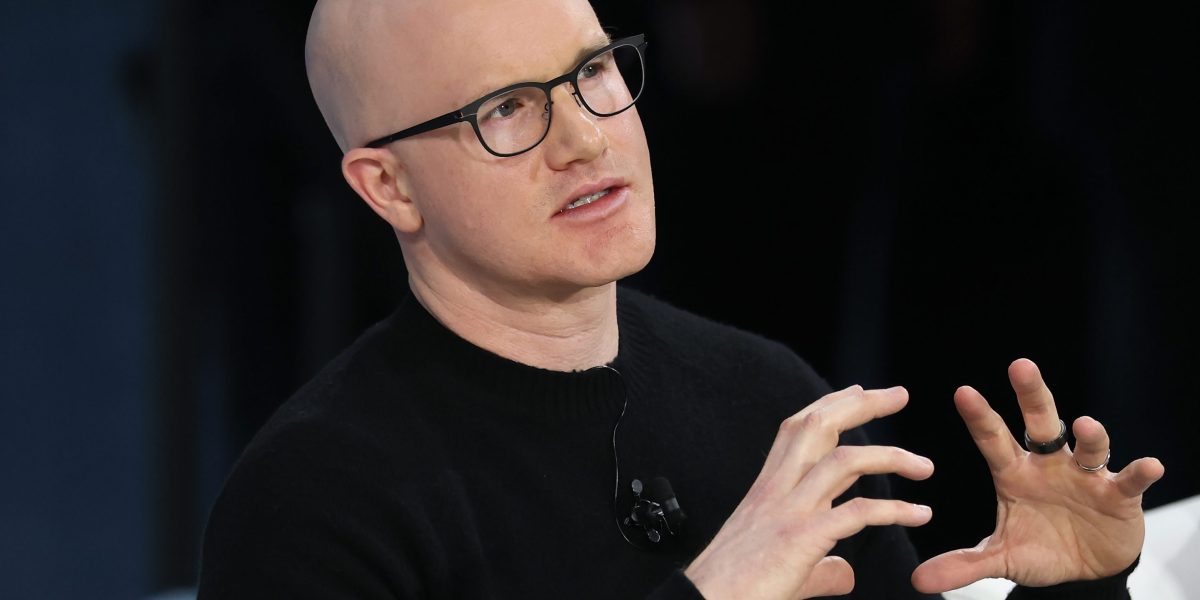
Out went what Armstrong calls “pure managers.” In came “player-coaches,” flat hierarchies capped at five layers, and “AI-native pods” that could include one-person teams directing agents that do the work of engineers, designers, and product managers.

“We are not just reducing headcount and cutting costs,” Armstrong wrote on X. “We’re fundamentally changing how we operate: rebuilding Coinbase as an intelligence, with humans around the edge aligning it.”

Layoffs economywide are relatively low. But inside tech, the AI layoff is the story of 2026. And Armstrong put his finger on something real: The org chart of the American corporation is under a kind of pressure that most companies have not yet figured out how to relieve.

Something is breaking inside the American corporation. Not the balance sheet, not the brand, not the technology stack—those are mostly fine. What’s breaking is harder to see on a slide deck and harder to fix with a budget line: the unwritten rules, shared assumptions, and organizational muscle memory that tell people how to behave, what to say, who to listen to, and what happens when you get it wrong.

Artificial intelligence didn’t create this tension. But it is making it impossible to ignore.

A sweeping new index from KPMG, built from surveys of 300 C-suite leaders, analysis of earnings calls from 177 publicly traded companies, and hard capital data across six industry groups, puts numbers to what many executives are quietly living. The verdict: 81% of executives said boards have raised expectations for their organizations’ adaptability. The organizations beneath them, in most cases, are not ready to meet it.

The report said conditions are no longer stable, with open trade, predictable regulation, inexpensive capital, and consistent labor markets all shifting simultaneously, redefining how CEOs and senior executives have to lead their organizations.

“Against this backdrop,” the report continued, “CEOs must understand how to rewire their organizations to keep pace with change.”

The survey shows a war inside big corporations as that rewiring is resisted at all levels.

The changing org chart of the 2020s

For most of the 20th century, the Fortune 500 org chart was a machine for execution. Decisions flowed down, information flowed up, and the hierarchy was the system. It was slow by design: Slow meant controlled, and controlled meant safe.

AI doesn’t work that way. It compresses timelines, flattens information asymmetries, and rewards organizations that can act before the picture is complete. The executives who built their careers in the old machine are now being asked to rewire it while it’s running.

Atif Zaim, KPMG’s deputy chair and U.S. managing principal, frames it as a factory floor reckoning.

“When electricity first came about … it wasn’t until much later that folks said, you can reorganize the entire factory—proximity to the boiler or proximity to the river or the water wheel is no longer important,” he told Fortune. Most large companies, he suggests, are still standing next to the boiler, acting as if they are still in the steam era when electricity is rewiring the factory floor.

Coinbase’s restructuring is one of the most explicit public expressions yet of this dynamic. By capping its hierarchy at five layers and increasing its employee-to-manager ratio to 15-to-1, Armstrong is making a structural bet the old command-and-control machine cannot survive the AI era. He is not alone: Meta’s new applied engineering team runs at a 50-to-1 ratio, and the broader “megamanager” trend has pushed the average manager’s span of control to 12.1 employees, up from 10.9 in 2024, according to Gallup.

Courtesy of KPMG U.S.

The KPMG data bears this out in sometimes uncomfortable detail. Only 30% of executives say their organization’s structures, roles, and processes can reconfigure quickly as business needs change. Only 24% identified more dynamic talent deployment as a key change made over the last year. The C-suite has embraced the language of transformation. The org chart hasn’t moved.

In a separate interview with Fortune that predated the KPMG index, Zak Kidd, an economist and cofounder of the organizational feedback startup Ask Humans, said he thinks the AI reorg will go further than most executives are prepared to admit. In his view, the management layer that most Fortune 500 org charts are built around is not just being challenged. It is structurally threatened.

“The future organization is just equity holders and essential workers with LLMs in between,” he said, adding agents will play a large role. “There’s really no need for the management function of human beings if large language models can do the discernment.”

The disconnect between executive expectation and organizational reality shows up in the numbers CFOs are watching most closely. A new survey by the Federal Reserve Bank of Richmond, cited by Apollo chief economist Torsten Slok, finds CFOs expect AI’s biggest impacts to fall on decision speed and accuracy, output per worker, and time spent on high-value tasks—in that order. Total employment, by their own projections, remains essentially unchanged. In other words, the C-suite expects AI to rewire how work happens inside the existing structure—without substantially reorganizing the structure itself. Kidd’s argument is this is exactly the wrong way to think about it.

The spending tells the real story

Follow the money and the culture war becomes concrete. Across every industry group in the KPMG index, executives report that increasing investment in new technology was the top action they took last year. They are nearly twice as likely to increase tech spending as to invest in employee training. Less than half say they find technology “very effective” at improving adaptability.

The math of that trade-off has a human cost. Four out of six industry groups in the index recorded year-over-year declines in hiring. Consumer retail shed headcount at a 7.9% rate. Health care, already strained, dropped 5.6%. Companies are simultaneously demanding more adaptability from their workforces and making those workforces smaller. The result: 46% of executives report burnout and change fatigue as an unintended consequence of their adaptability efforts.

The macro data is beginning to validate what the KPMG index measures at the organizational level. An AI disruption tracker published on April 13 by Morgan Stanley economists finds AI’s impact on the labor market is “narrow, early-stage, and largely visible in micro data rather than aggregate outcomes”—but the micro signals are pointed in one direction. Young workers in high-AI-exposure occupations have seen unemployment rise more sharply since 2023, and they are taking longer to find new jobs. Meanwhile, company earnings calls are increasingly referencing AI in the context of labor, with mentions of displacement rising faster than mentions of job creation. The macro picture looks stable. Beneath the surface, the adjustment is already underway.

“In times of disruption, workers need more training and support, not less,” the KPMG report states flatly. Almost no one is providing it. While 57% of leaders say improving performance and efficiency was a top priority last year, fewer than 10% say developing stronger workforce training programs was among their primary objectives.

Zaim has a theory about why.

“Changing human behavior is one of the hardest things you’re going to do,” he said, “especially in these organizations.”

Pointing out that KPMG itself is more than 150 years old (Fortune is a relatively spry 96), Zaim added, “You’ve got layers upon layers of lore and culture and muscle memory that has been built into, ‘Yeah, this is how we do things.’ A lot of this stuff is not written down anywhere. It’s not like you can go and change the policy and suddenly things change.”

The innovation trap

Here is where the white-collar culture war gets its most revealing data point. The industries most focused on innovation—most aggressive about new technologies, business model experimentation, and accelerating R&D—are not the most adaptable. The correlation is essentially zero.

Manufacturing and energy, which scores the highest strategic adaptability of any sector in the index at 71 out of 100, is not a sector known for radical reinvention. It adapts through disciplined scenario planning, centralized decision authority, and operational execution. Health care leads the overall index at 53—not because it innovates fastest, but because it scores consistently across culture, ecosystem, and strategy. TMT—the sector that most loudly evangelizes transformation—scores 41 on cultural adaptability, near the bottom.

Zaim invoked Kodak, a company that literally invented the digital camera and was destroyed by it anyway.

“Is there a risk that you are a leader, excellent in innovation, but somehow that diffusion, that adoption, that getting it into the rest of the organization didn’t happen because you didn’t have the culture for it?” The answer, the index suggests, is yes—and it is happening at scale, right now, inside some of the most sophisticated companies in the world.

Courtesy of Ask Humans

Kidd said he sees such failures as symptomatic of something deeper—a fundamental misunderstanding of what AI actually does to organizational intelligence. He said he was skeptical of consulting firms and corporations that try to draw bright lines between what humans can do and what AI cannot. “Human skill capability ceiling is fixed,” he said, “whereas on the other side of the curve, it’s not fixed.” Any boundary you draw today, he said, is just a “sandcastle.”

The companies investing heavily in innovation while neglecting culture, he argued, are making the same category error: assuming the gap between human and machine capability is stable when it is, in fact, closing faster than most org charts can process.

The psychological safety gap

Beneath every data point in this report is a more fundamental question: Do the people inside these organizations feel safe enough to actually change?

The answer, in aggregate, is no. Just 9% of executives—across all industries—identify increased psychological safety as one of the behaviors their organization changed most in the past year.

Zaim said he has pushed CEOs on this directly, recalling one particular conversation with a CEO, years before AI, about transformation in general.

“He was agreeing vehemently—yes, you need a culture where people can bring up ideas. I said, ‘When was the last time you celebrated a failure?’ And the penny dropped instantly. He’s like, ‘You know what, Atif? You’re 100% correct. We just don’t do that,’” he said. It’s not about having a mindset where failure is good, Zaim clarified, but that risk-taking definitely is, and failures are a byproduct of that.

Kidd, who has spent months meeting with chief impact officers at major consulting firms and Fortune 100 companies as part of his own research, kept seeing versions of this reluctance to take risks, people who “see the org chart shifting underneath them in real time and are trying to figure out what the other side looks like.”

It’s understandable to want to distinguish human work from AI work, Kidd said, before concluding that was ultimately “pissing in the wind.” When the gap between human and machine capability closes, he added, the only durable advantage for any organization will be its culture. “When you remove the management buffer and hand execution over to AI, the remaining humans are no longer the engine—they are the steering wheel. if your culture is misaligned, the AI will just scale your dysfunction at light speed.”

Firms designing their cultures around a stable human-AI boundary, Kidd explained, are making a bet that the boundary will hold. The KPMG data suggests most of them are already losing that bet—they just haven’t looked at the score.

The board is watching

What’s different now is the pressure is structural, not optional. Boards have noticed. Eighty-one percent of executives say their boards or owners have raised expectations for organizational adaptability. Companies that pushed through transformation—that made the cultural and structural bets, not just the technological ones—saw 4.4 times higher shareholder returns and nearly triple the revenue growth of more passive peers. Leaders in organizations they describe as genuinely adaptable are 13 percentage points more likely to report revenue growth and to expect more of it.

Zaim acknowledged that the competitive threat is no longer abstract, agreeing that he’s heard anecdotes of three-person companies operating with a dozen AI agents, generating millions in revenue, chipping away at Fortune 500 business. “The price of knowledge, one could argue, has come down,” he said. “And therefore it allows you to go into businesses and challenge established businesses with a lot less initial capital expense than has ever been the case.”

“I don’t want to be dramatic and say it’s life or death,” Zaim said. Then he paused. “But I think it is life or death for some.”

A version of this story was originally published on Fortune.com on April 15, 2026.


Original Source Link

Previous Post

Republicans Say No To Healthcare, But Yes To $1 Billion For Trump’s Ballroom

Next Post

Meet the Man Turning Your Favorite Musicians Old

Next Post
Meet the Man Turning Your Favorite Musicians Old

Meet the Man Turning Your Favorite Musicians Old

7 Novels About Dysfunctional (But Charming) Families

7 Novels About Dysfunctional (But Charming) Families

PrimeScape Fence and Stain Highlights No-Dig PostMaster V3 Posts for Stronger, Cleaner-Looking Wood Fences

PrimeScape Fence and Stain Highlights No-Dig PostMaster V3 Posts for Stronger, Cleaner-Looking Wood Fences

PopularPosts

January 6 Committee Criminal Referrals Of Trump & More – What It All Means

January 6 Committee Criminal Referrals Of Trump & More – What It All Means

December 10, 2022
Why the Drivers of Lower Inflation Matter

Why the Drivers of Lower Inflation Matter

July 30, 2023
The Time Traveler’s Wife: Can History Be Changed?

The Time Traveler’s Wife: Can History Be Changed?

May 23, 2022
Military judge affirms validity of 9/11 terrorist plea bargains, contradicting Pentagon

Military judge affirms validity of 9/11 terrorist plea bargains, contradicting Pentagon

November 7, 2024
A Group Of Senate Democrats Spinelessly And Pathetically Cave To Trump

A Group Of Senate Democrats Spinelessly And Pathetically Cave To Trump

March 14, 2025
How to See the Giant Asteroid That Will Pass by Earth This Weekend

How to See the Giant Asteroid That Will Pass by Earth This Weekend

June 26, 2026

Categories

  • Business (7,757)
  • Events (12)
  • Film (7,687)
  • Lifestyle (5,439)
  • Literature (5,803)
  • Music (7,741)
  • Politics (7,457)
  • Science (7,129)
  • Technology (7,682)
  • Television (7,750)
  • Uncategorized (6)
  • US News (7,790)

RecentPosts

Literary Hub » Miranda July, Jamel Brinkley, and More on Their Favorite (Re)reads

by
August 16, 2026

The Case for Dipping Back In This first appeared in...

11 Best Technical Death Metal Albums of the 2000s

by
August 16, 2026

The 2000s — headbangers were being served nü-metal by the...

Harvard fund discloses $2.2 billion stake in Musk’s SpaceX

by
August 16, 2026

Harvard Management Co. disclosed a $2.2 billion stake in SpaceX,...

Former Democrat Activist Explains How the Party Got Captured by the Radical Left (VIDEO) * The Gateway Pundit * by Mike LaChance

by
August 16, 2026

Screencap of YouTube video. Evan Barker is a former Democrat...

California drug bust seizes over $800K in cocaine at traffic stop

by
August 16, 2026

NEWYou can now listen to Fox News articles! California authorities...

Retrospec Joe Rev 2 Review (2026): Putting the ‘Joy’ in Joyride

by
August 16, 2026

The entry-level Joe Rev was created in this same spirit—a...

Archives

Editor's Picks

Kelly Clarkson Jokes About ‘Perfect’ Body Part Peeking Out During Show

August 10, 2026

Climate change is threatening Italy’s cheese banks that hold Parmigiano wheels as loan collateral

August 11, 2026
Lioness Season 3 Episode 2 Review: An Adrenaline-Inducing “No Sorrow Like the Survivor” Ups the Stakes

Lioness Season 3 Episode 2 Review: An Adrenaline-Inducing “No Sorrow Like the Survivor” Ups the Stakes

August 10, 2026

Browse By Category

  • Business (7,757)
  • Events (12)
  • Film (7,687)
  • Lifestyle (5,439)
  • Literature (5,803)
  • Music (7,741)
  • Politics (7,457)
  • Science (7,129)
  • Technology (7,682)
  • Television (7,750)
  • Uncategorized (6)
  • US News (7,790)

Useful Links

  • Anti-Spam Policy
  • Copyright Notice
  • DMCA Compliance
  • Earnings Disclaimer
  • Fair Use Disclaimer
  • FTC Compliance
  • Medical Disclaimer
  • Privacy Policy
  • Social Media Disclaimer
  • Terms and Conditions

Copyright © 2022 by Washington Weekly Times. All rights reserved. All articles, images, product names, logos, and brands are property of their respective owners. All company, product and service names used in this website are for identification purposes only. Use of these names, logos, and brands does not imply endorsement unless specified. By using this site, you agree to the Terms of Use and Privacy Policy.

No Result
View All Result
  • Home
  • US News
  • Politics
  • Business
  • Science
  • Technology
  • Lifestyle
  • Music
  • Television
  • Film
  • Literature
  • Contact
    • About

Copyright © 2022 by Washington Weekly Times. All rights reserved. All articles, images, product names, logos, and brands are property of their respective owners. All company, product and service names used in this website are for identification purposes only. Use of these names, logos, and brands does not imply endorsement unless specified. By using this site, you agree to the Terms of Use and Privacy Policy.

We use cookies on our website to give you the most relevant experience by remembering your preferences and repeat visits. By clicking “Accept All”, you consent to the use of ALL the cookies. However, you may visit "Cookie Settings" to provide a controlled consent.
Cookie SettingsAccept All
Manage consent

Privacy Overview

This website uses cookies to improve your experience while you navigate through the website. Out of these, the cookies that are categorized as necessary are stored on your browser as they are essential for the working of basic functionalities of the website. We also use third-party cookies that help us analyze and understand how you use this website. These cookies will be stored in your browser only with your consent. You also have the option to opt-out of these cookies. But opting out of some of these cookies may affect your browsing experience.
Necessary
Always Enabled
Necessary cookies are absolutely essential for the website to function properly. These cookies ensure basic functionalities and security features of the website, anonymously.
CookieDurationDescription
cookielawinfo-checkbox-analytics11 monthsThis cookie is set by GDPR Cookie Consent plugin. The cookie is used to store the user consent for the cookies in the category "Analytics".
cookielawinfo-checkbox-functional11 monthsThe cookie is set by GDPR cookie consent to record the user consent for the cookies in the category "Functional".
cookielawinfo-checkbox-necessary11 monthsThis cookie is set by GDPR Cookie Consent plugin. The cookies is used to store the user consent for the cookies in the category "Necessary".
cookielawinfo-checkbox-others11 monthsThis cookie is set by GDPR Cookie Consent plugin. The cookie is used to store the user consent for the cookies in the category "Other.
cookielawinfo-checkbox-performance11 monthsThis cookie is set by GDPR Cookie Consent plugin. The cookie is used to store the user consent for the cookies in the category "Performance".
viewed_cookie_policy11 monthsThe cookie is set by the GDPR Cookie Consent plugin and is used to store whether or not user has consented to the use of cookies. It does not store any personal data.
Functional
Functional cookies help to perform certain functionalities like sharing the content of the website on social media platforms, collect feedbacks, and other third-party features.
Performance
Performance cookies are used to understand and analyze the key performance indexes of the website which helps in delivering a better user experience for the visitors.
Analytics
Analytical cookies are used to understand how visitors interact with the website. These cookies help provide information on metrics the number of visitors, bounce rate, traffic source, etc.
Advertisement
Advertisement cookies are used to provide visitors with relevant ads and marketing campaigns. These cookies track visitors across websites and collect information to provide customized ads.
Others
Other uncategorized cookies are those that are being analyzed and have not been classified into a category as yet.
SAVE & ACCEPT