



















.jpeg "Listen to Yaya Bey’s Lovestruck New Song “Egyptian Musk’”")

















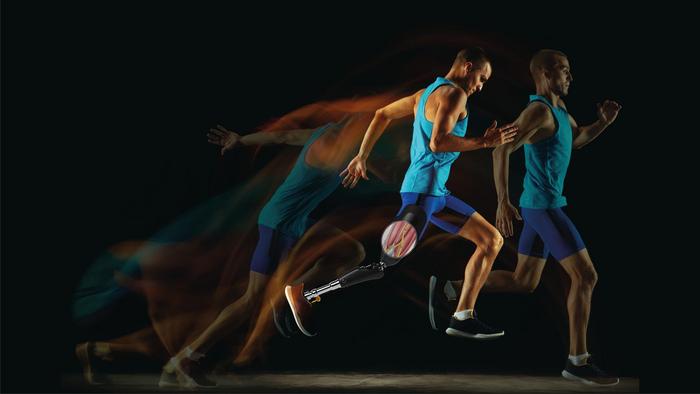
Every time an above-knee amputee thinks about moving the leg that is no longer there, something happens. Nerve fibres, still intact inside the stump, still connected to the spinal cord and the brain, still faithfully carrying orders, fire. The signal travels down. There is no muscle to receive it. Nothing moves. But the signal is there, complete, legible, waiting for someone who knows how to read it.
That is, essentially, what a team led by researchers at Chalmers University of Technology in Sweden has now done. In a study published in Nature Communications, they implanted ultrathin electrode arrays directly into the sciatic nerves of two above-knee amputees, recorded the electrical activity generated when participants imagined moving their phantom limbs, and decoded it using an AI system modelled on the nervous system itself. The result was something the field had not managed before: the ability to distinguish, from nerve signals alone, not just that a leg was intending to move, but which part of it, in which direction, including the toes of a foot that has been physically absent for years.
The technology underlying this sits at an unusual intersection. Current prosthetic legs are largely passive devices. Sophisticated ones can sense terrain and adapt their mechanics, but they do not take orders from the user in any direct neurological sense. Arm prostheses have a slight edge here, since they can be wired to residual muscles that still contract when the wearer thinks about moving, and those contractions can be read as control signals. For leg amputees, particularly those with above-knee amputations, even that option is mostly unavailable. The muscles needed have gone with the limb.
What remains are the nerves. “When you tell your body to move, signals travel through the nerves to the muscles which carry out the action,” says Giacomo Valle, assistant professor at Chalmers and one of the study’s senior authors, “even if the limb is no longer there.” The challenge has always been getting at those signals. Peripheral nerves produce weak, noisy electrical activity, and prior to this work no study had successfully recorded and decoded movement-related signals from them in leg amputees. All previous attempts at direct neural decoding were done in arm and hand prosthetics. Legs, which account for the majority of all amputations worldwide, had been left essentially untouched by this approach.
The implant itself comes from research at the University of Freiburg: transversal intrafascicular multichannel electrodes, or TIMEs, each electrode roughly as wide as a single human hair. Four of these were threaded transversely through fascicles of the tibial branch of the sciatic nerve in each participant during surgeries that lasted around four hours. Between them, the 56 active recording channels had direct electrical contact with the nerve fibres remaining in the stump. The implants stayed in for three months. During that time, participants sat and were shown a screen displaying movement instructions. Wiggle your toes. Extend your knee. Flex your ankle. Nothing happened visibly. Inside the stump, quite a lot did.
Most prosthetic legs don’t connect to the nervous system at all. They rely on mechanical sensors that adapt automatically to terrain, or in some cases on surface electrodes that pick up electrical signals from residual muscles. For above-knee amputees, the muscles that would control ankle and toe movements are physically gone with the amputated limb, so even muscle-based control is largely unavailable. Direct neural interfacing is technically far harder in legs than in arms, which is why this kind of research has lagged behind hand and arm prosthetics by many years.
The implanted electrodes pick up tiny electrical spikes from the nerve fibres still active inside the stump. The AI, a type called a spiking neural network, is trained on recordings taken while the participant repeatedly attempts specific phantom movements: knee flexion, ankle extension, toe wiggling, and so on. The network learns to associate particular patterns of spike activity across the 56 electrode channels with each movement type. When a new movement attempt is made, the network compares the incoming spike pattern to what it learned and identifies the closest match.
The approach is related but distinct. Brain-computer interfaces, such as those used in some paralysis research, record from neurons in the motor cortex. This study records from peripheral nerves in the limb stump, which is considerably less invasive than brain surgery and does not require navigating the skull. The nerve signals are weaker and noisier than cortical signals, which is one reason this problem has proven so difficult, but the lower anatomical risk makes peripheral interfacing more practical as a long-term clinical option.
Yes, potentially through the same implant. Earlier work in the same patients had already shown that electrical stimulation through these electrodes evokes sensations in the phantom limb. This study found that the electrode sites best suited to recording motor signals have minimal overlap with those best suited for sensory stimulation, meaning a single device could in principle handle both functions simultaneously. No existing commercial prosthesis combines direct neural motor control with sensory feedback in a single implanted system.
Several things. The study involved only two participants and was conducted in a controlled laboratory setting with offline data analysis, not real-time prosthesis control. The implants are research devices, not approved medical products. Long-term signal stability remains uncertain, since the body’s response to foreign objects in nerve tissue can degrade electrode performance over months or years. The next required step is integrating the technology into an actual prosthetic leg and testing it under real-world conditions, a process that will take years of further development and clinical validation.
Reading those signals required a different kind of AI from the systems that run image recognition software or large language models. “Our study shows that decoding peripheral nerve activity works best when it respects the language of the nervous system,” says Elisa Donati, professor at the University of Zurich and ETH Zürich and the study’s other senior author. Peripheral nerves do not transmit continuous analogue information; they communicate in discrete electrical pulses, or spikes. Standard machine learning algorithms, trained on continuous numerical features, are poorly matched to this kind of data. The team used spiking neural networks (SNNs), which process spike trains directly and mimic the spike-based format of biological neural communication. Tested against conventional classifiers (support vector machines and multilayer perceptrons), the SNN consistently won out, with statistically significant margins in both participants.
Accuracy figures in this kind of work require context. The team achieved around 58% accuracy decoding six movement classes in their first participant using nerve signals alone, rising to roughly 68% in the second when they also incorporated inter-muscular EMG signals picked up incidentally by the same electrodes from residual thigh muscles. Chance performance was between 17% and 25% depending on the number of classes being decoded. For comparison, fine motor decoding in upper-limb prosthetics has taken decades of refinement to get where it is. What makes the leg results striking is less the absolute numbers than the nature of what was being decoded. The muscles that control ankle flexion and toe movement in an above-knee amputee no longer exist. Their motor neurons, though, still send signals through the sciatic nerve. Those signals were being picked up and correctly classified. “It was amazing to see how electrodes placed high up in what remains of a leg could decode attempts to wiggle the toes,” Valle says.
There is a further wrinkle here worth noting. The same electrodes used to record motor intent could also deliver electrical stimulation that evoked sensations in the phantom limb; earlier work in the same patients had demonstrated this. The important finding in the new study is that the sites that were best for recording motor signals showed minimal overlap with the sites most effective for sensory stimulation. The implication is that motor and sensory nerve fibres are already sorted into distinct regions of the sciatic nerve by the time they reach thigh level. A single set of implanted electrodes can therefore potentially serve both functions simultaneously without one interfering with the other. Until now, restoring sensory feedback and providing motor control have each typically required their own hardware.
The study is emphatically a proof of concept. Two participants is not a cohort from which general claims flow easily, and the decoding was done offline on recorded data, not in real time controlling an actual prosthesis. Intraneural electrodes also trigger a foreign body response over months of implantation, raising questions about long-term signal quality that this study cannot answer. Phantom movement itself is an imperfect experimental tool; without visual or proprioceptive feedback, there is no way to verify that participants were producing precise, articulation-specific movements rather than vague attempts at intent.
What the study establishes, though, is that the signals are there and that they are decodable with the right approach. The next step, by the team’s own account, is integration into a working prosthetic leg, one that a participant can actually walk on, can feel through, and can control with thoughts that travel down nerve fibres nobody has listened to before. Lower-limb amputations represent 69% of all limb loss globally. The technology targeting that population is considerably behind what exists for hands and arms, not because the problem is less important but because it is harder. The sciatic nerve is not the median nerve. The signals are weaker, the anatomy more complex, the movements more consequential for independence and safety.
It is a harder problem. These are the first results that suggest it might be a solvable one.
DOI / Source: https://doi.org/10.1038/s41467-026-69297-0
Quick Note Before You Read On.
ScienceBlog.com has no paywalls, no sponsored content, and no agenda beyond getting the science right. Every story here is written to inform, not to impress an advertiser or push a point of view.
Good science journalism takes time — reading the papers, checking the claims, finding researchers who can put findings in context. We do that work because we think it matters.
If you find this site useful, consider supporting it with a donation. Even a few dollars a month helps keep the coverage independent and free for everyone.
Related