







































Key Takeaways
- Black and Hispanic older adults accumulate tau tangles in memory-critical brain regions earlier than white peers, sometimes without amyloid plaques.
- The HABS-HD study reveals that current Alzheimer’s diagnostics may not be effective for diverse populations due to biological differences in tau accumulation.
- Vascular health and social factors affect cognitive decline more significantly in Black adults than standard biomarkers do.
- The existing amyloid cascade hypothesis may not apply equally across different racial and ethnic groups, complicating the understanding of Alzheimer’s disease.
- Future research should assess how tau levels interact with other health factors over time in diverse populations to improve detection and treatment.
Black and Hispanic older adults accumulate tau tangles in the memory-critical regions of their brains years before their white peers do. They do this sometimes without any sign of amyloid plaques, the protein usually considered the trigger for Alzheimer’s disease. These are not speculative findings or emerging hypotheses. They emerged from one of the largest, most racially diverse brain-imaging studies of aging in the United States, and they complicate the story neuroscientists have been building for decades.
The implications ripple outward immediately. If the biological markers that have anchored Alzheimer’s research for a generation don’t accumulate equally across populations, then the diagnostic tests built on those markers may be silently failing the very communities at highest risk for dementia. More troublingly, the drugs designed to target amyloid and tau may not work the same way, or work at all, for patients who’ve taken a different biological path to cognitive decline.
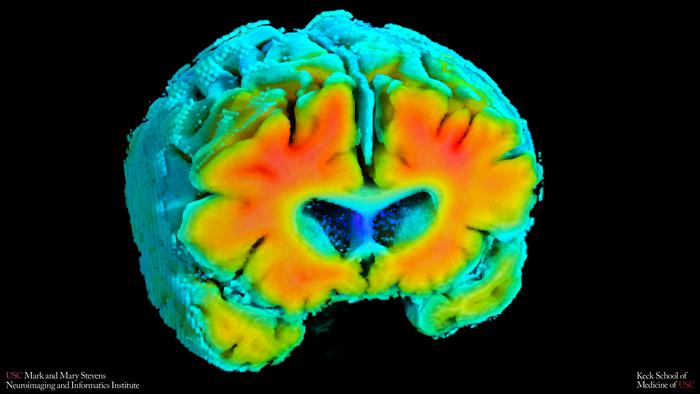
The findings come from the Health and Aging Brain Study-Health Disparities (HABS-HD), a multi-site effort examining over 1,500 cognitively normal or mildly impaired older adults from three racial and ethnic backgrounds. Researchers using advanced PET scans capable of detecting tau protein tangles years before symptoms appear found that we can’t assume those patterns apply equally to everyone. The lead researchers, a team at the USC Mark and Mary Stevens Neuroimaging and Informatics Institute, are explicit about what they’ve discovered: the disease itself may look different depending on who develops it.
Understanding Alzheimer’s has always meant understanding two proteins. Amyloid-beta assembles into plaques that clutter the spaces between neurons. Tau forms tangles inside cells, strangling their internal machinery. The leading theory, called the amyloid cascade hypothesis, proposes a sequence: amyloid accumulates first, then tau follows, and together they drive cognitive decline. This model emerged largely from studies of non-Hispanic white participants, most of them educated and relatively healthy aside from their aging brains. The results seemed universal. They probably were not.
The HABS-HD study found that Hispanic and Black participants showed significantly higher levels of tau in the medial temporal lobe (a seahorse-shaped structure buried deep in the brain that handles memory formation) compared to white participants at the same stage of cognitive health. The difference persisted even after researchers accounted for amyloid positivity. Some of the tau elevation in Black participants may reflect technical artifact; the tracer used in PET scans can produce false signals in adjacent tissues. But even after adjusting for this off-target binding, the pattern held. In cognitively normal older adults, Hispanic participants still showed more tau than their white counterparts. Black participants did too, especially in the hippocampus.
What would be merely interesting (a possible biological difference across populations) becomes unsettling when the relationship between these proteins and actual memory performance is examined. Vascular health, the presence of other health conditions, life-long stress exposure, and other social factors appear to influence cognition in Black adults more strongly than the standard biomarkers do. This suggestion came from a finding so counterintuitive that it took a large, carefully controlled study to surface it: amyloid positivity strengthened the link between tau and worse memory in white and Hispanic participants, but not in Black participants. The two proteins were behaving differently. The disease, apparently, was not following the same script.
Consider what this means. White and Hispanic participants showed a predictable relationship: if you had both amyloid and tau, your memory suffered more than if you had tau alone. The proteins amplified each other’s damage. Black participants seemed immune to this amplification effect. Their tau levels did not predict memory performance in the same way, as though their brains were being assailed by something else entirely, or by a different weighting of stressors that the current biomarker model simply doesn’t capture.
The mechanisms remain obscure. A working hypothesis, supported by the HABS-HD data itself: Black and Hispanic older adults carry higher rates of hypertension, diabetes, and cardiovascular disease than their white peers (conditions that promote cerebrovascular damage and may create multiple pathways to cognitive decline beyond the traditional amyloid-tau axis). Chronic stress, inequality, and its physiological consequences may prime the brain differently. Genetic variation in how the APOE gene (the strongest genetic risk factor for Alzheimer’s) operates in people with African ancestry may alter tau accumulation patterns. The stress-induced hyperphosphorylation of tau proteins, documented in animal models, might be more pronounced in communities experiencing long-term exposure to acute and chronic adversity. None of these explanations are definitive. All of them suggest that the biological aging of the brain is not a universal process, but one shaped by lived experience.
The research team’s interpretation is cautious. “Studies like this are essential for improving how we interpret the earliest biological signs of Alzheimer’s disease,” notes Arthur Toga, director of the Stevens INI. Better imaging tools, more diverse research cohorts, and longer follow-up studies may eventually reveal whether these biomarker differences predict future decline, or whether they represent a kind of biological variation that doesn’t inevitably lead to disease. What matters now is simple: the dominant model of how Alzheimer’s develops has been validated mainly in white brains. Applying that model uncritically to everyone else may mean missing the signal entirely, even as the brain is already changing.
Future studies will track these participants over time, watching whether tau and amyloid accumulate further and whether cognition declines, and whether vascular health, genetics, and social determinants interact with these proteins to shape outcomes. The question is not whether Black and Hispanic older adults are at higher risk for dementia (they are). The harder question is why. And whether the tools we’ve built to detect and treat Alzheimer’s will work for them at all.
Frequently Asked Questions
What is tau, and why does it matter in Alzheimer’s?
Tau is a protein that normally stabilizes structures inside neurons. In Alzheimer’s disease, it becomes malformed and twisted into tangles that disrupt communication between brain cells. High levels of tau, especially in memory-related brain regions, are associated with cognitive decline and are considered an early warning sign of disease progression.
Why did tau levels differ across racial and ethnic groups if everyone was cognitively healthy?
This is the puzzle. All participants were cognitively normal or mildly impaired at enrollment. Yet Black and Hispanic participants showed more tau in the medial temporal lobe than white participants, despite having similar cognitive test scores at the same stage. This suggests that tau accumulation alone doesn’t fully explain memory problems, and that other biological or social factors may be equally or more important.
Could the higher tau in Black and Hispanic participants be a measurement error?
The researchers investigated this carefully. Some of the tau signal in Black participants likely comes from off-target binding in nearby structures like the choroid plexus (a fluid-producing tissue in the brain). However, even after accounting for this technical artifact, the pattern persisted. Hispanic and Black participants genuinely showed more tau in the memory-critical regions.
Does this mean the standard Alzheimer’s drugs won’t work for Black and Hispanic patients?
It’s too early to say. Current drugs target amyloid and tau. If those proteins aren’t the primary drivers of cognitive decline in some populations, the drugs might be less effective, or ineffective, in those groups. This underscores why diverse research cohorts are essential: we need to know whether treatments work equally across all populations before they’re approved.
What should happen next?
Researchers need to follow these participants longer, watching whether their tau levels increase further and whether they eventually develop cognitive impairment. They also need to measure vascular health, genetic variation, stress exposure, and social determinants alongside the protein biomarkers. Only then can we understand whether tau differences predict future decline and what other factors shape the brain’s aging process across communities.
Source: https://alz-journals.onlinelibrary.wiley.com/doi/10.1002/alz.71226?af=R
Quick Note Before You Read On.
ScienceBlog.com has no paywalls, no sponsored content, and no agenda beyond getting the science right. Every story here is written to inform, not to impress an advertiser or push a point of view.
Good science journalism takes time — reading the papers, checking the claims, finding researchers who can put findings in context. We do that work because we think it matters.
If you find this site useful, consider supporting it with a donation. Even a few dollars a month helps keep the coverage independent and free for everyone.
Related