







































We’ve all been there, haven’t we? That day when stress boils over and you need to let out a primal, gut-wrenching scream. It feels great, right? But this cathartic release is fundamentally trying to choke you. New research reveals this raw, emotional vocalization is physically similar to the body’s swallowing reflex, putting the vocal cords under immense, damaging pressure. A paper presented at the 189th Acoustical Society of America Meeting shines a light on why an angry yell can wipe out your voice for two weeks, yet a professional singer can belt out a rock anthem and walk away unscathed.
The scientists, led by Karen Perta at Elmhurst University, used a sophisticated setup: real-time magnetic resonance imaging (RT-MRI) alongside acoustic analysis. Their goal was to compare an “angry scream” with a “healthy belting” vocalization. A single, trained female volunteer produced both sounds. While both were loud and intense, her body created them in strikingly different ways, demonstrating a clear contrast between vocal danger and vocal safety.
The research centered on watching the vocal tract in action. Picture that dark, muscular passageway of the throat and mouth squeezing and contorting itself to generate immense sound. The RT-MRI gave the team this view. They could measure the throat space, the height of the voice box, and the shape of the mouth opening for both sounds. These measurements immediately confirmed their suspicions about the angry scream’s inherent danger: it is an act of extreme laryngeal compression.
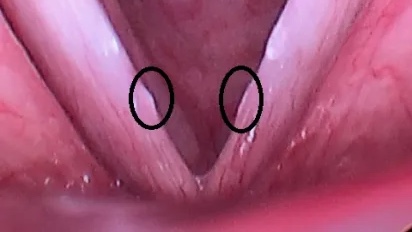
The angry scream was an exercise in extreme tightness. Perta’s team found that the larynx-the voice box-shot up to its highest position, and the throat space shrunk to its smallest point. This extreme action forced the vocal folds-the two small pieces of tissue that vibrate to make sound-to collide with greater force and for a much longer time than during the healthy belt. This violent compression makes the scream so intense, especially the high-pitched shriek, but it came at a high biological price.
“During screaming, the highly constrictive actions of the vocal tract put extra strain and force on the vocal folds that contribute to vocal fold injury,” the scientists noted. And they had the proof. The participant who delivered the scream actually developed minor vocal fold lesions, which took about two weeks to fully resolve. The scream’s pitch was also extreme, clocking in at twice the frequency of the trained belt.
By contrast, the healthy belt was still powerful and high-pitched, but it involved a lower larynx and a more open space in the throat. This more relaxed approach meant the singer could project her voice without the damaging, heavy compression on her delicate vocal cords.
The Scream Hijacks a Survival Reflex
The most compelling finding explains why the scream is so constrictive: the action is almost identical to swallowing. Swallowing is a primitive reflex, designed to protect the body; your vocal tract and folds squeeze shut to prevent food or water from entering your lungs. The angry scream, the researchers theorize, abuses this protective mechanism.
“In conclusion, Scream is a primitive vocalization that is produced with a very constrictive action that is similar to swallowing,” the paper states. This suggests the angry yell isn’t a learned skill but an innate, raw response. That’s why it feels so easy and spontaneous to do, yet is so physically destructive.
Belt is a learned, trained behavior that is less constrictive and “overrides” innate tendencies for squeezing the vocal tract and pressing the vocal folds.
This ability to “override” the innate squeeze is what trained vocal professionals master. Singers, public speakers, and even passionate fans who can yell for hours have essentially taught their bodies to bypass the scream’s constrictive, swallowing-like move. They’ve found a way to be loud and forceful without crushing their sensitive vocal folds.
A Simple Voice Safety Warning
The research carries a clear warning for anyone who finds themselves letting loose a spontaneous scream. While the impulse is natural, the physical strain is real. The study suggests that if your throat feels tight, if it hurts, or if your voice is hoarse after yelling, you’ve likely triggered this damaging, constrictive action.
Safe yelling, the research points out, should feel open, not tight. It shouldn’t be painful. It definitely shouldn’t cause you to lose your voice. Though the full study awaits peer review, this initial presentation gives us a sharp, biomechanical reason to think twice before venting that frustration.
During screaming, the tight throat space led to prolonged contact and strong compression of the vocal folds.
Understanding this distinction between a primitive, damaging scream and a trained, safe belt is the first step toward protecting your voice. Next time you feel that urge to vent, remember that swallowing reflex, and perhaps try a deep, quiet breath instead.
Acoustical Society of America: 1pSC9
If our reporting has informed or inspired you, please consider making a donation. Every contribution, no matter the size, empowers us to continue delivering accurate, engaging, and trustworthy science and medical news. Independent journalism requires time, effort, and resources—your support ensures we can keep uncovering the stories that matter most to you.
Join us in making knowledge accessible and impactful. Thank you for standing with us!