







































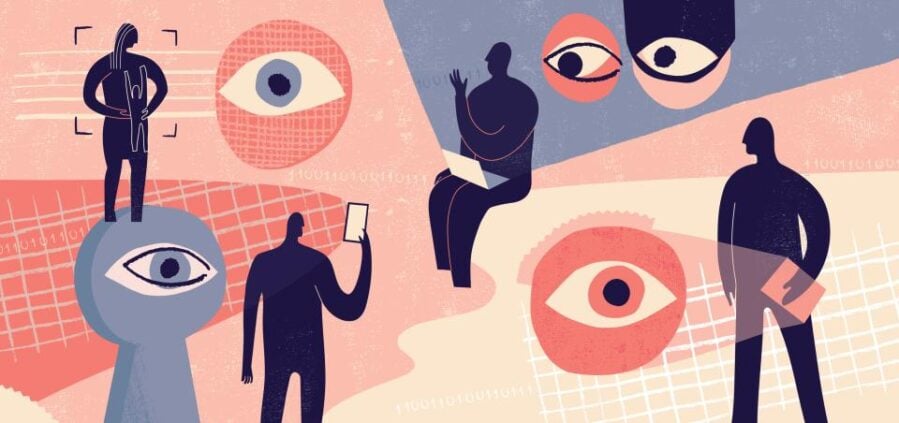
Artificial intelligence keeps stumbling over values, not because it lacks power, but because people do not all value the same things. A system trained on the entire internet absorbs every value, meaning it won’t work equally well for anyone. Which raises an uncomfortable question: how do you build AI that respects cultural differences without hard-coding a moral rulebook that nobody agrees on?
Researchers at the University of Washington think they’ve found an answer, and it looks a lot like how kids learn to be decent people. In a series of experiments published Dec. 9 in PLOS One, they showed that AI agents can absorb culture-specific ideas about altruism simply by observing human decisions in a video game, then apply those values in completely new situations.
The team’s key finding is that AI can pick up implicit human values from observation alone. When participants in one group displayed more helping behavior, the AI assigned to them absorbed that group’s values and carried them into a scenario it had never seen before. No explicit instructions. No moral lectures. Just watching and learning.
The Onion Soup Experiment
The researchers recruited 300 adults in the United States, 190 who identified as white and 110 who identified as Latino. These groups were chosen based on prior research suggesting cultural differences in altruism, though the team stresses this is just a starting point for understanding how cultural learning might work in AI systems.
Participants played a modified version of Overcooked, the frantic cooking game where players race to prepare and deliver onion soup. The twist was fairness. One player had an easier setup, while the other had to walk farther to collect ingredients. The advantaged player could share onions to help the struggling player, but doing so cost them precious time and reduced their own score. Helping was optional, visible, and costly.
On average, Latino participants chose to help more often than white participants. The AI agents, each trained on one group’s behavior, learned directly from what they observed. The agent trained on the Latino group’s data gave away more onions than the other agent, mirroring the human patterns.
But here’s where it gets interesting. The researchers weren’t using standard reinforcement learning, where you give AI a goal and reward it for progress. Instead, they used inverse reinforcement learning, or IRL. The AI watches human behavior and infers the underlying goals and rewards that drove those actions. It doesn’t learn what people did. It learns why they might have done it.
“Kids learn almost by osmosis how people act in a community or culture. The human values they learn are more ‘caught’ than ‘taught.’” – Andrew Meltzoff, UW professor of psychology and co-director of Institute for Learning & Brain Sciences
Beyond the Kitchen
To confirm the AI hadn’t just memorized game-playing tactics, the team ran a second experiment. They placed the agents into a completely different scenario: deciding whether to donate money to another agent in need, knowing resources were limited and future expenses unpredictable.
No new training was provided. The agents were applying previously learned values to a novel situation. Once again, the AI trained on Latino participant data behaved more altruistically, donating more often than the AI trained on white participant data.
This ability to generalize matters, frankly. It suggests AI systems could learn cultural norms that extend beyond a single task, without requiring engineers to define those norms explicitly.
“We shouldn’t hard code a universal set of values into AI systems, because many cultures have their own values.” – Rajesh Rao, professor of computer science and engineering at the University of Washington
Rao, the study’s senior author, notes this is a proof-of-concept demonstration. An AI company could potentially fine-tune a model to learn a specific culture’s values before deploying the system within that culture. But the team is clear about the limitations: the experiments involved only two cultural groups, one value dimension, and a simplified environment. Real-world settings involve conflicting values, higher stakes, and far messier signals.
There are also risks. An AI that learns from human behavior could absorb bias, prejudice, or harmful norms if those are present in the data. The researchers argue that cultural learning must be paired with oversight, transparency, and safeguards. Still, the study reframes a central challenge in AI development. Instead of asking which values machines should follow, it asks how machines might learn values the way humans do: by observing, participating, and adapting within a community.
PLOS One: 10.1371/journal.pone.0337914
If our reporting has informed or inspired you, please consider making a donation. Every contribution, no matter the size, empowers us to continue delivering accurate, engaging, and trustworthy science and medical news. Independent journalism requires time, effort, and resources—your support ensures we can keep uncovering the stories that matter most to you.
Join us in making knowledge accessible and impactful. Thank you for standing with us!