As gross profits from the actual business of selling cars fall from pandemic-era highs, dealerships are trying to convince customers to return for every single oil change to help secure their bottom line.
Gone are the days of a constricted car supply and weak competition that saw dealerships rake in sky-high profits in the early 2020s. As profits fall back to Earth—partly because of compressed margins caused by the car supply moving closer to demand and competition between car sellers increasing—dealerships have had to emphasize other areas of the business to protect their profits.
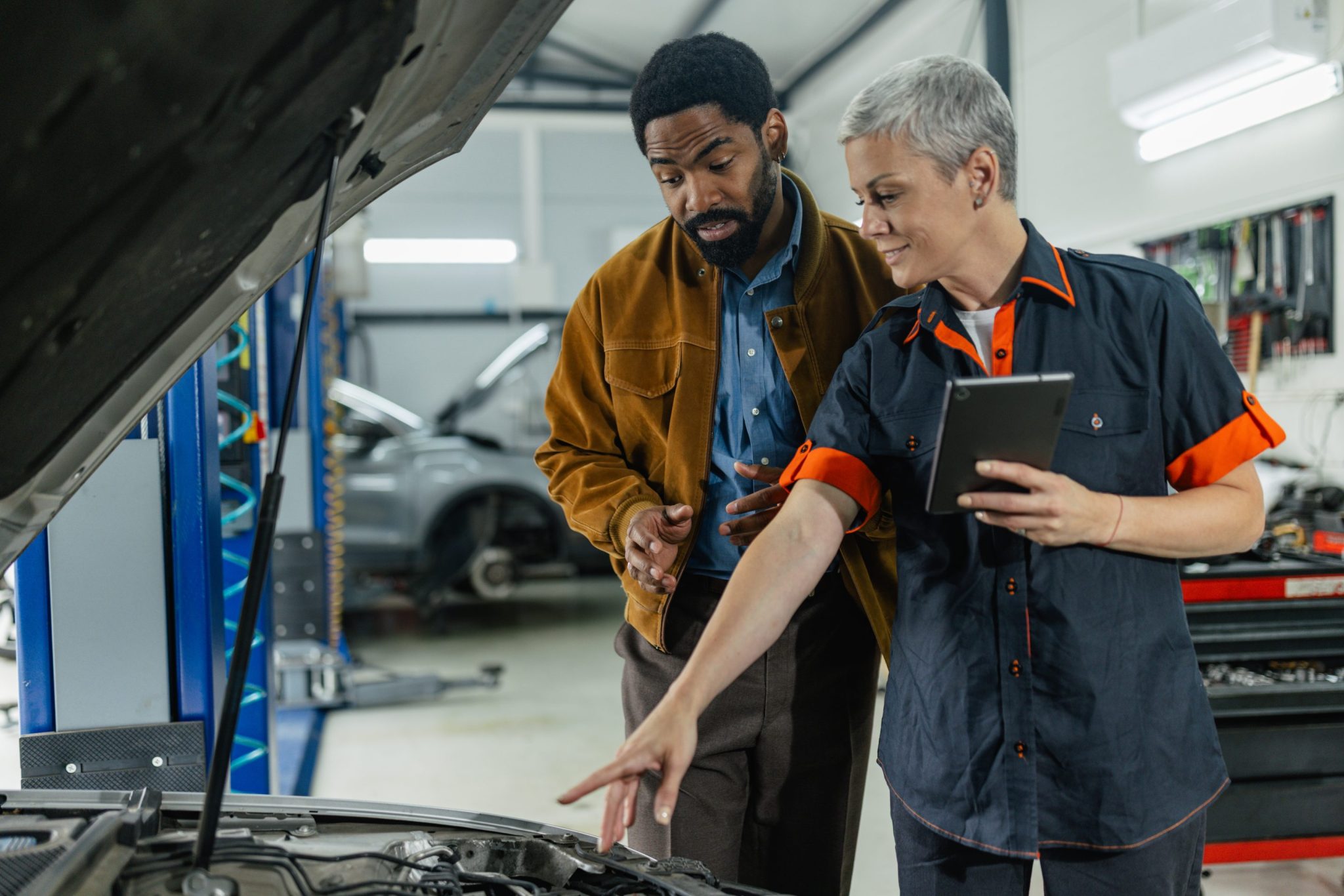
For many dealerships, this means focusing on service. Despite their reputation for pricey repairs and questionable value, some operations are doubling down on the customer experience to compete with independent shops such as Jiffy Lube, Meineke, and even Walmart. The stakes are high, given 42% of Americans identified one of these chains as their “primary service provider” in 2025—up from 20% in 2020, according to a report by consulting firm Ducker Carlisle.
Tim Pohanka, executive vice president and chief operating officer of Pohanka Nissan Hyundai, a dealership group in Fredericksburg, Va., told Fortune the compressed margins involved with dealerships’ core business of selling cars have singled out service as “the biggest opportunity.”
The data tracks with Pohanka’s take. At the same time margins from car sales have fallen, dealerships’ total service and parts sales has exploded by 48% over the past five years and as of last year stood at $164.6 billion, according to the National Automobile Dealers Association.
No longer can dealerships rely on the large margins and relative pricing power the constrained supply of the pandemic era helped give them. Instead, they’ve had to adapt to compete with independent service chains, which offer oil changes, filter checks, tire rotation, and light repairs on a flexible schedule that has seen them surpass dealerships as the go-to choice for Americans looking for vehicle service.
Pohanka said his dealerships also offer walk-in appointments and options to finance the services they offer. For full transparency, every car serviced at the dealerships also comes with a video update that shows the full vehicle.
These efforts, among others, may be the key to increasing the amount of money that can be made from a single customer even years after they’ve driven their car off the lot.
It’s also especially important as people hold onto their vehicles for longer, extending the window for service over the car’s usable life. The average age of a passenger car on the roads as of last year was 14.5 years, compared to 11.5 years a decade prior, according to the Bureau of Transportation Statistics.
Pohanka said service as a recurring revenue stream is key to keeping dealerships’ business steady even as the car business faces disruptions spanning from tariffs to supply chain issues.
Moreover, the benefits of keeping a customer coming back to the dealership can also emerge when they’re looking for a new car. Pohanka said customers who are already receiving service from a dealership are more likely to buy another car there as well.
For dealerships, the move to emphasize service is motivated by growing pressure.
Average pretax profit per public dealership more than tripled to $6.8 million during the pandemic in 2022 from $1.9 million in 2018, according to a study of publicly traded dealership groups by Kerrigan Advisers, cited by CNBC. But in 2025, the average gross profits for dealerships owned by public companies came in at about $3.9 million.
This decline in profit from car selling comes as the market continues to normalize from the extreme supply shortages that defined the pandemic.
At the beginning of August, U.S. dealers had about 2.73 million new vehicles available, according to Cox Automotive, essentially unchanged from a year earlier. Still, the market may be moving toward a healthier balance between inventory and demand, Cox Automotive said in a report earlier this month. That marks a change from the supply-constrained pandemic market, when dealers could command unusually high prices because consumers had fewer cars to choose from.
To be sure, cars themselves are still expensive. The average new-vehicle listing price was $49,249 at the end of July, while the average transaction price reached $49,855, up 1.9% from a year earlier, according to Kelley Blue Book.
When prices are so high, worries about a potential decline in overall sales are top of mind, Pohanka said. But another factor is also in play. As car prices rise, it may also be harder for dealers to convince a customer to stick around for regular service, given dealerships’ reputation for being pricey. This is despite dealerships’ argument that any price difference could be explained by their factory-trained technicians, specialized equipment, and special access to manufacturer data.
During the pandemic-era vehicle shortage, scarce inventory meant focusing mainly on car sales was good move. Now, dealers have to work harder to emphasize service and keep customers for the long run to secure their business for a potentially tougher future.
“If you’re not engaged in the service industry, and you’re relying only on sales, then you’re really setting yourself up for a potential problem if something goes wrong,” Pohanka said.