












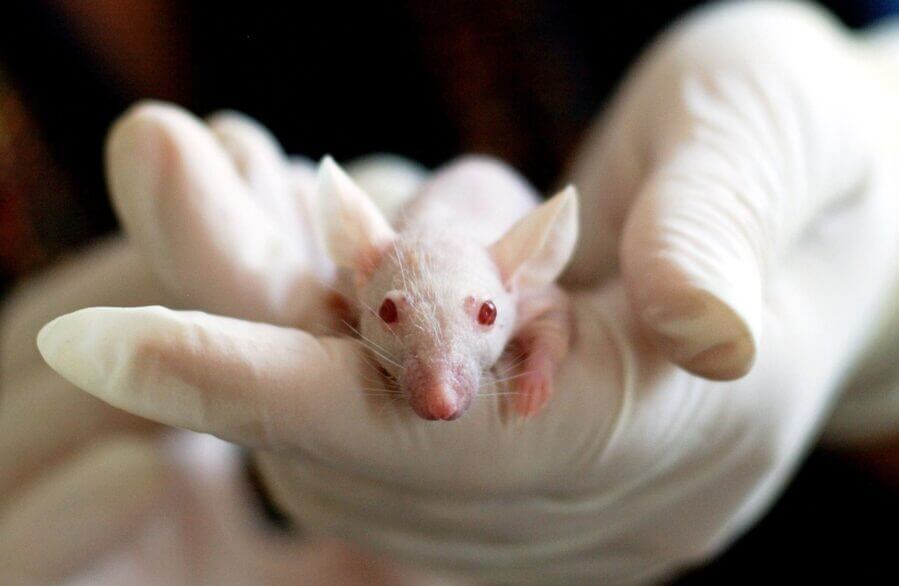






























A mouse stands in a small chamber it has never been shocked in. The walls are smooth and white, the floor a particular texture, and nothing bad has ever happened here. Yet the animal freezes, rigid with fear, as though bracing for a jolt that belongs to an entirely different room it visited a week earlier. Something in its head has glued two unrelated places together, and the glue, it turns out, is a single brain circuit that was switched off.
That circuit normally does the opposite. Its job is to keep memories that should stay apart from bleeding into one another, and a team at the University of California, Los Angeles has now traced exactly how it works.
The problem it solves is one your brain handles thousands of times a day without you noticing. Every fresh experience arrives with a question attached: does this belong with something I already know, or is it new enough to file on its own? Get it right and the world stays navigable. Get it wrong and you start forming false associations, linking events that have nothing to do with each other, which happens to be a hallmark of conditions like schizophrenia and bipolar disorder.
For decades the suspects were known but the mechanism wasn’t. “We’ve known for a long time that the prefrontal cortex and hippocampus work together in memory, but how the prefrontal cortex actually controls which memories get linked has been a mystery,” says André de Sousa, the postdoctoral researcher at UCLA Health who led the work.
Two Questions Every Memory Has to Answer
Two things, it emerged, decide whether the brain bundles two memories together: how alike the experiences are, and how much time separates them. Events that happen within a few hours tend to get merged automatically in the hippocampus, the brain’s main memory store. Stretch the gap to several days, though, and a more deliberate process takes the wheel.
That process lives in a patch of prefrontal cortex called the ventromedial prefrontal cortex, or vmPFC. The researchers watched it light up, using miniature microscopes mounted on the heads of mice to catch individual neurons firing in real time, whenever an animal met a genuinely new environment days after a previous one.
Think of it as quality control. After several days have passed, the prefrontal cortex has had time to properly consolidate the earlier memory, so when a new experience turns up it runs a comparison. Meaningfully different? The vmPFC tells the hippocampus to grab a fresh set of neurons and log the new memory separately. Pretty similar? It steps back, lets the hippocampus reuse many of the same neurons, and the two memories become linked. Knock the vmPFC out of the loop and that discrimination collapses; the hippocampus starts merging things that ought to stay separate. Which is precisely what happened to that frozen mouse, shocked in one room and made to fear another.
Timing was everything. When the team silenced the vmPFC in mice exploring two different rooms just five hours apart, nothing changed at all; the memories linked regardless.
A Switch That Runs Both Ways
This tells you the vmPFC isn’t a general-purpose editor but a specialist in the long game, stepping in only once an older memory has had time to settle. The signal, the researchers found, travels from the vmPFC to a relay station called the medial entorhinal cortex, which passes word to the hippocampus, where a particular type of inhibitory neuron, a neurogliaform cell, acts as the final gatekeeper deciding which neurons get recruited.
And the switch runs both ways. By blocking or artificially driving that single pathway, the team could force memories to merge that should have stayed distinct, or prise apart memories that would normally have fused, even ones encoded close together in time.
That two-way control is the part de Sousa keeps returning to. “We can make memories merge that shouldn’t, or keep separate memories that would otherwise be linked, just by manipulating this one pathway. That tells us this is a fundamental control mechanism,” he says.
A note of caution, naturally. This is mouse work, and a foot shock in a plastic box is a long way from the tangled false associations of human psychiatric illness. Whether the same circuit behaves the same way in people remains, for now, an open question.
Still, the disorders where memory organization goes awry, schizophrenia, bipolar disorder, certain anxiety conditions, are also the ones marked by faulty communication between the prefrontal cortex and hippocampus. The same wiring frays with age, when keeping memories straight gets harder. Having an actual circuit to point at, rather than a vague handshake between two regions, gives researchers somewhere concrete to aim. De Sousa says the broader goal is to understand how the prefrontal cortex folds together working memory, long-term storage and decision-making, drawing on what you already know to shape what you encode next.
For now there’s a mouse, no longer frightened of a room where nothing happened, and a pathway that decides where one memory ends and the next begins.
https://doi.org/10.1038/s41593-026-02231-1
Frequently Asked Questions
Why would the brain ever link two separate memories on purpose?
Because linking related experiences is how we build useful knowledge rather than a pile of disconnected snapshots. If two things happen in similar places or close together in time, treating them as connected often reflects reality and helps us predict what comes next. The trouble only starts when the linking machinery fires for events that genuinely have nothing to do with each other.
How does the brain actually keep two memories from merging?
A region called the ventromedial prefrontal cortex compares a new experience against a consolidated older one, and if they differ enough it signals the hippocampus to store the new memory in a fresh set of neurons. The instruction travels through a relay called the medial entorhinal cortex down to inhibitory gatekeeper cells in the hippocampus. Switch that pathway off and unrelated memories start fusing together.
Is it true that scientists can make a memory form falsely?
In mice, yes. By silencing this one circuit, researchers got animals to fear a chamber where nothing harmful had ever happened, simply because it had been merged with a different room where they were shocked. The same pathway could also be driven the other way, forcing apart memories that would normally have linked.
Could this lead to treatments for schizophrenia or bipolar disorder?
It is far too early for that, but the work hands researchers a specific circuit to study rather than a vague link between two brain regions. Those conditions, along with some anxiety disorders and ordinary aging, all involve both faulty memory organization and disrupted communication between the prefrontal cortex and hippocampus. Pinning down the wiring is the first step toward understanding what goes wrong.
Quick Note Before You Read On.
ScienceBlog.com has no paywalls, no sponsored content, and no agenda beyond getting the science right. Every story here is written to inform, not to impress an advertiser or push a point of view.
Good science journalism takes time — reading the papers, checking the claims, finding researchers who can put findings in context. We do that work because we think it matters.
If you find this site useful, consider supporting it with a donation. Even a few dollars a month helps keep the coverage independent and free for everyone.