



























Superhero-themed cinematic universes (and attempts to create them) are a dime a dozen these days, but as is so often the case, the small screen is holding an ace up its sleeve. Back in the 2010s, The CW delivered a string of memorable superhero shows that happily crossed over and interweaved whenever necessary. The Arrowverse started out in 2012 with a single, comparatively low-stakes television series about a second-string DC Comics hero, but the gritty approach “Arrow” took was effective enough that things started expanding.
No one set out to create a shared television universe when the show hit The CW on October 10, 2012. But by the time the show ended in 2020, with eight seasons and five spin-offs under its belt, it’s fair to conclude that the experiment was a success. “Their original plan was to do a superhero show, no superpowers, grounded,” Stephen Amell once told TVLine. “But then you get to use the Flash and it’s like, ‘Well! Plans have changed.'”
The Arrowverse ended up outlasting its progenitor, officially concluding in 2023 with the ninth and final season of “The Flash.” The 11-year tenure took the viewers to many fascinating DC corners over the course of nearly 700 individual episodes of television, happily highlighting heroes and villains both familiar and obscure. But as for which show in this magnificent batch of superhero series is the greatest? That’s what we’re here to find out.
Batwoman
It took a long time for The Arrowverse to get permission to use Gotham City — and even then it couldn’t show Batman. In 2018, the franchise made the best of the cards it was dealt by introducing Kate Kane/Batwoman (Ruby Rose). First appearing during the “Elseworlds” crossover, the Gotham-based vigilante soon graduated to a show of her own. But unfortunately, “Batwoman” was beleaguered by behind-the-scenes drama.
After a first season that included a tie-in to the climactic “Crisis on Infinite Earths” crossover event, Rose departed the series. So, by the time the show returned for a second season, Rose’s Kate Kane was replaced with newcomer Ryan Wilder (Javica Leslie), who picked up the cape and the cowl for the next two seasons. After some in-universe plastic surgery shenanigans, Kate eventually returned, now played by Wallis Day, but the show had moved past her. Despite a solid sophomore season and an interesting third one, “Batwoman” never got a chance to truly spread its wings the way other Arrowverse shows did as The CW canceled the series after its third season.
Due to its relatively short run and bumpy production, “Batwoman” lands at the bottom of this list. But it’s still a fun watch if you give it a shot. After all, the Arrowverse is one of those rare shared universes where every corner is worth exploration.
Black Lightning
Among all the Arrowverse shows, “Black Lightning” has arguably the coolest premise: Jefferson Pierce (Cress Williams) is a mild-mannered high school principal who is secretly a retired superhero. Of course, events conspire against him, and he becomes Black Lightning once more. The dynamic between Jefferson and his superpowered daughters, Anissa (Nafessa Williams) and Jennifer (China Anne McClain), is a highlight and the show’s primary antagonist, Tobias Whale (Marvin “Krondon” White III), is a captivating and underappreciated supervillain who should be talked about far more than he is.
All in all, “Black Lightning” is a solid superhero series. The sole reason it’s so low on this list is that this is a ranking of Arrowverse shows, and “Black Lightning” seriously dragged its feet before getting with the program. For its first two seasons, the show existed completely outside Arrowverse and only united with the other shows during its third season thanks to the “Crisis on Infinite Earths” crossover event. Apart from this, the show was only half-heartedly a part of the franchise, even in its fourth and final year.
“Black Lightning” wasn’t originally supposed to have anything to do with the other shows. “With ‘Black Lightning,’ Fox had the pilot and they passed on it. So, [showrunner Salim Akil] and [executive producer Mara Brock Akil] came in and said this is what we have,” CW President Mark Pedowitz told Black Girl Nerds in 2018. “It was different from all of our other superhero shows and it was never designed to be a part of the Arrowverse.”
Supergirl
As with “Black Lightning,” “Supergirl” was shoehorned into the Arrowverse partway through its run, though it didn’t take nearly as long to embrace the shared universe concept. Although “Supergirl” first premiered on CBS, it crossed over with “The Flash” in it’s very first season with the one-off “World’s Finest,” giving it a slight edge for the purposes of this list. By Season 2, “Supergirl” had officially moved to The CW, making crossovers far easier going forward.
Initially, “Supergirl” takes place on an Earth where superheroes have been active for quite a while longer than they have on the main Arrowverse timeline. Superman (Tyler Hoechlin) had been active for years, and so by the time Kara Danvers/Supergirl (Melissa Benoist) arrives on the scene in National City, the world isn’t terribly surprised. However, Benoist’s titular heroine and her allies still regularly meet other Arrowverse heroes throughout the show. By the middle of the fifth season, the series had fully merged into the larger Arrowverse after “Crisis on Infinite Earths.”
In general, the show manages to squeeze every drop of its potential to create a fun new take on DC’s Kryptonian superhero mythos and its various major players while still retaining the ability to interact with other Arrowverse figures. In fact, the six-season “Supergirl” would eventually spawn “Superman & Lois,” a show that remained entirely separate from the Arrowverse save for the actors who play its title characters.
Legends of Tomorrow
Viewers who want to experience a TV show that’s as close to a comic book as humanly possible will not be disappointed in “DC’s Legends of Tomorrow.” The show collects a group of memorable Arrowverse supporting characters in a time-traveling ship called the Waverider, first captained by Time Master Rip Hunter (Arthur Darvill of “Doctor Who” fame) and later resurrected “Arrow” supporting character Sara Lance/White Canary (Caity Lotz).
“Legends” starts out fairly serious but finds its feet after the first season and embraces its outlandish and comedic aspects. The show’s strength is its action figure approach. It’s perfectly willing to pick and mix the most deliciously weird and wicked characters from various DC shows and mash them together with nigh-invariably great (and often hilarious) results. This is a show that doesn’t believe in microdosing. Instead, it simply keeps piling larger than life characters like John Constantine (Matt Ryan) from “Constantine,” Mick Rory/Heat Wave (Dominic Purcell) from “The Flash,” and Ray Palmer/The Atom (Brandon Routh) on top of each other without a care in the world.
There really is no other show even remotely like “Legends of Tomorrow” in the Arrowverse. Its stubborn determination to do its own thing is admirable, but it takes an entire season to find its feet, and its seventh and final season is also slightly weaker than the rest. Because of this, there are a couple of Arrowverse shows it’s unable to surpass, but for fans who enjoy epic and exciting superhero action unafraid to go meta or tweak its formula, “Legends” could rank much higher than this.
Arrow
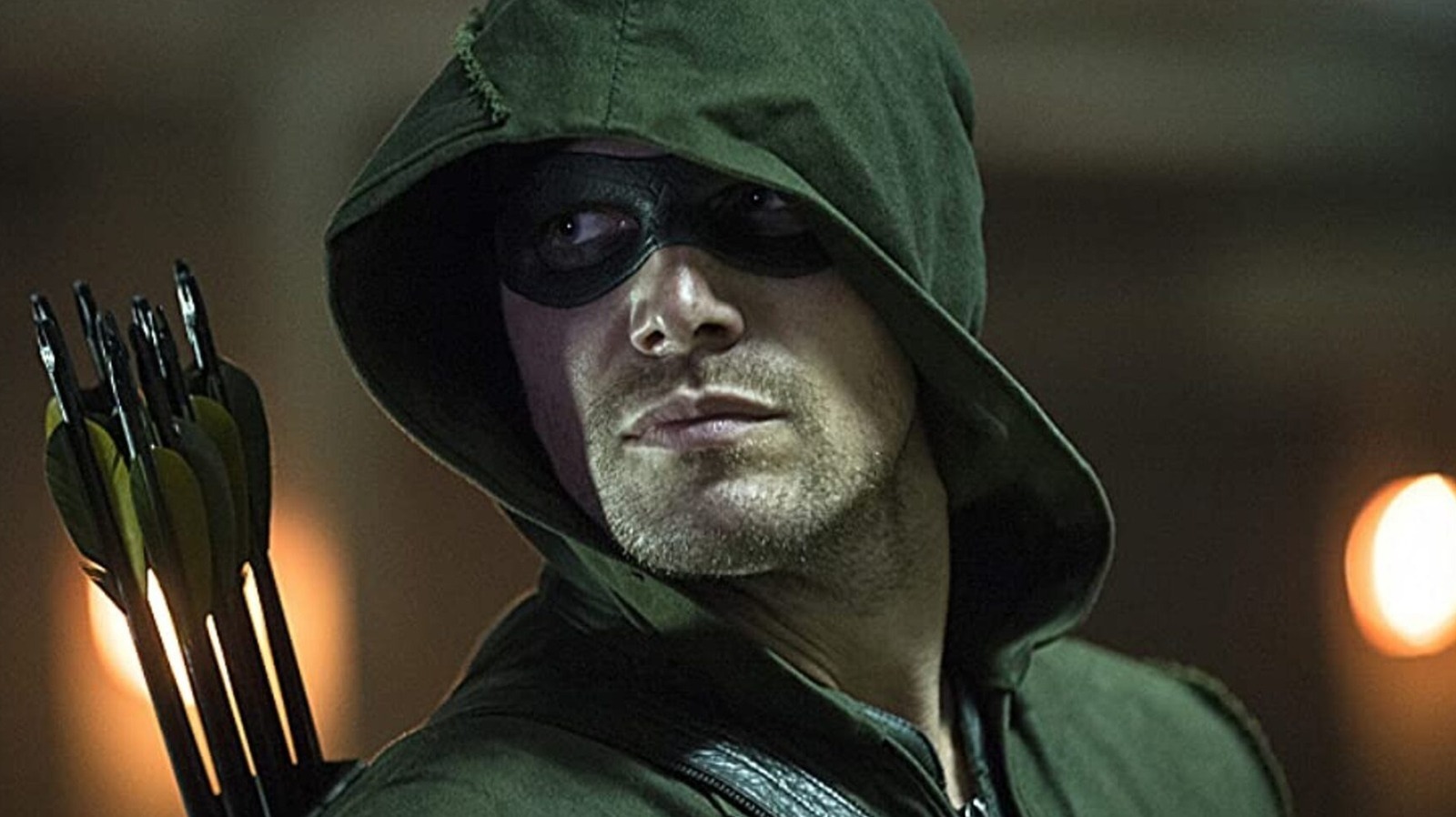
There’s a reason the Arrowverse is called the Arrowverse. “Arrow” created the template that every other show on this list tinkered with and expanded on in an incredibly organic way. As a non-powered vigilante with an archery theme, Oliver Queen/Green Arrow (Stephen Amell) is the perfect focal point for a show that wants to stay comparatively grounded while still retaining the ability to roll out metahumans and supervillains on a regular basis. It also helps that the writing is on point, and the fun gimmick of unfolding Oliver’s origin and his rise as a hero on simultaneous timelines is an efficient storytelling tool.
The show also started the Arrowverse’s trend of on-point casting. Actors like Amell, David Ramsey (John Diggle/Spartan), Emily Bett Rickards (Felicity Smoak/Overwatch), and John Barrowman (Malcolm Merlyn/Dark Archer) are not only perfect in their roles, but display absolutely amazing chemistry that can easily lure the viewer in. Sometimes, the superheroics are strictly secondary — all the show needs to do is show the fun interactions between its many characters. Oh, and that’s not even to mention the bar it raised in terms of fight choreography.
Had it never spawned a single spin-off, the eight-season “Arrow” would still be one of the finest superhero shows ever made. Thanks to its role in creating the Arrowverse, it’s something even more. But although it sparked the entire shared universe, it’s not quite the best of these shows.
The Flash
“The Flash” started out as an uncanny expansion experiment. After “Arrow” had established itself as gritty and grounded, the last person the unprepared viewer would have expected to waltz in is Barry Allen/The Flash (Grant Gustin). The Central City CSI first appears in the “Arrow” Season 2 episode “The Scientist,” receiving his speed powers in the following episode, “Three Ghosts.” Though his super-speed wasn’t a factor in those early appearances, Barry is one of DC’s most recognizable names — and it was easy to see what was up well before it actually happened.
If there were any doubts about the viability of this approach, they would soon evaporate. “The Flash” premiered in 2014 and went on to deliver season after season. The Fastest Man Alive lived up to the name and expanded the Arrowverse far beyond what “Arrow” audiences ever thought possible. The show’s speedster antics grew so notable that the DC Extended Universe side of things — which usually steered pointedly clear of the Arrowverse — had to acknowledge the show with an Ezra Miller Flash cameo on the “Crisis on Infinite Earths” crossover.
“The Flash” may not be the first Arrowverse show, but it’s the shared universe’s longest-running program that grew to become more prominent in the grand scheme than its parent show. For many Grant Gustin will always be the Flash. With that in mind, “The Flash” has more than earned its place as the greatest show in this shared universe.