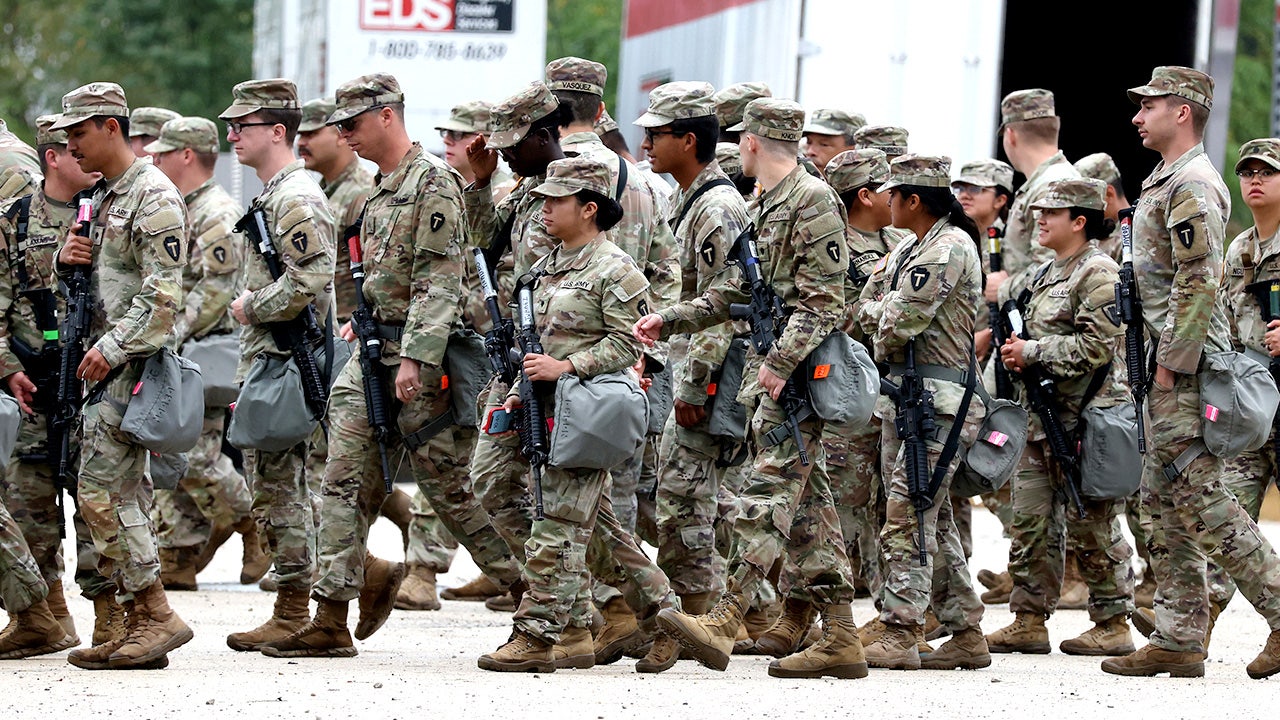








































The problem might not be brain damage after all. New research tracking the same group of Navy Seabees over two decades suggests that Gulf War illness stems from a persistent energy crisis inside brain cells rather than irreversible neural destruction.
In a study published in Scientific Reports this month, researchers led by Sergey Cheshkov and Robert W. Haley at UT Southwestern Medical Center used advanced brain imaging to show that veterans with Gulf War illness have mitochondria stuck in a state of chronic dysfunction. The finding matters because it shifts the condition from something permanent to something potentially treatable.
More than 175,000 of the roughly 700,000 troops deployed to the 1991 Persian Gulf War came home with a constellation of symptoms—fatigue, pain, brain fog, balance problems, exercise intolerance, digestive issues, and depression. Past work has linked the illness to low-level sarin exposure when coalition forces bombed Iraqi chemical weapons facilities. This new study addresses what happened next: whether that exposure killed neurons outright or threw the brain’s energy systems into disarray.
Reading the Brain’s Energy Signature
The trail began in the late 1990s when Haley’s team first scanned members of a hard-hit Seabees battalion using proton magnetic resonance spectroscopy. Those early scans, done at lower resolution, showed a reduced ratio of N-acetylaspartate to total creatine (NAA/tCr) in deep brain structures—a pattern initially read as evidence of dying neurons. Follow-up studies gave mixed results, and some researchers wondered if the abnormality had faded.
To settle the question, the team brought the same veterans back between 2008 and 2009, this time using a stronger 3 Tesla scanner with a more sophisticated protocol. They scanned 39 veterans with Gulf War illness and 16 without, measuring brain metabolites at both short and long echo times—essentially sampling the magnetic resonance signal at different moments as it decays.
The distinction turned out to be critical. At short echo time, when the signal is fresh and strong, veterans with Gulf War illness again showed lower NAA/tCr ratios in the basal ganglia. But the investigators found something unexpected: the shift wasn’t driven by loss of NAA, the marker typically associated with dying neurons. Instead, total creatine levels were elevated, particularly in two of the three clinical variants of the illness.
At long echo time, those differences mostly disappeared—not because the veterans had recovered, but because of signal physics. Phosphocreatine and free creatine, which together make up the total creatine signal, have different decay properties. By the time a long echo scan samples the signal, much of the phosphocreatine contribution has vanished, masking the very abnormality the researchers were tracking.
“Our research shows that these veterans don’t have damaged neurons, which would be incurable, but an energy imbalance, which suggests that their disabling symptoms might respond to novel treatments,” said Robert Haley, who holds the U.S. Armed Forces Veterans Distinguished Chair for Medical Research at UT Southwestern.
The team also measured myo-inositol, a compound that rises when brain support cells called glia become activated during inflammation. They found elevated myo-inositol in all three Gulf War illness variants, with the strongest signal on the right side of the basal ganglia. Standard MRI scans showed no obvious lesions, and earlier blood work ruled out systemic autoimmune disease, pointing instead toward a low-grade, persistent inflammatory state inside the brain.
Why Creatine Levels Tell an Energy Story
Elevated total creatine turns out to be a chemical signature of cellular energy trouble. In healthy brain tissue, phosphocreatine acts as a quick-release energy buffer. When a neuron needs ATP in a hurry, an enzyme called creatine kinase strips phosphate from phosphocreatine, leaving behind free creatine and fresh ATP. When mitochondria can’t keep up with ATP demand, that conversion accelerates, phosphocreatine stores drop, and free creatine accumulates.
The chemistry fits with other clues. Animal studies using sarin-like compounds have documented behavioral changes, calcium overload, and mitochondrial injury lasting well beyond initial exposure. Studies in Gulf War veterans using phosphorus MRS have shown that muscle phosphocreatine recovers slowly after exercise—a direct measure of impaired mitochondrial ATP production. Small trials with coenzyme Q10, which supports mitochondrial function, have produced modest symptom improvements.
Haley’s group argues that these pieces form a coherent picture. Mitochondria fail to sustain normal energy output. Cells lean harder on the creatine kinase buffer system, depleting phosphocreatine and raising free creatine. ATP shortages and mitochondrial stress trigger release of danger signals that activate microglia and drive chronic inflammation. The elevated myo-inositol in Gulf War illness fits that scenario of ongoing glial activation.
Not all illness variants showed identical patterns. Veterans with the two moderately severe clinical syndromes had the largest creatine elevations. Those with the most severe symptoms showed smaller increases, consistent with a situation where prolonged energy failure eventually depletes even the backup creatine stores.
The work has limitations. The sample comes from a single battalion, and while their symptoms mirror broader veteran populations, the findings may not capture every presentation of the illness. The protocol didn’t include fully relaxed scans to measure certain relaxation properties, and the imaging voxels weren’t segmented by tissue type. Still, the core finding—short echo time creatine elevation, persistent NAA/tCr reduction, and elevated myo-inositol—held up through multiple statistical controls.
For veterans living with Gulf War illness for more than three decades, the conceptual shift carries weight. If the brain’s wiring is largely intact but its power supply is failing, then treatments targeting mitochondrial function or damping inflammation become realistic goals rather than long shots. The scans don’t deliver those therapies yet, but they help reframe the problem from permanent damage to chronic metabolic crisis, a distinction that opens new paths toward actual treatment.
If our reporting has informed or inspired you, please consider making a donation. Every contribution, no matter the size, empowers us to continue delivering accurate, engaging, and trustworthy science and medical news. Independent journalism requires time, effort, and resources—your support ensures we can keep uncovering the stories that matter most to you.
Join us in making knowledge accessible and impactful. Thank you for standing with us!